What Does Ibogaine Feel Like? The Three Phases and How Long It Lasts
Ibogaine is long, intense and mostly inward. Here is what each phase feels like, how many hours it lasts and what the days after are really like.
Medically reviewed by Dr. Gibran Guardado, Medical Director
What Does Ibogaine Feel Like? The Short Answer
People who have taken ibogaine rarely describe it as a party or a high. First-hand accounts tend to call it heavy, dreamlike and very personal. You lie still in a quiet, dark room. With your eyes closed, images and memories play out almost like a film. Your body feels slow and unsteady, and nausea is common in the first hours.
After that comes a long, quieter stretch of thinking. Many people say this is where the real work happens: they look back at their life, their use and their relationships with unusual clarity. Then, over the next day or two, the effects fade and you are left tired, a bit raw and often noticeably clearer.
So the honest answer to “what does ibogaine feel like” is: demanding, long and introspective. It is not something to take lightly, and it is not something to take without medical supervision. That is why, at Iboga Treatment Center, every flood dose happens with doctors in the room.
How Long Does Ibogaine Last?
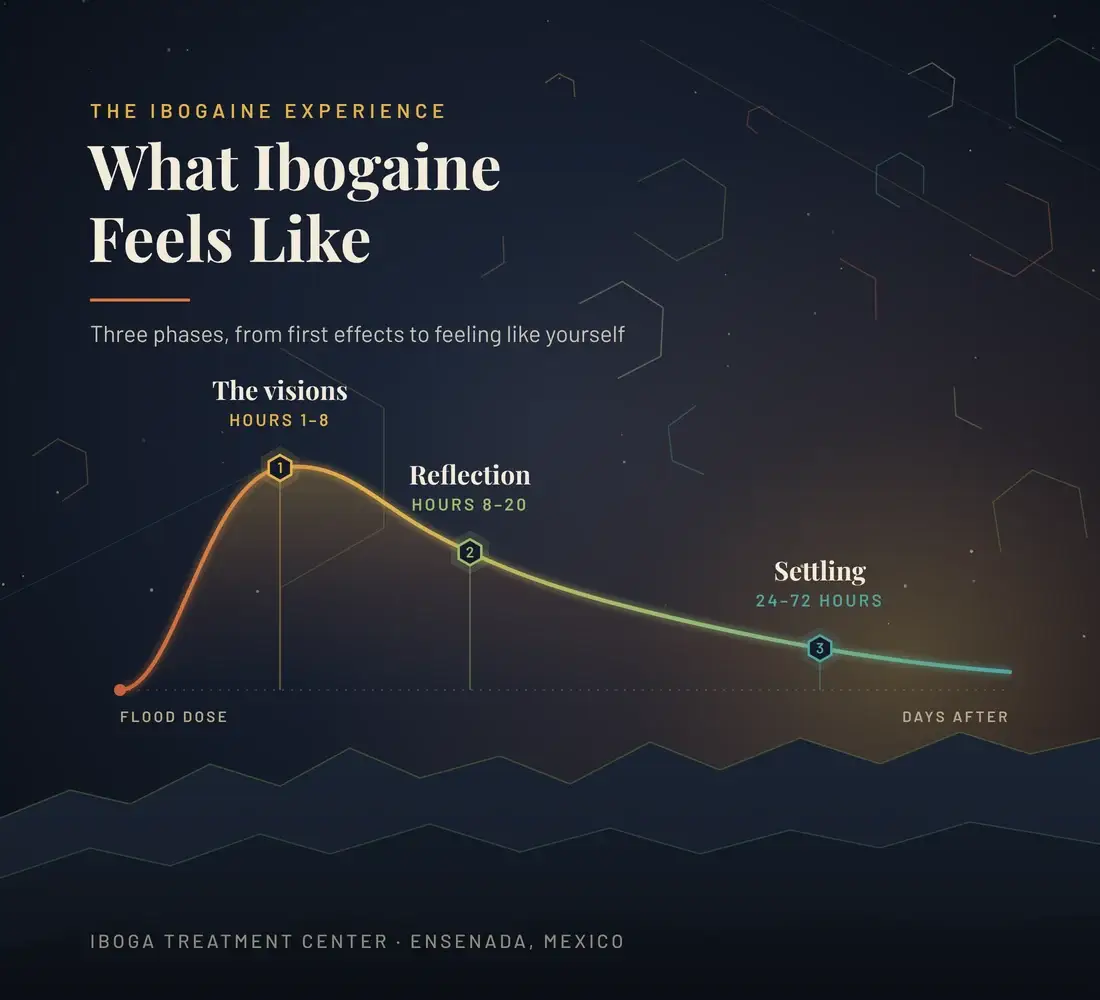
A full (flood) dose of ibogaine is one of the longest experiences of any psychedelic medicine. Researchers usually describe it in three overlapping phases, with the whole session running roughly 12 to 36 hours and lingering effects for up to three days. Timing varies with the dose, your body and how quickly you metabolize it.
| Phase | When it starts | How long it lasts | What it feels like |
|---|---|---|---|
| 1. The visions (acute) | 1 to 3 hours after the dose | About 4 to 8 hours | Dreamlike images and memories, mostly with eyes closed; nausea, unsteadiness, buzzing or ringing sounds |
| 2. Reflection (evaluative) | About 8 to 20 hours in | Many hours | Images fade; calm, deep thinking about your life, choices and relationships |
| 3. Settling (residual) | About 12 to 24 hours in | 24 to 72 hours | A clearer head, low energy, light sleep and sensitivity to noise |
The three-phase model comes from clinical observations summarized by Alper and Lotsof and used in later research, including a 2017 study of people treated for opioid use. If you want the background on the medicine itself first, start with what ibogaine is and where it comes from.
Phase 1: The Visions (Hours 1 to 8)
The first effects usually arrive within one to three hours. People often notice a buzzing or humming sound, a heavy body and difficulty walking straight. Light and movement can feel like too much, so the room is kept dark and quiet.
Then the visions start. They are often described as “waking dreams”: scenes from childhood, people you have lost, moments you had forgotten, or symbolic images that seem to carry a message. They are strongest with your eyes closed and tend to fade or pause when you open them. Unlike many psychedelics, ibogaine is not known for euphoria or giggling; it feels more like watching something important than enjoying a ride.
In a 2017 Brazilian study, people treated with ibogaine described strong physical effects alongside vivid visions and a flood of memories, especially about their drug use. Several said the experience was difficult but meaningful. It is hard, and it is worth preparing for.
What it feels like physically in phase 1
- Nausea and vomiting: common, especially early. Moving as little as possible helps.
- Ataxia: poor balance and coordination. You will need help to get to the bathroom.
- Sound sensitivity: a buzzing or ringing tone, and normal sounds can feel loud.
- A slower heart rhythm: you won’t feel it, but it is the main medical risk of ibogaine and the reason heart monitoring matters.
Phase 2: Reflection (Hours 8 to 20)
As the visions fade, a quieter, more thoughtful stage begins. You are still lying down and still tired, but your mind is busy. People describe looking at their life from the outside: why they started using, what they have lost, who they want to be. Thoughts that would normally trigger shame or defensiveness can feel easier to look at calmly.
This is the stage people often talk about most afterward. It is also why the experience is long by design. Ibogaine gives you hours of time with your own thoughts, with no phone, no distractions and nothing to do but think.
For people coming off opioids, this is often when they notice that the withdrawal they expected isn’t there in the usual way. Ibogaine’s effect on withdrawal and cravings is the main reason people seek it out for addiction. Our page on ibogaine for opiate addiction explains how that fits into a full program.
Phase 3: Settling (24 to 72 Hours)
By the second day the strongest effects are gone, but you are not back to normal yet. This residual phase can last one to three days. Common experiences include:
- Low energy and a heavy body. Walking is easier but still slow.
- Light, broken sleep. Many people need less sleep than usual for a night or two, even when tired.
- A clear, quiet mind. Some describe it as feeling “washed out” in a good way.
- Emotional sensitivity. It is normal to feel tender, tearful or flat for a day.
Some people describe one or two “grey days” in this window, when mood dips before it lifts. Knowing this is normal, and having staff and rest around you, makes it much easier to get through. It is one reason we don’t send anyone home right after a flood dose.
The Days and Weeks After Ibogaine
Once the residual phase ends, people usually start eating normally, sleeping better and moving around more. This is when the work of integration begins: making sense of what came up during the session and turning it into changes in daily life.
Ibogaine is not a cure on its own. The days after a flood dose are a window, not a finish line. That is why our stays continue after treatment with rest, nutrition, counseling and time outdoors, and why some guests add a stay at our ibogaine aftercare property before going home.
What Ibogaine Feels Like at Iboga Treatment Center
How ibogaine feels depends a lot on where and how you take it. The same dose feels very different in a calm, medically supervised setting than in an unprepared one. Here is what the experience looks like with us:
- You are stabilized first. The flood dose doesn’t happen on day one. Depending on what you are coming off, stabilization can take several days to a few weeks, and our doctors decide when your body is ready.
- Doctors are in the room. Our team includes three medical doctors, and at least two of them are with you for the whole session.
- You are monitored throughout. Medical monitoring continues through the 24 to 36 hours of the flood dose, and medical staff stay at the main center around the clock.
- Magnesium is part of our protocol to support your heart during treatment.
- Someone is always nearby. You won’t be left to get to the bathroom or through a hard moment alone.
This is what medically supervised ibogaine treatment should look like, wherever you go. Programs run one to four weeks, with four weeks the most recommended for daily or long-term use. You can compare the options on our ibogaine programs page and see current pricing on our ibogaine cost page.
Is Ibogaine Like Other Psychedelics?
Not really. Ibogaine is far longer than most, less euphoric and much more physical. A few quick comparisons:
- Psilocybin (magic mushrooms) lasts about 4 to 6 hours and is often more emotional and visual with eyes open. See ibogaine vs psilocybin.
- Ketamine lasts about an hour or two and feels dissociative and floaty. See ibogaine vs ketamine.
- Ayahuasca lasts several hours, often comes with purging, and is usually taken in group ceremonies; ibogaine is taken alone in a quiet room.
The biggest difference is purpose. People rarely take a flood dose of ibogaine for the experience itself. They take it to interrupt addiction or to face something hard, and the long reflective phase is built for that.
How to Prepare for What Ibogaine Feels Like
You can’t control what comes up during an ibogaine session, but you can make the experience easier:
- Be honest about everything you take. Some medications and substances interact dangerously with ibogaine. Our medical team needs a full list.
- Expect discomfort, not fun. Knowing nausea and unsteadiness are normal makes them less frightening.
- Set an intention. A simple question, like “what do I need to see?”, gives the reflective phase something to work with.
- Plan for rest afterward. Don’t schedule work or travel for the days right after treatment.
- Choose a clinic with doctors on site. If you are in the US, our guide to where US residents can get ibogaine treatment explains what to look for.
Our team walks you through each step before you arrive. If you think ibogaine might be right for you, apply for treatment and we’ll start with a conversation.
What Does Ibogaine Feel Like? Common Questions
Short answers to common questions about the ibogaine experience.
What does ibogaine feel like?
Ibogaine usually feels heavy, dreamlike and introspective rather than euphoric. In the first hours there are vivid, dreamlike visions and memories, mostly with eyes closed, along with nausea, unsteadiness and sound sensitivity. Later comes a long, calm stretch of reflection, then one to three days of low energy and a clearer mind.
How long does ibogaine last?
A flood dose typically lasts 12 to 36 hours in total. The visionary phase starts within one to three hours and lasts about four to eight hours, the reflective phase follows, and residual effects such as tiredness and light sleep can last 24 to 72 hours.
Is ibogaine painful?
Ibogaine isn’t usually painful, but it is physically uncomfortable. Nausea, vomiting, poor balance and sensitivity to sound are common during the first hours. Staff help you stay still, hydrated and safe.
Will I be awake during ibogaine treatment?
Yes. You stay awake and aware during the session, lying down in a dark, quiet room. The visions feel like waking dreams, and you can open your eyes, talk and ask for help at any time.
Can ibogaine be a bad experience?
It can be very hard. The visions can bring up painful memories, and the physical effects are unpleasant. People who prepare, set an intention and are treated in a calm, medically supervised setting generally find the hard parts easier to get through.
How will I feel the day after ibogaine?
Many people feel tired, slow and a little raw the next day, often with a quiet, clear mind. Sleep can be light for a night or two. Some people have a flat or “grey” day before their mood lifts.
Why does ibogaine need medical supervision?
Ibogaine can slow the heart’s electrical rhythm, which can be dangerous for some people and with some medications. At Iboga Treatment Center, more than one doctor is present during every session, magnesium is part of our protocol, and monitoring continues through the 24 to 36 hours of the flood dose.
How long should I plan to stay for ibogaine treatment?
Programs run one to four weeks, and four weeks is the most recommended for daily or long-term substance use. The flood dose comes after stabilization, and you rest and recover at the center afterward. See our programs and cost pages for details.
Curious How Ibogaine Would Feel for You?
Our admissions team can walk you through each step, from stabilization to the days after, and answer anything this page didn’t.
Prefer a phone call? Our admissions line, (877) 876-4157, is answered 24 hours a day, and everything you share is kept confidential.