FENTANYL ADDICTION TREATMENT
Ibogaine Treatment for Fentanyl Addiction
Ibogaine helps break the grip of fentanyl withdrawal and cravings. At Iboga Treatment Center, our medically supervised extended-stay program gets you safely through the transition off fentanyl and gives you the time to recover.
UNDERSTANDING FENTANYL DEPENDENCE
Why Fentanyl Is So Hard to Quit
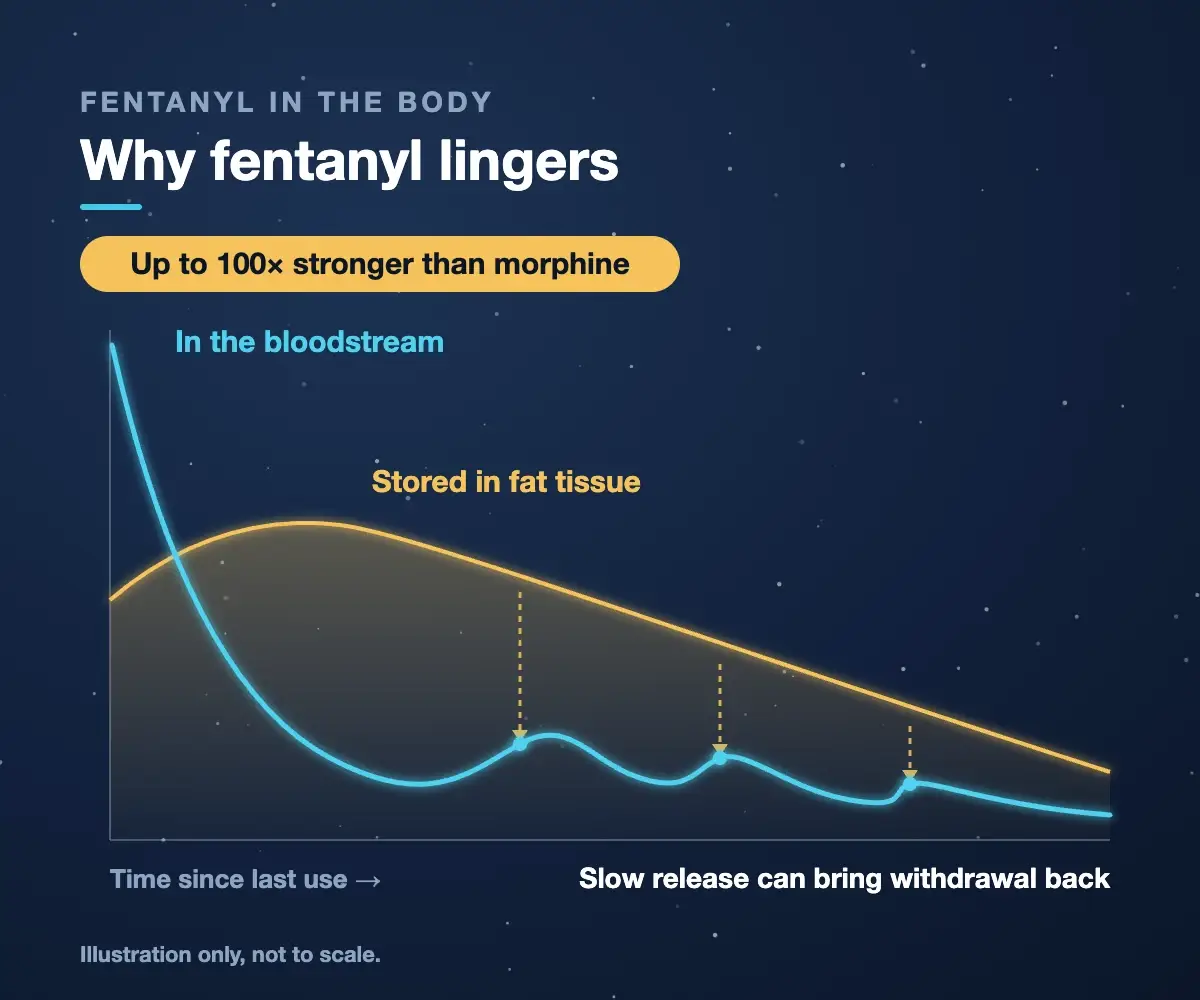
Fentanyl is up to 100 times more potent than morphine. It binds to the brain’s opioid receptors so strongly that dependence can develop quickly, and the brain adapts by dialing down its own natural opioid signaling. Once that happens, going without the drug brings on withdrawal that many people describe as the worst they have experienced.
Fentanyl also behaves differently from other opioids in the body. It is stored in fat tissue and released slowly, so withdrawal can drag on longer than expected and can return after it seems to have passed. Standard detox programs manage this with comfort medication, and for many people that is enough. For others, the length and intensity of fentanyl withdrawal, followed by cravings that persist for weeks, make relapse very likely soon after leaving treatment.
Ibogaine interacts with the same opioid receptors and with the dopamine pathways involved in craving. Many guests report a sharp drop in withdrawal symptoms and cravings after treatment. Because fentanyl lingers in the body, it has to be cleared and you have to be stabilized before ibogaine can be given safely, and that stabilization is where our experience matters most. Research on ibogaine for fentanyl dependence is still developing, and individual results vary.
THE SCIENCE
How Ibogaine Treats Fentanyl Addiction
Ibogaine works differently from the tools most detox programs rely on. Rather than masking withdrawal symptoms or substituting one opioid for another, it acts directly on the brain’s opioid receptors, along with the dopamine and serotonin systems involved in craving and mood.
During a session, ibogaine binds to several receptor types at once. Guests often describe withdrawal symptoms falling away during the session itself, and many report that the pull toward fentanyl feels far weaker afterward. It is this combination, relief from withdrawal and a break in the craving cycle, that draws people to ibogaine after other approaches have failed them.
Ibogaine is converted in the body to noribogaine, a metabolite that stays in the system for days after the session and is thought to contribute to the steadier mood and reduced cravings many guests describe in that period. Our extended-stay program is built to use that time well, with integration therapy, counseling and residential support while new patterns take hold. Learn more about how ibogaine works. Individual results vary.

WHAT MAKES IBOGA TREATMENT CENTER DIFFERENT
Ibogaine Is the Beginning, Not the Entire Treatment
Ibogaine is at the center of our treatment, but getting off fentanyl takes more than a single session. Guests receive medical stabilization, continuous monitoring, nutritional support, therapy, physical recovery and, most importantly, the time needed to heal properly. That’s what sets our ibogaine treatment in Mexico apart: we don’t give ibogaine and send you home. Our extended program allows withdrawal to resolve, sleep and strength to return, and each guest to start building a stable foundation for long-term recovery. See our ibogaine treatment programs.
Fentanyl Withdrawal Timeline, With and Without Ibogaine
Fentanyl withdrawal on its own is long and hard. Here is how it typically unfolds, and how the process looks at Iboga Treatment Center.
Without Ibogaine
On your own
Hours 6–12
Early withdrawal begins. Anxiety, muscle aches, sweating and intense cravings.
Days 1–3
Peak withdrawal. Severe pain, vomiting, diarrhea, insomnia and overwhelming anxiety. This is when many people relapse.
Days 4–7
Symptoms slowly decrease but remain hard to bear. Depression and fatigue set in.
Weeks 2–4
Physical symptoms fade, but cravings, depression and anhedonia (the inability to feel pleasure) can last for months.
Our Fentanyl Program, Start to Finish
Our approach
Days 1–3
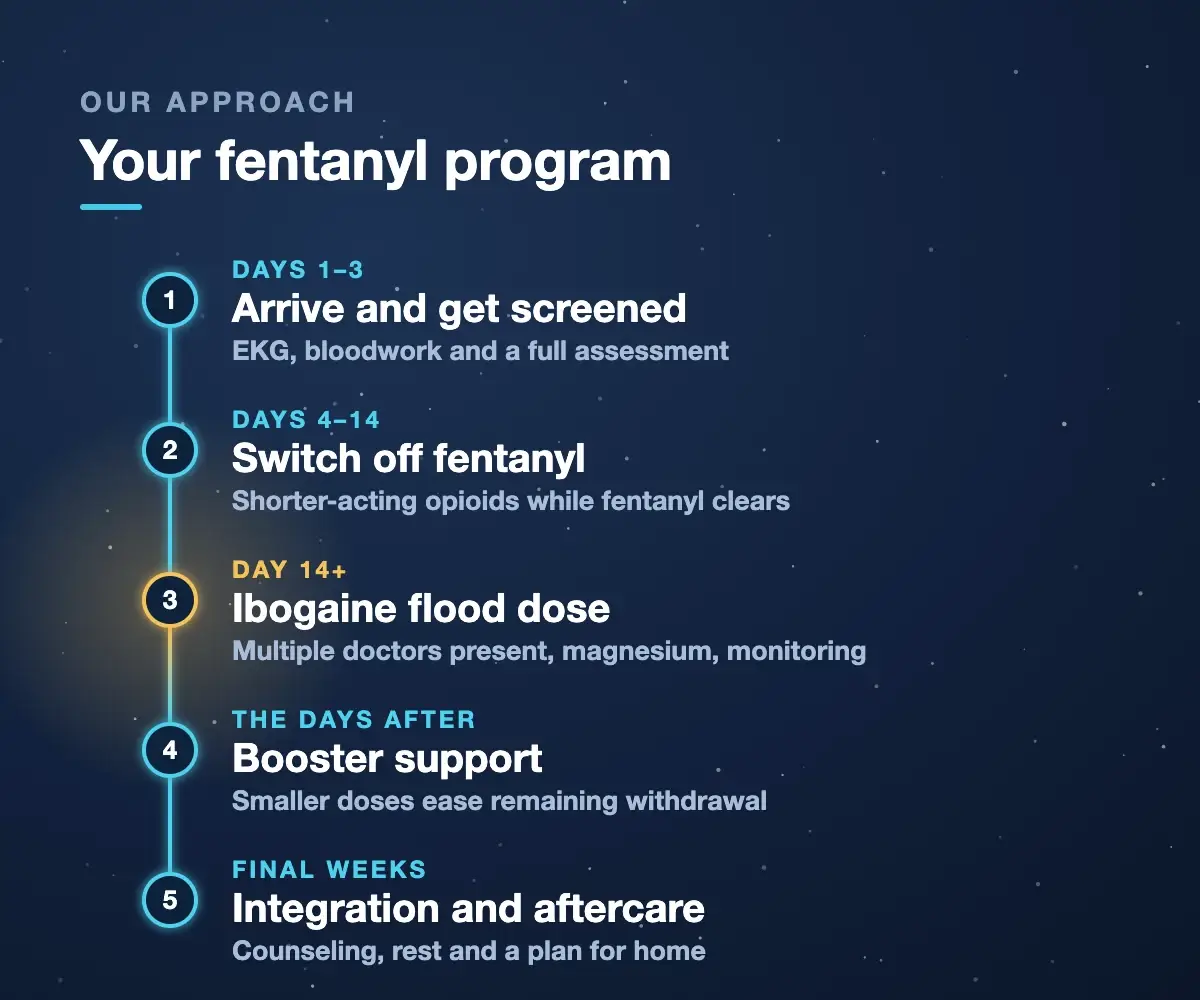
Arrival and a full medical evaluation with an EKG, blood panels and a psychological assessment. You settle in and begin stabilization.
Days 4–14
A medically supervised switch from fentanyl to shorter-acting opioids, so your body can clear fentanyl safely while you stay comfortable. Our medical team monitors you throughout.
Day 14 and after
When you’re fully stable, you receive the flood dose, attended by our doctors, with magnesium and nonstop cardiac monitoring. Many guests report that withdrawal eases dramatically within 24 to 36 hours.
The days after
Post-flood recovery. Smaller booster doses help with any withdrawal that’s left and bring a calm, reflective state.
Remaining weeks
Integration therapy, daily counseling, breathwork, nutritional support and continued ibogaine support as needed while your brain and body recover.
When you leave
You go home with a personalized aftercare plan. If you need more time, our extended aftercare program offers supervised housing and therapy.
Without ibogaine, fentanyl withdrawal is often a weeks-long battle with a high risk of relapse. At Iboga Treatment Center, stabilization keeps you comfortable while preparing your body for a safe flood dose, and the extended stay means you don’t go home before your body and mind are ready.
OUR APPROACH
Our Fentanyl Detox Program
At Iboga Treatment Center, we’ve treated many fentanyl-dependent guests. Fentanyl addiction is different from other opioid dependence: it’s more aggressive, withdrawal is more severe and the risk of relapse is higher. That’s why our fentanyl program is designed around these challenges.
Fentanyl needs a longer stabilization period than other opioids before ibogaine can be given safely. First comes a thorough medical evaluation: an EKG, full blood panel, liver and kidney testing and a psychological assessment. We then move you from fentanyl onto shorter-acting opioids, a critical step for your safety and for giving ibogaine its best chance to work. For most fentanyl guests, the flood dose comes no sooner than about day 14.
Three doctors on our medical staff lead your treatment. During the flood dose, several doctors attend and magnesium is given with the ibogaine, and medical staff are here 24/7 throughout your stay. Any benzodiazepine use is managed individually by our doctor.
Treatment, Recovery and Aftercare
The Ibogaine Flood Dose
Your ibogaine session takes place in a fully equipped clinical setting under continuous cardiac monitoring. Our medical staff stay with you throughout the 24- to 36-hour experience, watching your vitals and keeping you safe and comfortable.
Post-Flood Recovery and Iboga Support
We don’t stop at the flood dose: smaller iboga doses follow to settle lingering withdrawal and help you into a calmer, reflective state. Many programs end at the flood dose. Ours doesn’t, because this is where the real work of recovery begins.
Integration Therapy
Every day, you work with licensed counselors to understand what surfaced in treatment, name your triggers, practice coping skills and get ready for life at home. Integration is a core part of every program.
Aftercare Planning
Before you leave, we build a personalized aftercare plan with you. For guests who need more time, our extended aftercare program provides continued supervised housing and therapy.
GUEST STORY
Sophie’s Story
“I was using fentanyl every day for almost three years. I had tried everything — rehab, Suboxone, cold turkey — nothing stuck. The six-week program at Iboga Treatment Center gave me something no other place could: time. Time to actually heal, not just detox. The ibogaine took away my withdrawals, and the weeks after gave me my mind back. I’m over a year sober now and I never thought I’d be able to say that.”
Individual results vary. Read more guest stories on our testimonials page.
Questions About Ibogaine for Fentanyl Addiction
Is ibogaine safe for fentanyl users?
Ibogaine carries real medical risks, and fentanyl adds one of its own. Fentanyl is stored in fat tissue and released slowly, so giving ibogaine too soon can be dangerous. So each fentanyl guest has an EKG, bloodwork and liver and kidney tests, and we transition and stabilize you off fentanyl before any ibogaine. On treatment day there are several doctors with you and magnesium alongside the ibogaine, and medical staff remain on site around the clock. Medical treatment always involves some risk, and we’ll be honest if ibogaine isn’t the right fit.
Do I need to stop using fentanyl before coming to the clinic?
No. Don’t try to stop or taper on your own before you arrive, and don’t switch to another substance without talking to us first. Keep using as you normally do until you speak with our medical team, who will tell you exactly how to prepare for travel. Your transition off fentanyl happens here, under medical supervision.
How long should I stay for fentanyl treatment?
Fentanyl guests need a longer stay than most, because clearing fentanyl safely takes time. Most spend about two weeks transitioning and stabilizing before the flood dose, followed by recovery, booster support and integration. For daily or long-term fentanyl use, we recommend four weeks or longer. Admissions can estimate your timeline once they’ve reviewed your history. See our ibogaine treatment programs.
Why do you transition me onto a shorter-acting opioid first?
Fentanyl lingers in the body long after the last dose, and ibogaine given while fentanyl is still present can be dangerous. Moving you onto a shorter-acting opioid under medical supervision lets fentanyl clear while keeping you comfortable, so ibogaine can be given safely once your body is ready. This step is the foundation of our fentanyl program.
How quickly will ibogaine reduce my fentanyl withdrawal?
Many guests report that withdrawal symptoms ease dramatically during the ibogaine session itself, within 24 to 36 hours. Some symptoms can linger or return in the days that follow, which is why we continue with smaller booster doses and keep you at the clinic through recovery. Individual results vary.
What is the difference between ibogaine and Suboxone for fentanyl?
Suboxone is a maintenance medication. It replaces fentanyl with a longer-acting opioid that you take daily, often for years, and it helps many people. Ibogaine is a single treatment given under medical supervision, aimed at getting you through withdrawal and reducing cravings without ongoing opioid medication. Many of our guests come to us after trying Suboxone. If you’re on it now, don’t stop on your own. Learn more about ibogaine treatment for Suboxone.
What if I have been using pressed fentanyl pills?
Pressed pills sold as oxycodone, Xanax or other medications often contain fentanyl in unpredictable amounts, sometimes mixed with other substances. Tell admissions exactly what you’ve been taking and how often, even if you’re not sure what was in it. We screen for other substances and plan your stabilization around what we find. Benzodiazepines, if you’ve been taking them, are handled individually by our doctor.
Will I have cravings after ibogaine treatment?
Many guests report that cravings feel much weaker after treatment, and some describe them as largely gone. Others notice cravings return in certain situations, especially after going home. For that reason, our program includes integration, aftercare planning and the choice of a longer stay. Individual results vary.
Is the 7-day program an option for fentanyl?
Usually not. Fentanyl needs to be cleared and your body stabilized before ibogaine can be given safely, and that alone typically takes about two weeks. Our extended-stay program is our standard for fentanyl. Admissions can confirm what’s appropriate after reviewing your history.
How much does fentanyl treatment cost?
Fentanyl programs are longer than most because of the stabilization they need, and your cost depends on that length plus your medical needs. You’ll hear the cost from admissions once screening is finished. More on pricing is available on the ibogaine treatment cost page.
How do I get to Ensenada from San Diego?
Ensenada is in Baja California, roughly a two-hour ride south of San Diego. Our team collects you at San Diego International Airport and drives you to the clinic, taking care of the border crossing. Admissions helps you work out travel dates and what to bring. Ibogaine can’t be legally used for treatment in the US, where it’s Schedule I, so fentanyl guests come to us in Mexico.
Have a question we didn’t answer? Call admissions at (877) 876-4157.
Ibogaine Treatment for Other Opioids
Heroin, oxycodone and other prescription opioids. How ibogaine treatment works for opioid dependence.
Getting off Suboxone (buprenorphine) with medical support and time to stabilize.
Leaving methadone maintenance under medical supervision, with a plan built around your history.
The ibogaine addiction treatment page lists every substance we treat.
Ready to Break Free from Fentanyl?
Talk to us about fentanyl treatment in a free, confidential consultation. You’ll get honest guidance, never pressure.
Questions About Fentanyl Treatment?
Ask Us About Fentanyl Detox
Getting off fentanyl can feel overwhelming, and you probably have questions about stabilization, the flood dose and how long you would need to stay. Share your number and our admissions team will call to talk it through, whether this is for you or someone close to you.
- How long fentanyl stabilization takes before ibogaine
- Why we suggest four weeks or more for daily use
- What to do about your current dose before you arrive
Want to talk right now? Call (877) 876-4157
Get a Call From Admissions
Every field is required, and it takes about a minute.