Ibogaine vs Ketamine: Which Treatment Fits Your Situation?
Ibogaine vs ketamine, side by side: how each one is given, how long it lasts, what it can do for depression and addiction, and the risks and legal rules that set them apart.
Ibogaine vs Ketamine in a Nutshell
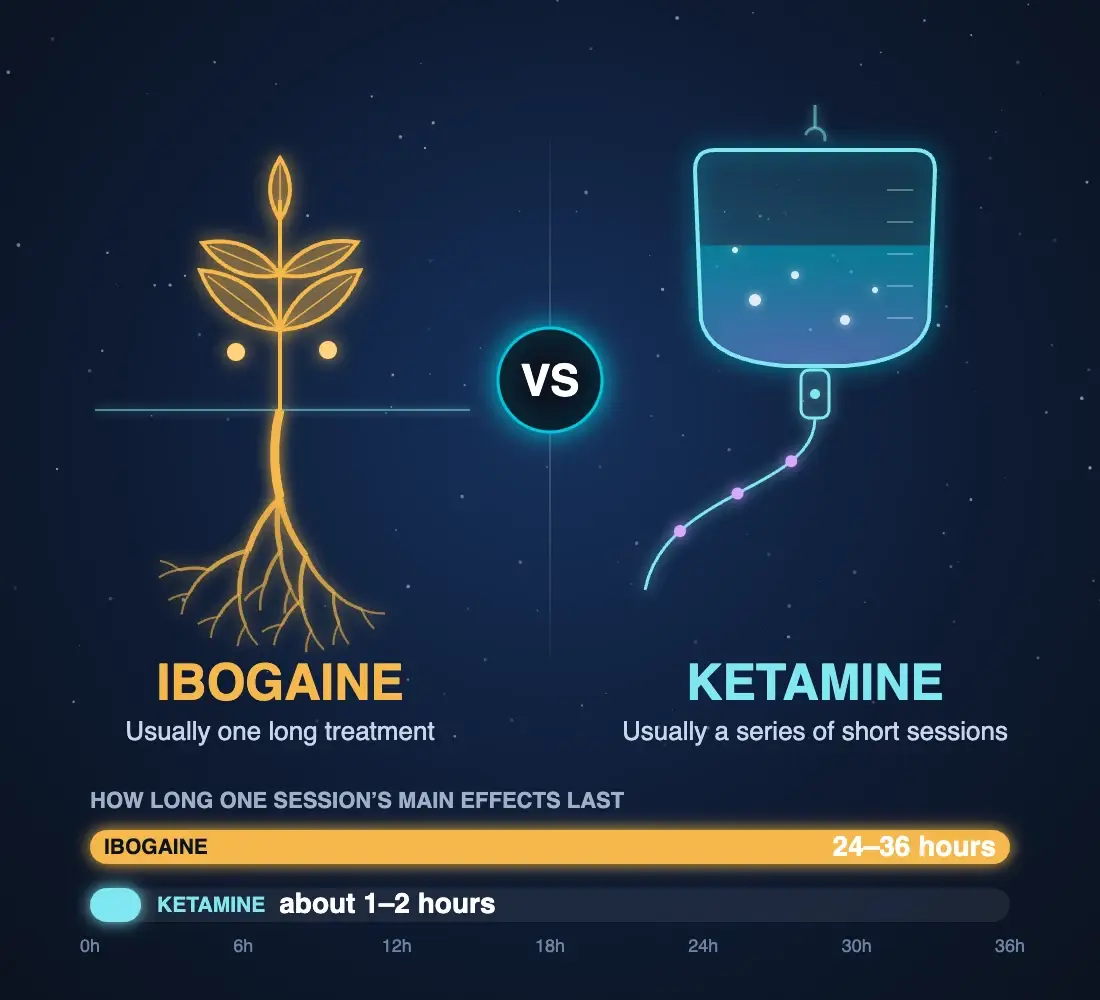
Ketamine and ibogaine share one surprising trait: both block NMDA receptors, a brain system tied to learning and habit. In practice they are used very differently. Ketamine is a legal prescription anesthetic now widely used for depression, given in short sessions that are usually repeated over weeks. Ibogaine is a single, day-long treatment used mostly to interrupt opioid dependence, and it can’t legally be given anywhere in the US.
For someone with treatment-resistant depression and no addiction, ketamine is the more accessible and better-studied choice. For someone dependent on fentanyl or heroin and other opioids, ketamine won’t carry them through withdrawal, and that is where ibogaine stands apart.
This comparison was written by the team at Iboga Treatment Center, based in Ensenada, Mexico. We know ibogaine best, and we’ve aimed to give ketamine a fair hearing too.
Ibogaine and Ketamine Compared
| Ibogaine | Ketamine | |
|---|---|---|
| What it is | A plant alkaloid from the root bark of the African iboga shrub | A synthetic anesthetic, also sold as the nasal spray esketamine (Spravato) |
| How it’s given | Swallowed, usually as one large dose on a treatment day | IV infusion, injection, nasal spray or dissolving tablets |
| One session lasts | Usually 24–36 hours of strong effects | About 1–2 hours; Spravato users stay at least 2 hours to be monitored |
| Typical course | One treatment day within a longer stay | A series of sessions, often several in the first few weeks, then boosters |
| Brain targets | NMDA receptors, plus opioid, serotonin and nicotinic receptors | NMDA receptors, mainly |
| Opioid withdrawal | Often eases withdrawal and cravings sharply | Not a withdrawal treatment on its own |
| Depression evidence | Small studies, including Stanford’s 2024 veterans study | FDA-approved esketamine, plus many trials of IV ketamine |
| Main physical risk | Heart rhythm problems (QT prolongation); needs EKG screening and monitoring | A temporary rise in blood pressure, dissociation and sedation |
| Misuse potential | Not considered addictive | Can be misused; heavy, frequent use can damage the bladder |
| US legal status | Schedule I, so not legally available | Schedule III, legal with a prescription |
Session lengths and schedules vary by clinic, dose and person.
Where Ibogaine and Ketamine Overlap, and Where They Don’t
Ketamine works mainly by blocking NMDA receptors, which is thought to set off a burst of glutamate activity and the growth of new connections between brain cells. That may be why some people with severe depression feel better within hours to a day, faster than standard antidepressants. The catch is that relief often fades within days or weeks, so repeat sessions are part of the plan.
Ibogaine blocks NMDA receptors as well, but that is only one piece. It acts on opioid, serotonin and nicotinic receptors too, and its long-lasting byproduct, noribogaine, keeps working after the main experience ends. Our explainer on how ibogaine works covers each of these targets.
A Ketamine Session vs an Ibogaine Treatment Day
At a ketamine clinic you typically sit in a recliner for an infusion of about 40 minutes. Many people feel detached from their body, floaty or dreamlike, and the strongest effects wear off soon after the drip stops. Spravato is similar: you use the spray at the clinic, stay at least two hours while staff check your blood pressure, and need someone else to drive you home.
An ibogaine treatment day works on a different scale. Its effects build over hours and can last through the night and into the next day, with vivid inner imagery, memories surfacing, nausea and trouble walking. Guests stay in bed under watch the whole time, and many need several days to feel steady again. Our article on what happens before ibogaine treatment explains how we get people ready for it.
Ibogaine vs Ketamine for Addiction
Ketamine therapy for addiction is an active research area, but most results so far come from small trials.
- Opioids: ibogaine is the stronger fit. Observational studies have documented withdrawal fading within hours for many people treated with it. Ketamine has been tried alongside standard opioid detox in small studies, but it isn’t a replacement for detox, and someone on fentanyl, methadone or Suboxone still needs a full withdrawal plan.
- Alcohol: a UK trial published in 2022 found that three ketamine infusions combined with therapy helped people stay sober on more days over six months than those who received a placebo. Read about our alcohol program if drinking is the main problem.
- Cocaine: a 2019 study found that one ketamine infusion paired with mindfulness training helped more people stay off cocaine in the following weeks. We also treat cocaine addiction with ibogaine.
- Meth and Adderall: research is thin for both medicines. Our meth and Adderall pages explain how we approach stimulants.
One caution for anyone in recovery: ketamine is itself a drug people misuse. That doesn’t rule it out, but it should only be used under a prescriber who knows your history.
Ibogaine vs Ketamine for Depression and PTSD
For treatment-resistant depression, ketamine has a clear lead. The FDA approved esketamine (Spravato) in 2019, and in January 2025 it cleared the spray for use on its own, without an oral antidepressant (Johnson & Johnson). Many clinics also offer IV ketamine off-label, and research on ketamine for PTSD is ongoing.
Ibogaine is earlier in its journey. Stanford’s 2024 study of 30 Special Operations veterans reported big improvements in PTSD and depression a month after a single ibogaine treatment, but it had no comparison group. If you’re weighing both, our pages on ibogaine for depression, PTSD and anxiety go into more detail.
Comparing the Risks
Ketamine’s short-term risks are mostly manageable in a clinic: a temporary jump in blood pressure, nausea, dizziness, dissociation and heavy sedation. Over the longer term, misuse is the bigger worry, and frequent recreational use is linked to serious bladder damage.
Ibogaine’s danger is concentrated in the heart. It slows the heart’s electrical recovery between beats, which can trigger dangerous rhythms, especially in people with heart disease or those taking certain medications.
That’s why every guest at our clinic gets an EKG, blood tests and a medication review before ibogaine is even considered. Three medical doctors work at the clinic, several are on hand during each treatment, guests receive magnesium, and heart rhythm is monitored throughout. Is Ibogaine Safe? The Honest Answer goes through who should not take it.
Legal Status, Access and Cost
Ketamine is a Schedule III drug in the US, so a licensed prescriber can use it legally. Insurance often covers Spravato for treatment-resistant depression, while IV ketamine infusions are usually paid out of pocket.
Ibogaine is in Schedule I, which means there is no legal treatment in the US. Texas has funded clinical trials, but for now people travel abroad, mainly to Mexico. When you compare options for ibogaine treatment, look first at the medical screening and staff, then at the setting. Our cost page explains what affects the price, and you can compare our program lengths before you call.
Which One Makes Sense for You?
- Depression that hasn’t responded to two or more antidepressants, without addiction? Ketamine or Spravato is a reasonable, legal next step to ask a psychiatrist about.
- Dependent on fentanyl, heroin, pain pills, methadone or Suboxone? Ibogaine is built for this situation, with medical detox before it.
- Heart problems or a long QT interval? Ibogaine may be ruled out, and our screening will tell you.
- A history of misusing ketamine or other dissociatives? Be cautious about ketamine, and tell any clinic about it.
If you’ve had ketamine treatment recently, or still use it, let our admissions team know along with your other medications. Our doctors use that information to plan your preparation and the timing of your treatment.
Still comparing options? See how ibogaine stacks up against psilocybin (magic mushrooms) and ayahuasca.
Ibogaine vs Ketamine: Your Questions
Short answers to the questions people ask most when deciding between these two treatments.
Is ibogaine like ketamine?
In one way: both block NMDA receptors. Otherwise they are very different. Ketamine’s effects last an hour or two and are usually repeated, while ibogaine works for a day or more and is usually given once during a stay.
Can ketamine treat opioid withdrawal?
Not on its own. It has been studied as an add-on during opioid detox, but it doesn’t replace a withdrawal plan. Ibogaine stands out because it can often relieve withdrawal symptoms within hours, under medical care.
Which works faster for depression?
Ketamine can lift mood within a day for some people, which is one reason it’s used for severe depression. People report ibogaine’s mood effects in the days and weeks after treatment, but that research is still small.
Is ketamine safer than ibogaine?
Physically, for most people, yes. Ketamine’s main risks are blood pressure spikes, dissociation and misuse. Ibogaine carries a real risk to heart rhythm and requires cardiac screening and monitoring.
Is ketamine addictive?
It can be. Ketamine is misused as a party drug, and frequent use can lead to tolerance, cravings and bladder damage. In a clinic, doses are controlled and monitored, which lowers that risk but doesn’t remove it.
How long does ketamine last compared with ibogaine?
Ketamine’s main effects usually fade within an hour or two of an infusion, though some antidepressant benefit can last days to weeks. Ibogaine’s main effects last roughly a day and a half at most, and the after-effects linger for several days.
Can I do ibogaine if I’ve had ketamine treatment?
Possibly. Tell our admissions team when your last session was and what you were given. Our doctors review it with your other medications and set a safe timeline, as part of how we prepare you.
Is ibogaine legal where ketamine is?
No. Ketamine is legal by prescription across the US, but ibogaine is Schedule I everywhere in the country. That is why Americans seeking it usually travel to medically supervised clinics in Mexico.
Not Sure Whether Ibogaine Is the Right Fit?
Talk with our admissions team about your history, your medications and what you’ve already tried, including ketamine. They’ll tell you honestly whether ibogaine makes sense.
Prefer the phone? Admissions is at (877) 876-4157, and calls are confidential.