OPIATE AND HEROIN ADDICTION TREATMENT
Ibogaine Treatment for Opiate Addiction
Opioid dependence can leave you trapped between intense cravings and painful withdrawal. Our medically supervised heroin and opiate detox in Ensenada, Mexico keeps you comfortable while you stabilize, gives you ibogaine when your body is ready, and leaves time to recover.
UNDERSTANDING OPIATE ADDICTION
Why Opioids Are So Hard to Quit
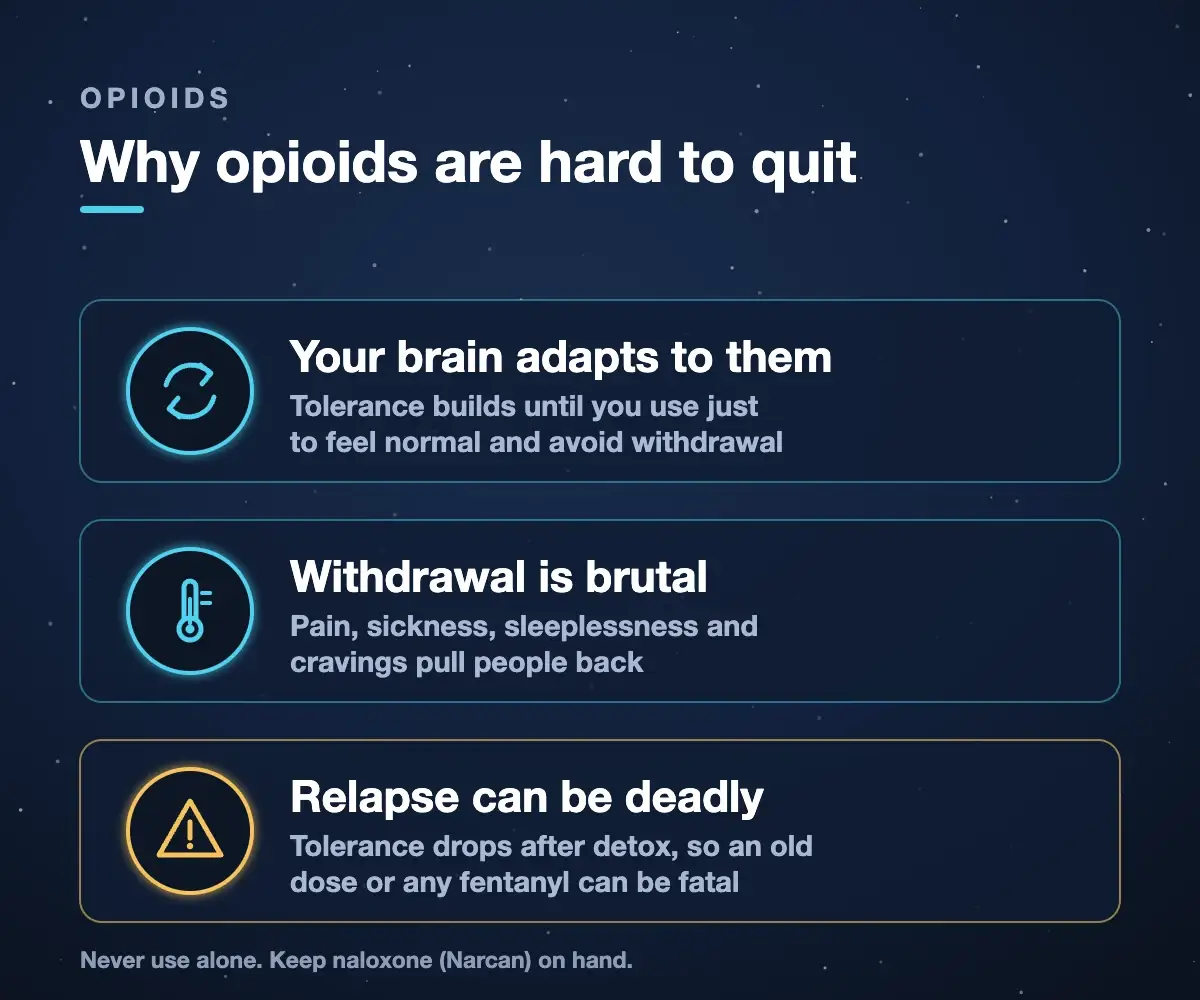
Opiates and opioids, including heroin, fentanyl and prescription painkillers such as oxycodone, hydrocodone and morphine, act directly on the brain’s opioid receptors. With repeated use, tolerance and physical dependence develop, and many people end up taking opioids not to get high, but simply to avoid withdrawal and feel normal.
When opioid use stops, withdrawal can bring anxiety, restlessness, insomnia, sweating, muscle and bone pain, stomach problems and intense cravings. Even when someone desperately wants to quit, the physical misery and the urge to use can pull them back in. And after a stretch without opioids, tolerance drops, which makes relapse especially dangerous.
Methadone and Suboxone help many people, but they mean staying on a daily opioid, often for years. Ibogaine takes another route: a supervised detox meant to carry you through withdrawal and quiet cravings, with no daily opioid afterward.
With three medical doctors on staff, Iboga Treatment Center in Ensenada, Mexico runs an opiate program that pairs a careful detox with ibogaine and extended recovery support.
THE SCIENCE
How Ibogaine Works on Opioid Withdrawal
Ibogaine works differently from conventional opioid detox. Instead of simply treating symptoms as they come, it engages several brain systems tied to opioid dependence, from the opioid receptors themselves to the networks that drive craving, mood and reward. New to ibogaine? Read what ibogaine is and how it works for a quick primer.
For many guests, withdrawal fades sharply over the 24 to 36 hours of the session. Ibogaine is also converted into noribogaine, a longer-acting metabolite that may help with mood and cravings in the days after. We use that period for recovery, integration, counseling and rebuilding healthy routines, so treatment becomes more than a detox.
The research on ibogaine for opioid dependence is the most developed area of ibogaine research, but it’s still early. Small open-label studies, including one at clinics in Mexico and one in New Zealand, have reported marked reductions in withdrawal symptoms and cravings, and a 2022 systematic review concluded that the data suggest ibogaine reduces opioid withdrawal and craving. Most of these studies were small and had no control group, and ibogaine carries real cardiac risks, which is why it should only be given with thorough screening and continuous medical monitoring.

WHY TIME MATTERS
Heroin Detox Is Only the Beginning
Getting through withdrawal is the first step, not the whole treatment. The weeks after detox are when cravings, low mood and old routines try to pull you back, and when your tolerance is lowest. Our ibogaine center in Mexico is set up for longer stays, giving you time to recover, integrate what you’ve learned and plan your return home.
Opiate Withdrawal Timeline, With and Without Ibogaine
Opiate withdrawal is rarely life-threatening on its own. The bigger danger is relapsing afterward, when tolerance is lower and overdose is more likely. Here’s the usual course of heroin and opiate withdrawal, next to what happens with us instead. For a deeper look at the science, read how ibogaine works.
Without Ibogaine
On your own
Hours 6–24
Early withdrawal begins, and heroin withdrawal can start within hours: anxiety, yawning, sweating, a runny nose and the first strong cravings.
Days 1–3
Peak withdrawal. Muscle and bone pain, vomiting, diarrhea, insomnia, chills and overwhelming cravings. A lot of people give in at this stage.
Days 4–7
Physical symptoms begin to ease but stay draining: fatigue, low mood and poor sleep.
Weeks 2–4 and beyond
Physical symptoms fade, but cravings, depression, anxiety and anhedonia (trouble feeling pleasure) can persist for months.
With Ibogaine at Our Clinic in Mexico
Our approach
Days 1–2
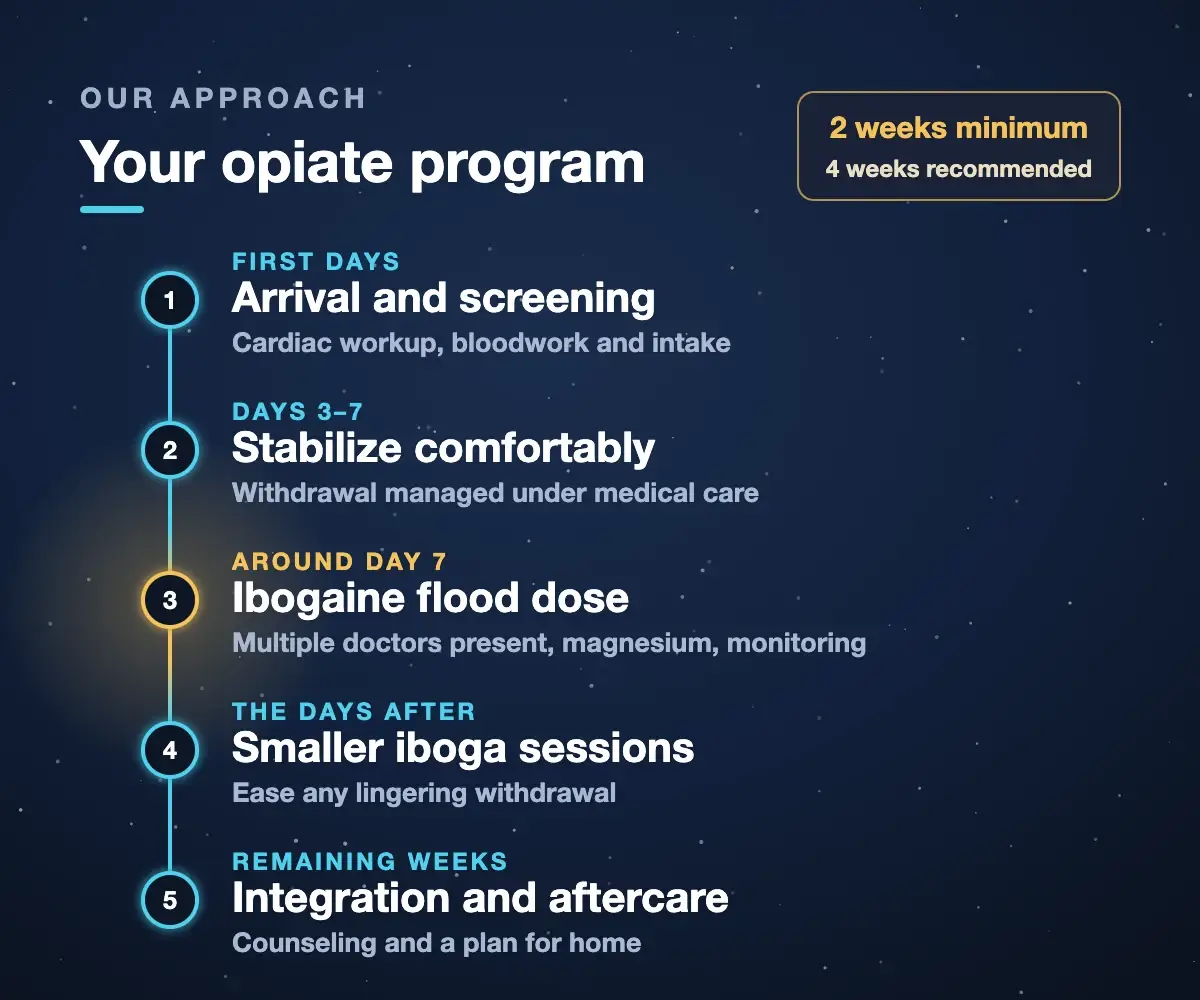
Arrival, a full medical evaluation, a cardiac workup, bloodwork and a psychological assessment. You get settled while stabilization starts.
Days 3–7
Medically supervised stabilization. Short-acting opioids clear the body faster than fentanyl, and you’re monitored and kept comfortable, with medical staff on site 24/7, until the medical team confirms you’re ready.
Around day 7
Your flood dose of ibogaine, with a team of doctors present, magnesium and continuous heart monitoring. For many, withdrawal drops off steeply within 24 to 36 hours.
The days after
Lower-dose iboga sessions handle leftover withdrawal and help you settle into a calm, reflective frame of mind.
Remaining weeks
Integration therapy, daily counseling with licensed counselors, breathwork and nutritional support while your brain and body recover.
When you leave
You leave with a plan for staying well at home, or move into supervised housing through extended aftercare.
Treat these timings as typical, not fixed. Guests coming off fentanyl, methadone or Suboxone need longer stabilization. Your doctors decide when each step happens.
HOW TO DETOX SAFELY
How to Detox From Heroin and Opiates Safely
Don’t try to stop cold turkey on your own, and don’t switch to another substance without medical advice. Opiate withdrawal is rarely life-threatening, but it’s miserable, and stopping alone is when many people relapse, often after their tolerance has dropped.
Our approach: don’t change your use until our medical team has talked with you; they’ll explain exactly how to get ready for the trip. Your detox happens here, under medical supervision, over the first week, whether it’s a heroin detox or coming off prescription painkillers. Around day 7, after the doctors confirm you’re ready, you take ibogaine under constant cardiac monitoring with several physicians in the room, then continue with smaller iboga sessions and aftercare on site. See what happens before ibogaine treatment for the full preparation process.
If fentanyl is part of your use, or you’re on methadone or Suboxone, the plan is different and takes longer. See ibogaine for fentanyl addiction, ibogaine for methadone and ibogaine for Suboxone.
How Long Is Opiate Detox and Treatment?
2 weeks
The minimum for heroin and prescription opioids
4 weeks
What we recommend for daily or long-term use
+ Aftercare
Optional supervised housing once treatment ends
Stabilization takes about a week before the flood dose, and then you need time to recover and integrate. Guests coming off fentanyl, methadone or Suboxone need longer. Compare our ibogaine treatment programs.
Our Heroin and Opiate Detox Program
Stabilization
We work with guests dependent on heroin, oxycodone, hydrocodone, morphine and other prescription or illicit opioids. Treatment starts with understanding exactly what you use, how much, how often and for how long. Your medical team then builds an individualized plan that keeps you comfortable and medically stable while you prepare for ibogaine.
The Ibogaine Session
Your flood dose takes place in a properly equipped clinical space, with the heart monitor running throughout. A team of doctors is there, magnesium is given with the ibogaine, and staff remain with you across the full 24 to 36 hours. Three of our own medical doctors lead your treatment.
Post-Flood Recovery
Once the flood dose is behind you, smaller iboga doses ease what’s left of withdrawal as your strength comes back. You rest, eat well and rebuild healthy routines before going home.
Integration and Aftercare
Licensed counselors help you make sense of the session and pin down the triggers, feelings and situations that fed your opioid use. If depression or anxiety is part of the picture, we work with that too. We’ll put together your aftercare plan before you leave, and supervised housing is available for anyone who wants extra time.
GUEST STORY
Nico’s Story
“I used heroin for most of my adult life and tried to quit more times than I can count, but I always ended up going back. A good friend referred me to Iboga Treatment Center, and I decided to give it a chance.
After three weeks at Iboga Treatment Center, I felt better than I had in years and, for the first time, genuinely hopeful that I could leave heroin behind. Three months later, I’m still clean, feeling good, and happy in a way I haven’t felt in a very long time.”
Individual results vary. You’ll find more guest accounts on our testimonials page.
Heroin and Opiate Detox: Your Questions Answered
Is ibogaine safe for opiate addiction treatment?
Ibogaine carries real medical risks. Heart rhythm is the main concern, so every guest is screened with an EKG, bloodwork and a medication review before acceptance, and you’re stabilized before ibogaine is given. In the session, you have several doctors with you, magnesium given alongside the ibogaine and round-the-clock monitoring. Every medical treatment carries some risk, and if ibogaine isn’t a good fit for you, we’ll say so. The risks are covered in detail in Is Ibogaine Safe? The Honest Answer.
Do I need to stop using opiates before coming to the clinic?
No. Please don’t quit or cut down by yourself before you come, and don’t swap to a different drug without checking with us. Carry on with your usual use until our medical team calls you with travel-day instructions. Your stabilization happens here, under medical supervision.
What are the symptoms of opiate withdrawal?
Early withdrawal usually brings anxiety, yawning, sweating, a runny nose, and cravings. At its peak, typically days one to three, it can include muscle and bone pain, vomiting, diarrhea, insomnia, chills, and overwhelming cravings. Physical symptoms ease over the following week, but low mood, poor sleep, and cravings can persist for weeks or months. Managing this safely and comfortably is the first job of our program.
How long does opiate withdrawal last?
Without treatment, withdrawal from short-acting opioids like heroin usually starts within 6 to 24 hours of the last dose, peaks over days one to three and eases over about a week. Sleep problems, low mood and cravings may continue for weeks or months, and withdrawal from long-acting opioids such as methadone runs longer. Here, doctors manage your withdrawal through stabilization, and the ibogaine session itself brings fast relief for many guests.
How quickly can ibogaine help with opiate withdrawal?
For many people, withdrawal subsides sharply during the session itself, over roughly 24 to 36 hours. A few symptoms may hang on or come back over the next days, so we continue smaller iboga doses and keep you with us through recovery. Individual results vary.
Can I overdose if I use opioids after treatment?
Yes, and it’s the most important safety point on this page. Your opioid tolerance falls steeply after detox and ibogaine, so your old dose, or any fentanyl at all, could be fatal. If you relapse, don’t use alone and keep naloxone (Narcan) within reach; you can buy it over the counter at US pharmacies. Anyone who overdoses needs naloxone and a 911 call immediately.
Avoiding that situation is a central goal of your aftercare plan. If home gets hard, phone us, and in a crisis, call or text 988.
How long should I stay for opiate addiction treatment?
Plan on at least two weeks. Short-acting opioids like heroin and oxycodone typically need about a week of stabilization before the ibogaine flood dose, followed by recovery, iboga support and integration, and for daily or long-term use we recommend four weeks. Guests coming off methadone, Suboxone or fentanyl need longer. Once admissions reviews your history, they’ll give you an estimated length of stay. See our program options.
Can ibogaine help with heroin, oxycodone and other painkillers?
We treat dependency on heroin, oxycodone, hydrocodone, morphine, codeine, and other prescription or illicit opioids. Fentanyl, methadone, and Suboxone each need a different stabilization approach and have their own treatment pages. Kratom and 7-OH also act on opioid receptors, and we treat them too. If you’re using more than one substance, your plan is built around all of them.
Can ibogaine help reduce opiate cravings after detox?
After treatment, a lot of guests find their cravings much fainter, and some say they’re nearly gone. For others, cravings come back in particular situations, often once they’re home. That’s why our program includes integration work, aftercare planning and the choice to stay longer. Individual results vary.
How is ibogaine different from Suboxone or methadone maintenance?
Suboxone and methadone are maintenance medications. They swap your current opioid for a longer-acting one taken every day, frequently for years, and they help a lot of people. Ibogaine is given once, under medical supervision, to help you through withdrawal and reduce cravings without daily opioid medication afterward. If you are currently on Suboxone or methadone, do not stop on your own. Our medical team manages that transition here.
Should I stop taking my other medications before treatment?
No. Please keep taking your medications as prescribed until our doctors advise otherwise. Certain drugs interact with ibogaine and need careful handling, yet quitting them abruptly can be dangerous too. Give admissions a full list of what you take, supplements included, and our doctors will tell you what to do during screening. Benzodiazepines are reviewed individually by our doctor and managed under medical care.
How much does opiate detox cost?
Your total depends on the length of your program and your medical needs, including how many days stabilization takes. You’ll get a clear quote from admissions after screening. Read more about pricing on the ibogaine treatment cost page.
What’s the best way to reach the clinic?
Ensenada, where we’re located, is about a two-hour trip south of San Diego. Land at San Diego International Airport, and our team handles the rest: pickup, the drive south and the border crossing. Admissions walks you through travel planning and what to bring. US law lists ibogaine as Schedule I, so it can’t be offered legally in the States, and that’s why we’re based in Mexico.
Still have questions? Call admissions at (877) 876-4157.
Ibogaine Treatment for Other Opioids
Fentanyl calls for a longer, more careful lead-in before ibogaine. Learn how fentanyl treatment works here.
Step off methadone maintenance with medical supervision and a plan shaped by your history.
Because buprenorphine must leave your system before ibogaine, Suboxone programs include extra stabilization time.
Browse everything we treat on our ibogaine addiction treatment page.
Ready to Break Free From Opiate Addiction?
Reach admissions now for a confidential consultation at no cost. We’ll talk honestly about whether ibogaine fits your situation, without any pressure.