Ibogaine Treatment for PTSD
For people who have tried therapy, medication or both and are still living with PTSD, ibogaine offers a different kind of treatment. Iboga Treatment Center is an ibogaine PTSD treatment center in Ensenada, Mexico, where every stay includes medical screening, cardiac monitoring and integration support before and after the ibogaine session.

Ibogaine for Veterans, First Responders and Trauma Survivors
Most people who look into ibogaine for PTSD have already tried the standard options: years of talk therapy, SSRIs, prazosin for nightmares, EMDR, sometimes ketamine. Some of it helped for a while, but the hypervigilance, the sleep problems and the feeling of being permanently on guard never fully went away. Ibogaine isn’t a first-line treatment, and we don’t present it as one. It’s what people consider when the first line hasn’t worked. For many Americans, that search leads to ibogaine centers in Mexico, because ibogaine can’t legally be offered in the United States.
Military Veterans
Combat trauma, moral injury and repeated blast exposure often come with a traumatic brain injury. That’s exactly the group the 2024 Stanford study looked at, and it’s why ibogaine has drawn so much attention among veterans.
First Responders
Police officers, firefighters, paramedics and ER staff carry years of critical incidents and cumulative stress. That can leave a nervous system that never fully switches off, even after therapy and medication have helped.
Trauma Survivors
We also work with survivors of assault, abuse, accidents, sudden loss and medical trauma. Trauma and substance use often go together, and we can treat both in the same stay.
Dealing with anxiety or depression as well? Read about ibogaine treatment for anxiety and ibogaine for depression.
How Ibogaine Treats PTSD and Trauma
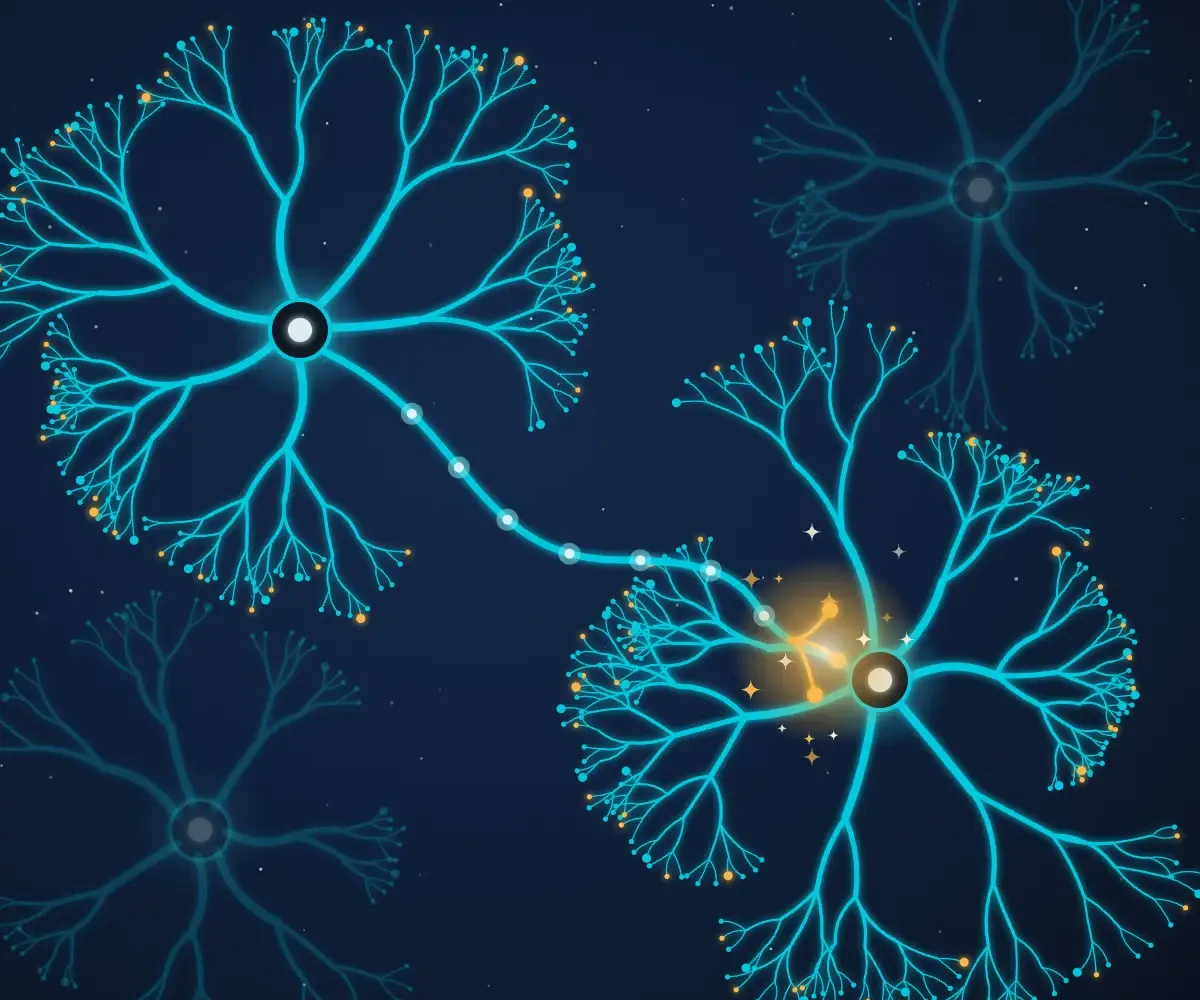
PTSD keeps the brain locked in a threat response long after the danger has passed. Ibogaine acts on several brain systems at once, including serotonin, opioid and NMDA (glutamate) receptors, which are tied to fear, mood and memory. In animal studies it also raised levels of GDNF, a protein that helps brain cells survive and adapt. Much of this comes from laboratory research, so think of it as the leading explanation rather than settled fact. For the full science, see how ibogaine works.
During the session, many people revisit painful memories from a detached, observational point of view rather than reliving them. In the weeks that follow, the brain may be more open to change, though researchers are still studying this. That’s why the integration work we do during that window matters as much as the session itself.
- Acts on several brain systems tied to fear, mood and memory
- Many people revisit trauma from a calmer distance
- Opens a window for change that integration therapy is built around
Is Ibogaine Safe for PTSD?
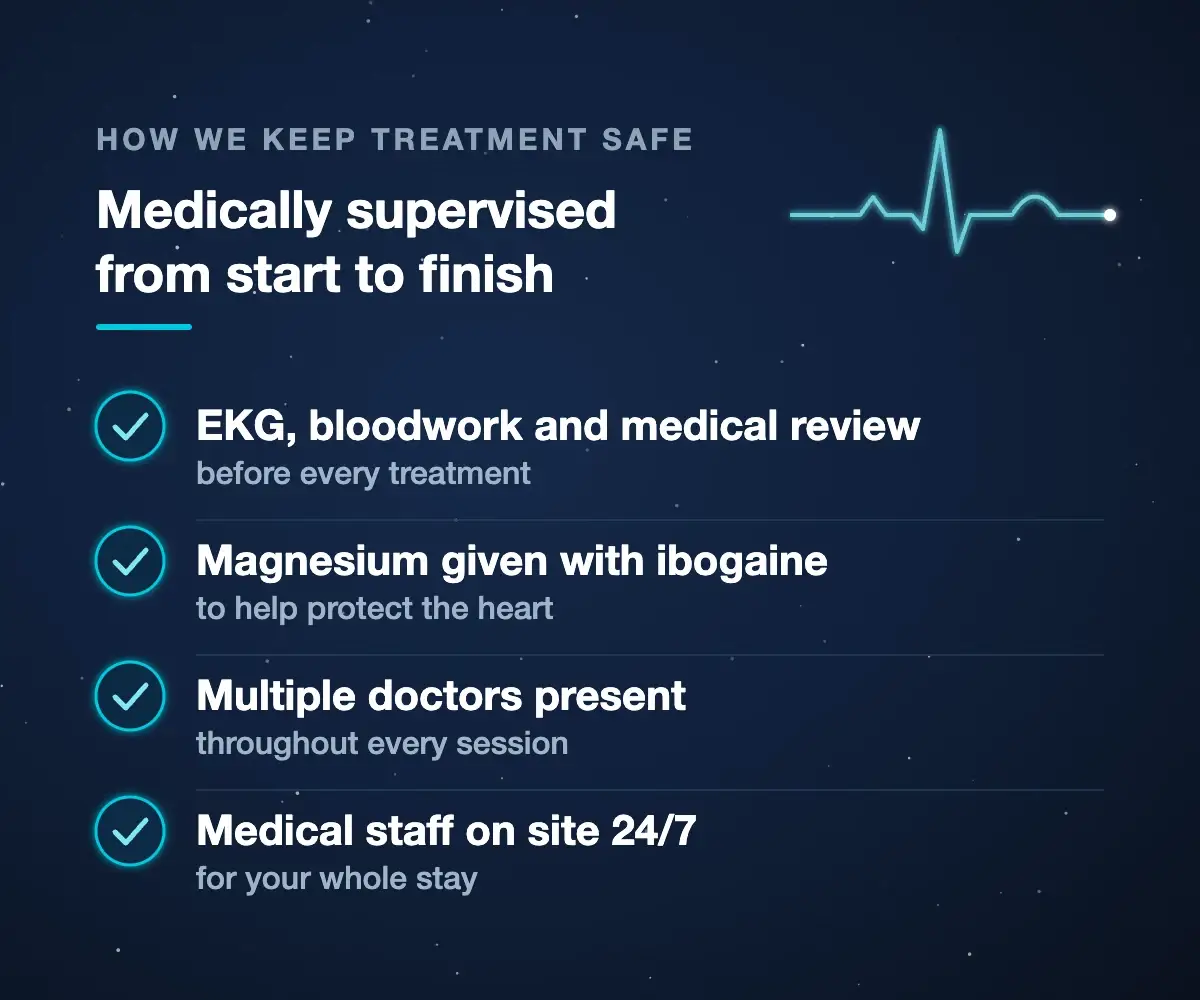
Ibogaine affects heart rhythm, which is why it should only be taken with proper screening and monitoring. Every guest has an EKG, bloodwork and a full medical review before treatment. We give magnesium alongside ibogaine to help protect the heart, the same approach used in the 2024 Stanford study. Multiple doctors are present throughout every session, with continuous cardiac monitoring, and our medical team is on site 24 hours a day for your whole stay. If screening shows someone isn’t a safe candidate, we tell them so and don’t proceed.
Ibogaine PTSD Research: What the Studies Show
Ibogaine has been used for decades to treat opioid dependence. Its use for PTSD is newer, and the research is still early, but it’s moving fast.
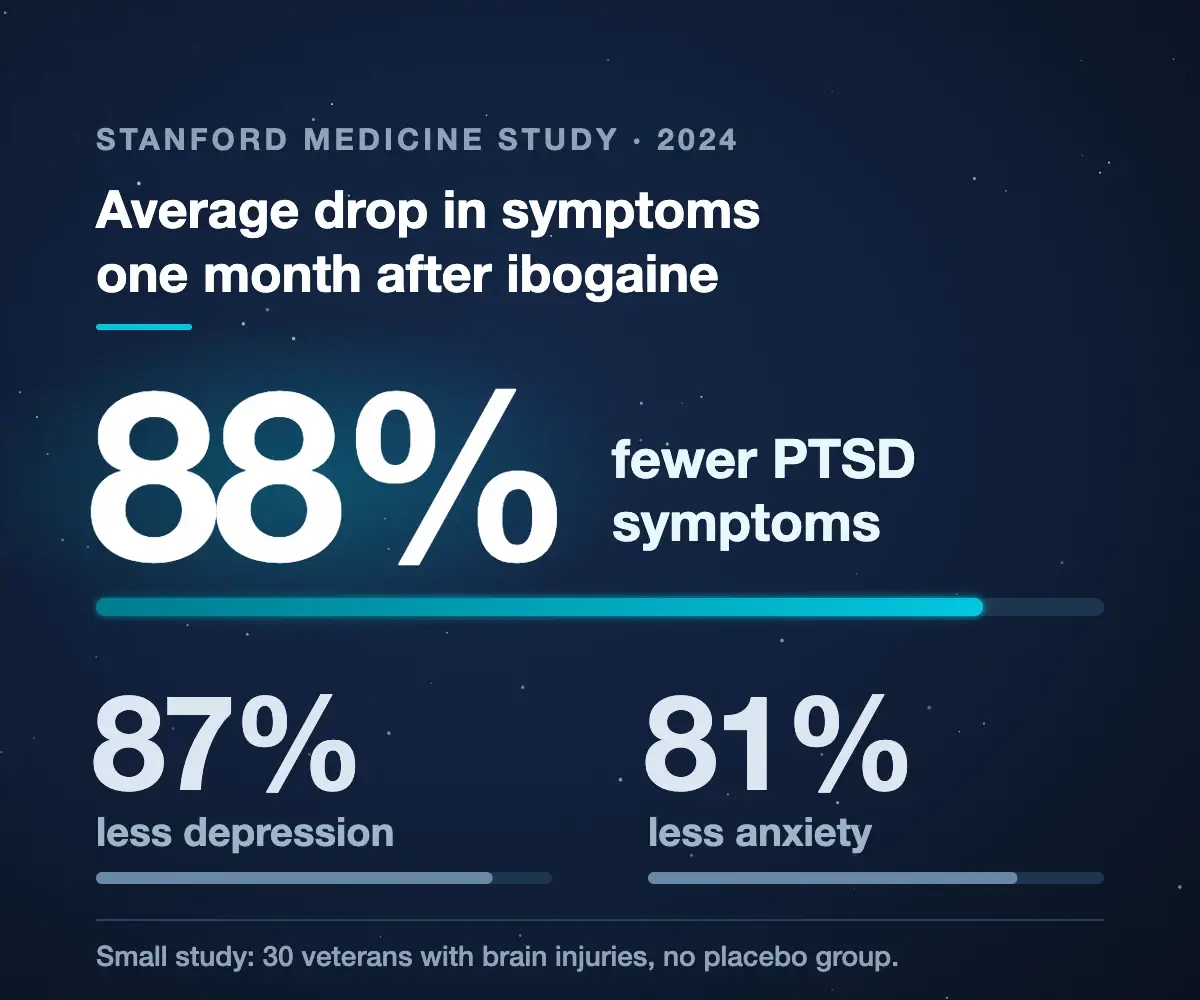
In 2024, Stanford Medicine researchers published a study in Nature Medicine of 30 U.S. Special Operations veterans with traumatic brain injuries who were treated with ibogaine and magnesium at a clinic in Mexico. One month later, their PTSD symptoms had dropped by an average of 88%, depression by 87% and anxiety by 81%, along with improved cognitive function and no serious side effects. It was a small study with no placebo group, so larger trials are still needed. In 2025, Texas set aside $50 million to fund ibogaine clinical trials.
- 88% average reduction in PTSD symptoms
- 87% average reduction in depression
- 81% average reduction in anxiety
Our Ibogaine PTSD Treatment Program
Our shortest program is 7 days, but we recommend a longer stay for most PTSD guests, especially if you’re tapering medications, coming off alcohol or another substance, or want more time for integration. Here at Iboga Treatment Center, every PTSD stay follows the same three phases, whatever its length.
Screening & Preparation
Our medical team goes over your health history and medications before you travel. Certain ones, SSRIs among them, have to be tapered beforehand with medical supervision, and our doctor decides on benzodiazepines individually. On site, you complete an EKG, bloodwork and a full evaluation, then spend the days before the session resting, stabilizing and meeting the team.
The Ibogaine Session
The session takes place under continuous cardiac and vital-sign monitoring, with multiple doctors present throughout and magnesium given to help protect the heart. It typically lasts 12 to 24 hours, followed by one to two days of rest. Nothing is required of you other than to let it unfold.
Post-Treatment Integration
The rest of your stay is focused on integration: processing the experience with our licensed counselors, restoring sleep and nutrition, and building the routines and plan you’ll carry home. Support continues after you leave through our aftercare program.
Ibogaine for Other Mental Health Conditions
Constant worry, a racing mind and trouble sleeping often come with trauma. See how ibogaine is used to treat anxiety and what treatment involves.
Low mood, exhaustion and losing interest in things you used to enjoy often travel with PTSD. Learn how ibogaine is used to treat depression.
An overview of the mental health conditions we treat with ibogaine, from medical screening to integration therapy and aftercare.
Ibogaine for PTSD: Frequently Asked Questions
Is ibogaine treatment safe for PTSD?
Ibogaine affects heart rhythm, so it should only be taken with proper screening and monitoring. Every guest has an EKG, bloodwork and a full medical review before treatment. We give magnesium with ibogaine to help protect the heart, as the 2024 Stanford study did. Multiple doctors are present throughout the session, and our medical staff are on site 24/7. If screening shows someone isn’t a safe candidate, we don’t proceed.
How does ibogaine compare to EMDR, SSRIs or ketamine for PTSD?
Most of our guests have already tried some or all of those. EMDR and talk therapy work on the memory; SSRIs manage symptoms while you take them; ketamine offers short-term relief that usually needs repeating. Ibogaine is a single, extended session that may interrupt the underlying threat response, followed by a window when change may come more easily. It isn’t a replacement for those treatments, and integration therapy afterward is still essential. It’s what many people try when the others haven’t been enough.
Do I have to stop my PTSD medications before treatment?
Some, yes. SSRIs, SNRIs and several other psychiatric medications interact with ibogaine and must be tapered under medical supervision before treatment. For benzodiazepines, our doctor looks at each guest’s situation and handles any changes medically. We review everything you take, including sleep and nightmare medications such as prazosin, during screening and coordinate any changes with you and your prescriber. Don’t stop any medication on your own.
I’m a veteran with a TBI. Is ibogaine safe for me?
The 2024 Stanford study was done specifically in Special Operations veterans with traumatic brain injuries and found no serious side effects, along with improvements in cognitive function. Having a TBI doesn’t automatically rule you out. What matters most is the cardiac and medical screening, which every guest completes.
Where is the clinic, and how do I get there?
Our clinic is in the Baja California city of Ensenada, two hours or so south of San Diego. Once you land at San Diego International Airport, our team drives you to the clinic and helps you through the border crossing. Admissions will help you plan the details, including what to pack. The US treats ibogaine as a Schedule I drug, so legal treatment isn’t possible there, which is why veterans and others travel to Mexico for it.
How long does the PTSD program take?
Our shortest program is 7 days, but we recommend a longer stay for most PTSD guests, especially if you’re tapering medications, coming off alcohol or another substance, or want more time for integration before going home. We’ll recommend a length based on your history during screening. Whatever the length, the days before the session are for preparation and the days after are for rest and integration, which is where much of the lasting benefit comes from.
What if I also drink or use to manage my symptoms?
We can treat both in the same stay. Alcohol and opioids are common ways people with PTSD get through the night, and ibogaine’s longest track record is with opioid dependence. Benzodiazepines are handled differently: our doctor reviews them case by case, and any changes are made under a doctor’s care. Tell us everything during screening, because it changes how we plan your preparation and detox.
Will one ibogaine treatment be enough for PTSD?
Many people experience major relief after a single session, and in the Stanford study the improvements were still present at one month. Some people return for a second session months or years later. Results vary, and what you do in the weeks after treatment, particularly integration and aftercare, has a large effect on how long the change lasts.
What does integration look like after ibogaine for PTSD?
The weeks after treatment are when change may come most easily, so integration starts before you leave: processing the experience with our licensed counselors, restoring sleep and routine, and planning for home. Support continues through our aftercare program, and we strongly recommend continuing with a trauma-informed therapist afterward.
Does the VA or insurance cover ibogaine treatment?
No. Because ibogaine isn’t FDA-approved, it isn’t covered by the VA, TRICARE or private insurance, and treatment is self-pay. See ibogaine treatment cost for current pricing, or ask our admissions team.
Can ibogaine help with PTSD and depression at the same time?
It may. PTSD, depression and anxiety often occur together, and in the 2024 Stanford study, veterans’ depression symptoms dropped by an average of 87% alongside their PTSD symptoms. Results vary, and the study was small. See ibogaine for depression and ibogaine for anxiety for more.
Talk to Us About PTSD Treatment
The first step is a confidential conversation with our admissions team. We’ll answer your questions, go over your history and tell you honestly whether ibogaine is a good fit. Prefer to talk now? Call (877) 876-4157.
- Confidential
- No obligation
- Medical screening before any commitment