SUBOXONE DEPENDENCE TREATMENT
Ibogaine Treatment for Suboxone
Coming off Suboxone is one of the longest, hardest transitions in addiction medicine. Our team at Iboga Treatment Center handles the switch off Suboxone and the stabilization that follows, and gives ibogaine only once your body is ready.
UNDERSTANDING SUBOXONE DEPENDENCE
Why Suboxone Is So Hard to Stop
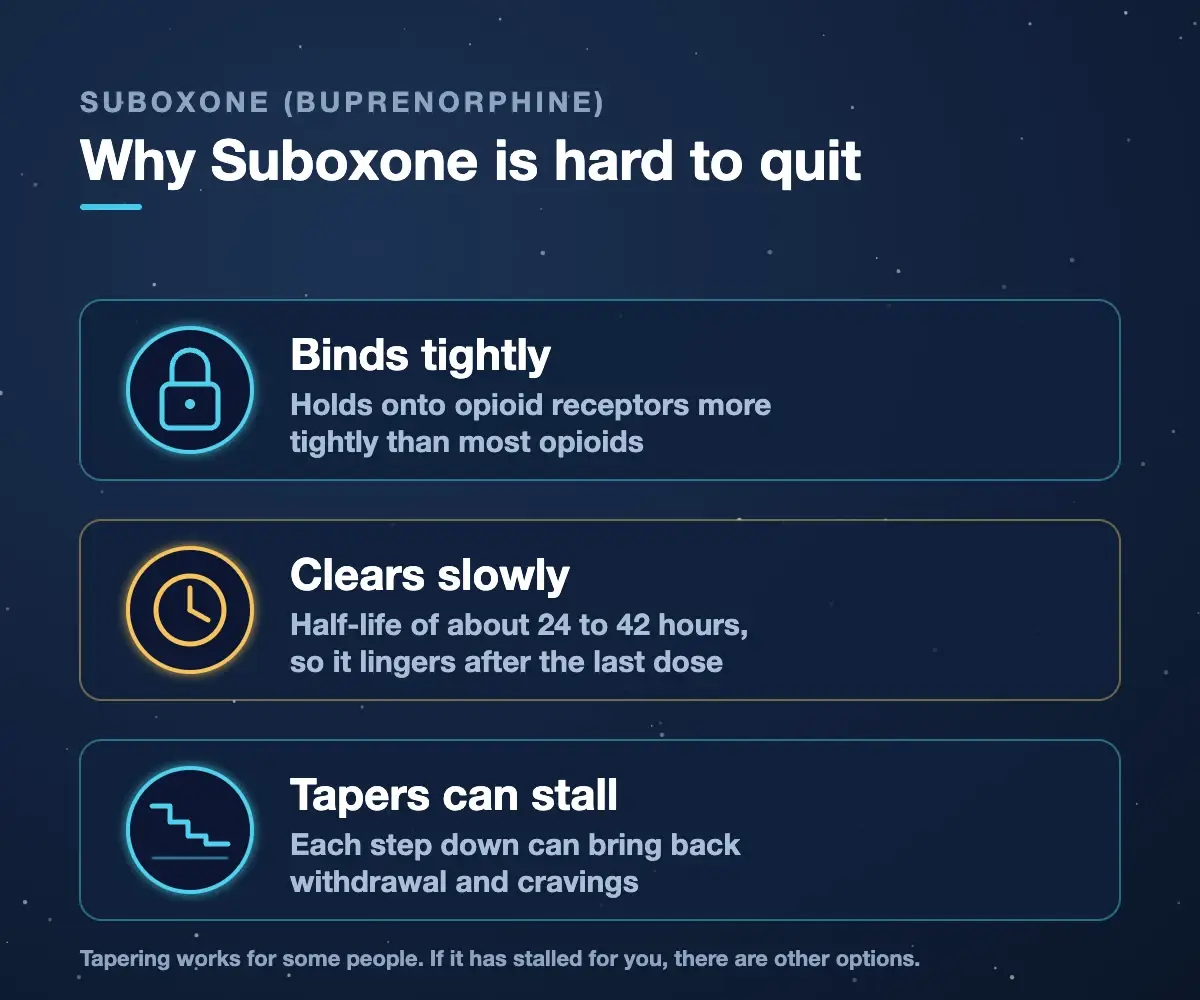
Suboxone is one of the most widely prescribed medications for opioid addiction, and for many people it is a lifeline. Buprenorphine, its active ingredient, binds to opioid receptors with extraordinary strength, blocking other opioids and suppressing withdrawal. That is exactly what makes it effective as a maintenance medication. It is also exactly what makes coming off it so difficult.
With a half-life of roughly 24 to 42 hours, buprenorphine stays in your system well after your final dose. Many people find that Suboxone withdrawal is more drawn out and more psychologically draining than the drug they originally used. Tapering helps, but even a careful taper can stall for months, and after years on Suboxone the body has adapted so completely that functioning without it can feel impossible.
None of this is a failure of willpower. It is the predictable result of how buprenorphine works in the brain, and it calls for a medical approach that works at the same level. That is why so many people on long-term Suboxone end up asking the same question: does ibogaine work for Suboxone?
THE SCIENCE
Does Ibogaine Work for Suboxone?
It can. Ibogaine reaches the opioid receptors buprenorphine sits on, plus the dopamine and serotonin networks behind craving and mood. Guests who have been stuck on Suboxone for years often report that withdrawal symptoms fall away during the session and that the pull toward the medication feels far weaker afterward. Studies specific to buprenorphine are still few, and results vary by person, yet Suboxone dependence is among the most common reasons guests come to us.
The catch is that Suboxone can’t be rushed into ibogaine. Buprenorphine binds to receptors so tightly and clears so slowly that giving ibogaine too soon is both less effective and less safe. So our program starts by moving you off Suboxone under medical care, usually onto a shorter-acting opioid, and keeps going until the doctors confirm you’re ready.
Once in the body, ibogaine becomes noribogaine, a metabolite active for days afterward that’s believed to help with the steadier mood and quieter cravings guests describe. See how ibogaine works for the science.

WHY TIME MATTERS
We Don’t Rush the Process. We Get It Right.
Suboxone cases need more time, more preparation and more medical support than almost any other opioid dependence. Many clinics aren’t set up for that. As an ibogaine clinic in Mexico built for longer stays, we designed our Suboxone program around it, with a longer stabilization period and more on-site aftercare after detox.
Suboxone Withdrawal Timeline, With and Without Ibogaine
Suboxone withdrawal on its own is long and unpredictable. Compare the usual Suboxone withdrawal timeline with the way our program handles it.
Without Ibogaine
On your own
Days 1–3
Withdrawal begins as buprenorphine starts to clear. Anxiety, restlessness, sweating, muscle aches, poor sleep and intense cravings.
Days 3–14
The hardest stretch. Flu-like symptoms, depression, irritability, stomach upset and little sleep. Many people relapse during this window.
Weeks 3–8
Lingering withdrawal. Low mood, fatigue, mood swings and cravings. Many people describe feeling unable to function.
Months 2–6+
Post-acute withdrawal (PAWS). Brain fog, trouble feeling pleasure, anxiety and unpredictable cravings can continue for months.
Coming Off Suboxone With Us
Our approach
Arrival
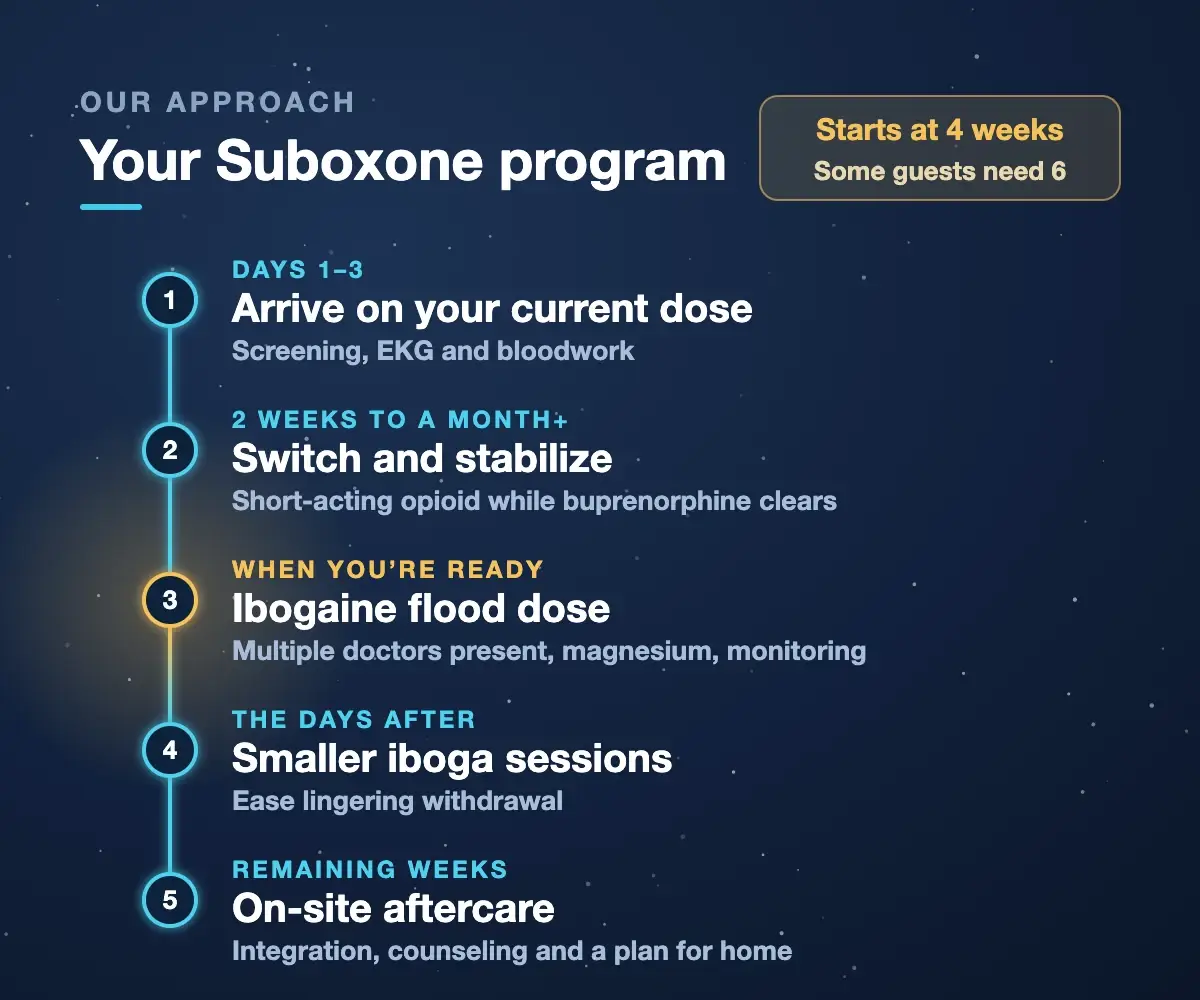
Medical screening with an EKG and bloodwork. You arrive on your current dose, and your doctor begins moving you from Suboxone to a shorter-acting opioid.
Stabilization
As long as your body needs. For some guests it’s about two weeks; for others a month or more, depending on dose and years on Suboxone. Daily medical checks confirm when you’re ready.
Treatment day
The flood dose itself, with several doctors on hand, magnesium and heart monitoring that runs for the whole 24 to 36 hours. Many guests report withdrawal fading during the session.
The days after
Smaller iboga sessions ease lingering withdrawal while noribogaine supports steadier mood and fewer cravings.
Remaining weeks
After detox, aftercare happens here: integration therapy, a counselor every day and live-in support while new habits settle in.
When you leave
An individual plan for home, with the option of supervised housing in extended aftercare.
Your own timeline may run shorter or longer than this. Our doctors adjust the schedule to you.
HOW TO GET OFF SUBOXONE
How to Get Off Suboxone Safely
Most people try to get off Suboxone by tapering with their prescriber, lowering the dose slowly over weeks or months. For some people that works. For others the taper stalls at a low dose, because each step down brings back withdrawal and cravings.
Our approach is different. You arrive on your current dose, and our doctors move you onto a shorter-acting opioid, then stabilize you until buprenorphine has cleared. Then comes ibogaine with several doctors present, and smaller iboga sessions plus on-site aftercare round out treatment.
Whatever route you choose, don’t stop Suboxone suddenly on your own. Talk with your prescriber or our admissions team first.
How Long Is a Suboxone Program?
4 weeks
Where Suboxone programs start
6 weeks
For guests who need more time
+ Aftercare
Supervised housing is available for a longer stay
Everyone is different. Suboxone needs a longer stabilization period and more on-site aftercare after detox to fully finish treatment, so your medical team sets your schedule. Compare our ibogaine treatment programs.
The Iboga Treatment Center Suboxone Protocol
Stabilization
From the moment you arrive, our medical team begins moving you onto a shorter-acting opioid, with supportive care, nutrition and rest while buprenorphine clears. Many guests also take part in temazcal (traditional sweat lodge) ceremonies as they prepare.
The Ibogaine Session
Once your medical team confirms buprenorphine has cleared, your flood dose is given in a private clinical room with continuous cardiac monitoring. More than one physician is present, magnesium is given together with ibogaine, and staff remain with you around the clock for those 24 to 36 hours. Three medical doctors on our staff are responsible for your care.
Post-Flood Iboga Work
Buprenorphine leaves a long tail. After the flood dose, smaller iboga sessions ease lingering withdrawal and calm the nervous system while your brain keeps stabilizing. Many clinics skip this phase. Here it’s built into every Suboxone program.
On-Site Aftercare and Integration
Coming off Suboxone is also an identity shift. Our licensed counselors meet with you daily, and Suboxone guests get more on-site aftercare after detox to fully finish treatment. You leave with an aftercare plan we design together.
GUEST STORY
Kristen’s Story
“I was on Suboxone for six years. My doctor put me on it to get off painkillers after a surgery, and it worked — but then I was stuck. Every time I tried to taper, even slowly, the withdrawals would hit and I’d go right back up on my dose. I started to believe I’d be on it forever. My doctor basically said as much.
I stayed 60 days at Iboga Treatment Center. The first few weeks were just getting the Suboxone out of my system — the stabilization process. It wasn’t easy, but the medical team kept me comfortable and I never felt like I was doing it alone. When I was finally ready for the ibogaine, it was like nothing I can describe. Years of stuff I’d been carrying just came up and out.
But honestly, the weeks after the flood dose were what changed everything for me. The smaller iboga sessions, the counseling, the time to just exist without a substance in my body for the first time in years — I needed every single day of those 60 days. If I had left after two weeks like most clinics would have sent me home, I don’t think I’d be where I am now.
I’m fourteen months off everything. No Suboxone, no opioids, nothing. I sleep through the night. I feel things again. I didn’t know that was still possible.”
Individual results vary. Hear from more guests on our testimonials page.
Suboxone and Ibogaine: Your Questions Answered
Is ibogaine safe for people on Suboxone?
Ibogaine carries real medical risks, and with Suboxone the biggest one is timing. Buprenorphine must be out of your system before the session, and an EKG, bloodwork and your full medical history are reviewed before we approve treatment. During the session, a team of doctors is with you, magnesium accompanies the ibogaine, and monitoring is continuous. If ibogaine isn’t a safe choice for you, we’ll tell you.
Do I need to stop taking Suboxone before I arrive?
No. Don’t try to stop on your own. You arrive on your current dose, and our medical team manages the transition here under supervision. Stopping abruptly at home is uncomfortable and unnecessary.
Why can’t ibogaine be given while Suboxone is still in my system?
Buprenorphine binds to opioid receptors more tightly than almost any other opioid and clears very slowly. If ibogaine is given while it is still present, the session is both less effective and less safe. For that reason we first switch you to a shorter-acting opioid and hold off until our doctors are sure you’re ready.
How long does the stabilization process take?
It varies more with Suboxone than with almost any other substance. Some guests are ready in about two weeks; others need a month or longer, depending on their dose and how many years they’ve been on it. Your medical team sets the schedule based on your labs and how you’re doing, never on a fixed calendar.
How long should I plan to stay?
Suboxone programs start at four weeks, and some guests need six. Everyone is different. Suboxone needs a longer stabilization period and more on-site aftercare after detox to fully finish treatment, and your medical team sets your schedule. If you need more time after that, our extended aftercare program can help.
How long does Suboxone withdrawal last?
Without treatment, Suboxone withdrawal usually starts one to three days after the last dose and is hardest over the first couple of weeks. Lingering symptoms such as low mood, poor sleep and cravings can last for weeks or months. Our doctors keep withdrawal in check while you stabilize, and many guests find the symptoms fall away during the ibogaine session.
What if I’ve been on Suboxone for many years?
Long-term Suboxone use is one of the most common situations we treat. It usually means a longer stabilization period, so plan on the longer end of our program lengths. Your medical team will build your timeline around your dose and history.
Will I have cravings after treatment?
Many guests report that cravings are much weaker after the flood dose, and noribogaine, which stays in your system for days afterward, may help with mood and cravings during that window. Some guests notice occasional cravings weeks later, which is why integration therapy and an aftercare plan are built into every program. Individual results vary.
How much does Suboxone treatment cost?
Suboxone stays tend to be longer because of the stabilization period, and your cost depends on how long you stay and your medical needs. After you’re screened, admissions will go through the numbers with you. The ibogaine treatment cost page has general pricing details.
How does travel to the clinic work?
We’re located in Ensenada, Baja California, a drive of around two hours from San Diego. Fly to San Diego; our staff will greet you at the airport and bring you to the clinic, border crossing included. You’ll get help from admissions with trip planning and a list of what to bring. As a Schedule I substance, ibogaine is off-limits for treatment in the US, which is why our clinic is in Mexico.
Still have questions? Call admissions at (877) 876-4157.
Ibogaine Treatment for Other Opioids
Fentanyl needs its own careful stabilization before ibogaine. See how our fentanyl program works.
A medically supervised way off methadone maintenance, planned around your history.
Heroin, oxycodone and other painkillers. Our approach to opioid dependence.
Our ibogaine addiction treatment page shows the full range of what we treat.
Ready to Get Off Suboxone for Good?
Questions about leaving Suboxone? Call for a free and confidential consultation. Expect a real conversation, not a sales pitch.