Ibogaine vs Psilocybin (Magic Mushrooms): What’s the Difference?
Ibogaine vs psilocybin, explained plainly: how long each one lasts, what the research shows, which fits opioid addiction or depression, and why their safety and legal status differ so much.
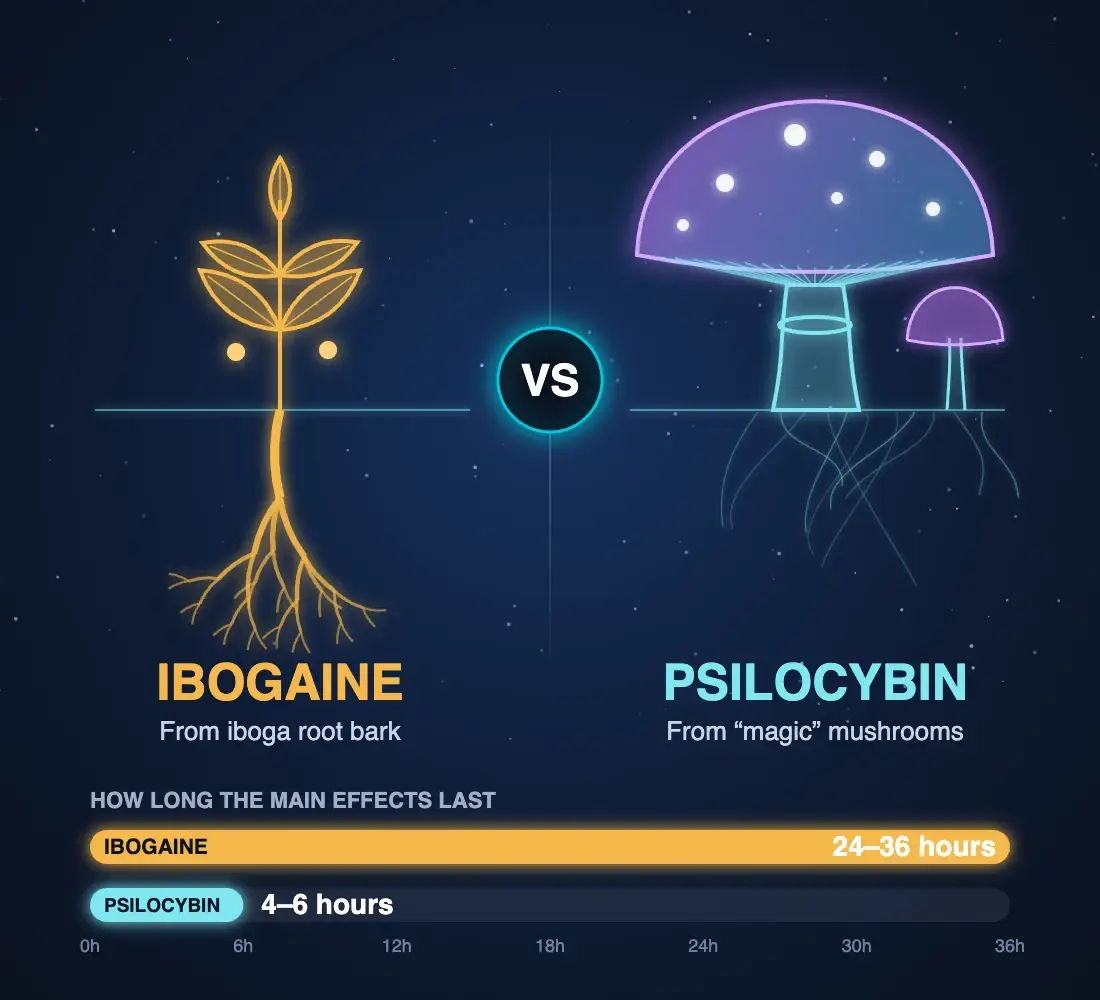
Ibogaine vs Psilocybin: The Short Answer
Both get filed under psychedelic medicine, and both come from plants or fungi people have used for centuries. That’s roughly where the overlap ends. Psilocybin, the compound in magic mushrooms, produces a trip of about four to six hours and is being studied mainly for depression. Ibogaine produces a far longer, more physically demanding experience, and its best-known use is interrupting opioid withdrawal and cravings.
If you are dependent on fentanyl, heroin or prescription opioids, that difference matters more than anything else on this page: mushrooms won’t take your withdrawal away. For depression with no physical dependence, psilocybin has the larger body of research behind it right now.
This guide comes from Iboga Treatment Center, an ibogaine clinic in Ensenada, Mexico. We’ve tried to be fair to both medicines and clear about where each one fits, including the situations where ibogaine is the wrong choice.
Ibogaine vs Magic Mushrooms, Side by Side
| Ibogaine | Psilocybin | |
|---|---|---|
| Where it comes from | Root bark of Tabernanthe iboga, a shrub from West-Central Africa | Psilocybe mushrooms, often called magic mushrooms |
| How long the main effects last | Usually 24–36 hours, with tiredness and lighter effects for days after | Usually 4–6 hours |
| Main brain targets | Opioid, NMDA, serotonin and nicotinic receptors; the body converts it to noribogaine, which lingers | Mostly serotonin 5-HT2A receptors; the body converts it to psilocin |
| Opioid withdrawal | Often eases withdrawal and cravings sharply | No meaningful effect on physical withdrawal |
| Heart risk | Serious: it can lengthen the QT interval, so EKG screening and monitoring are required | Low: heart rate and blood pressure rise for a few hours |
| Strongest research | Opioid dependence (observational studies) and a 2024 Stanford study of veterans | Depression, including two positive Phase 3 trials |
| US legal status | Schedule I, with no legal treatment anywhere in the US | Schedule I federally; state programs in Oregon and Colorado, and New Mexico’s due by the end of 2027 |
| Typical setting | Medical clinics outside the US, such as in Mexico | Clinical trials, licensed state programs or unregulated personal use |
Effect lengths vary from person to person and dose to dose.
How Ibogaine and Psilocybin Act on the Brain
Psilocybin is fairly simple pharmacologically. Once swallowed, it becomes psilocin, which activates serotonin 5-HT2A receptors. Researchers think this temporarily loosens rigid patterns of thought, which may be why it shows promise for depression, where people often feel stuck in the same mental loops.
Ibogaine is messier and harder to study. It touches several receptor systems at once, including the opioid and NMDA receptors that matter in addiction, and the liver turns it into noribogaine, which stays in the body for days. That long tail may help explain why many people describe a quieter stretch after treatment. Our guide to how ibogaine works goes deeper into the science, including what is still unknown.
What Each Experience Feels Like
A psilocybin session usually starts within an hour of taking it. Colors, music and emotions intensify, thoughts can feel more open, and many people describe meaningful insight. Anxiety or confusion can come up too. By evening it is largely over, and in supervised programs people often go home the same day.
Ibogaine is less like a trip and more like a long, waking dream. Many people spend it lying quietly, eyes shut, while memories and images play out for many hours. Nausea, unsteady walking and sensitivity to light and sound are common, and sleep can be hard for a night or two afterward. It is physically demanding, which is one reason it belongs in a medical setting. Our page on what ibogaine is walks through a full treatment.
Which One Is Better for Addiction?
It depends on what you are trying to quit.
- Opioids (fentanyl, heroin, pills, methadone, Suboxone): ibogaine is the one with a track record. Observational research, including a study of people treated at clinics in Mexico, found it often relieves opioid withdrawal within hours. Psilocybin does nothing for physical withdrawal, so someone who is still dependent can’t trip their way off opioids.
- Alcohol: psilocybin has the stronger evidence. A 2022 randomized trial in JAMA Psychiatry found adults with alcohol use disorder who received psilocybin with therapy had fewer heavy drinking days than those given a placebo drug. Evidence on ibogaine for drinking comes mostly from animal studies; see ibogaine treatment for alcohol addiction.
- Tobacco: a small Johns Hopkins pilot study reported high quit rates with psilocybin, though larger trials are still needed.
- Stimulants: neither has strong human trial data yet. We treat meth and cocaine addiction with ibogaine, and we’re upfront that the research is early.
Whichever medicine someone chooses, it is only part of recovery. The weeks that follow, with integration and support, decide much of what lasts.
Which One Is Better for Depression, Anxiety and PTSD?
For depression, psilocybin is further along. Compass Pathways’ psilocybin treatment, COMP360, produced positive results in two Phase 3 trials for treatment-resistant depression. As of August 2026 the company was submitting its FDA application and expected a possible 2027 launch, if the drug is approved and psilocybin is rescheduled (Compass Pathways).
Ibogaine’s mental health research is smaller but striking. In a 2024 Stanford study, 30 Special Operations veterans with brain injuries received ibogaine with magnesium in Mexico, and a month later their PTSD, depression and anxiety scores had fallen sharply. The study had no placebo group, so bigger trials need to confirm it. Read more about ibogaine for PTSD, depression and anxiety, or start with our mental health overview.
Safety: The Biggest Difference Between Them
Psilocybin’s physical risks are low for most healthy adults. Its main dangers are psychological: panic, confusion or risky behavior during a trip, and serious harm for anyone with a personal or family history of psychosis or bipolar disorder. It can also interact with some psychiatric medications.
Ibogaine’s main risk is to the heart. It can lengthen the QT interval, the time the heart needs to recharge between beats, and that can set off a dangerous rhythm. It should never be taken casually or at home.
At our clinic, nobody receives ibogaine without an EKG, bloodwork and a full review of their medications first. Three medical doctors are on staff, more than one is present for every treatment, magnesium is given alongside ibogaine, and our medical team stays on site day and night. For a fuller look at who shouldn’t take it, read Is Ibogaine Safe? The Honest Answer.
Is Ibogaine or Psilocybin Legal in the US?
Under federal law, both are Schedule I drugs. States are moving faster on psilocybin: Oregon and Colorado let adults use it at licensed centers, and New Mexico’s Medical Psilocybin Act, signed in April 2025, must start by the end of 2027 for conditions including PTSD and substance use disorders.
Ibogaine has no comparable state program. Texas set aside $50 million in 2025 to fund clinical trials, but those are research studies, not treatment you can book. That’s why people who want ibogaine now usually travel, and why it pays to compare the best ibogaine treatment centers in Mexico on medical screening and staffing, not just price. Our treatment cost page explains what goes into the price.
How to Decide Which One Fits You
- Physically dependent on opioids? Look at medically supervised ibogaine treatment, or talk with a doctor about other opioid treatments.
- Depression without a substance problem? Psilocybin programs or clinical trials may be the better-studied option.
- Heart condition, long QT or certain medications? Ibogaine may not be safe for you, and our screening will tell you either way.
- History of psychosis or bipolar disorder? Talk to a psychiatrist before considering either one.
Considering ibogaine? Tell our admissions team about any recent use of mushrooms or other psychedelics, along with all your medications, so our doctors can plan your stay safely. You can also compare our program lengths first.
Weighing other treatments too? Read our comparisons of ibogaine with ketamine and with ayahuasca.
Ibogaine vs Psilocybin: Common Questions
Quick answers to what people ask most when comparing these two medicines.
Is ibogaine stronger than psilocybin?
“Stronger” isn’t quite the right word. Ibogaine lasts many times longer and is far harder on the body, and its effect on opioid withdrawal has no equivalent with mushrooms. Psilocybin’s visual and emotional effects can feel just as intense, but they pass within hours.
Can magic mushrooms help with opioid withdrawal?
No. Psilocybin doesn’t act on opioid withdrawal, and taking mushrooms while dependent on fentanyl or heroin won’t spare you the symptoms. Ibogaine is different because it can often ease withdrawal within hours, when given under medical supervision.
Is psilocybin safer than ibogaine?
Physically, yes, for most healthy adults. Ibogaine carries a real cardiac risk that requires screening and monitoring. Psilocybin’s risks are mainly psychological, and neither is safe for people with a history of psychosis.
How long does an ibogaine trip last compared with mushrooms?
Psilocybin’s effects usually fade within four to six hours. Ibogaine’s main effects often last 24 to 36 hours, and many people feel tired or sensitive for several days afterward.
Which is better for depression?
Psilocybin currently has more research, including two Phase 3 trials. Ibogaine showed large drops in depression scores in a small 2024 Stanford study of veterans, but it hasn’t been tested in large controlled trials yet.
Is either one legal in the United States?
Both are Schedule I under federal law. Oregon and Colorado run regulated psilocybin programs, and New Mexico’s program is due by the end of 2027. There is no legal ibogaine treatment in the US, so Americans usually go to clinics in Mexico.
Can I do ibogaine if I’ve used mushrooms recently?
Tell our admissions team exactly what you’ve used and when. Our doctors review recent substances and medications before treatment and will tell you how to prepare; see how we prepare you for treatment.
Can I take ibogaine at home like mushrooms?
No. Because of its effects on the heart, ibogaine should only be taken with medical screening, cardiac monitoring and doctors nearby. Ibogaine taken without that kind of care has led to deaths.
Wondering Whether Ibogaine Fits Your Situation?
Our admissions team can talk through your history, your medications and whether you’re likely to qualify, before you commit to anything.
Rather call? Reach admissions at (877) 876-4157. The call is free and confidential.