METH ADDICTION TREATMENT
Ibogaine Treatment for Meth Addiction
Meth rewires your brain’s reward system. Our medically supervised ibogaine programs give your brain weeks to recover from meth, not just days, so you have a real shot at staying off it.
UNDERSTANDING METH ADDICTION
Why Meth Is So Hard to Quit
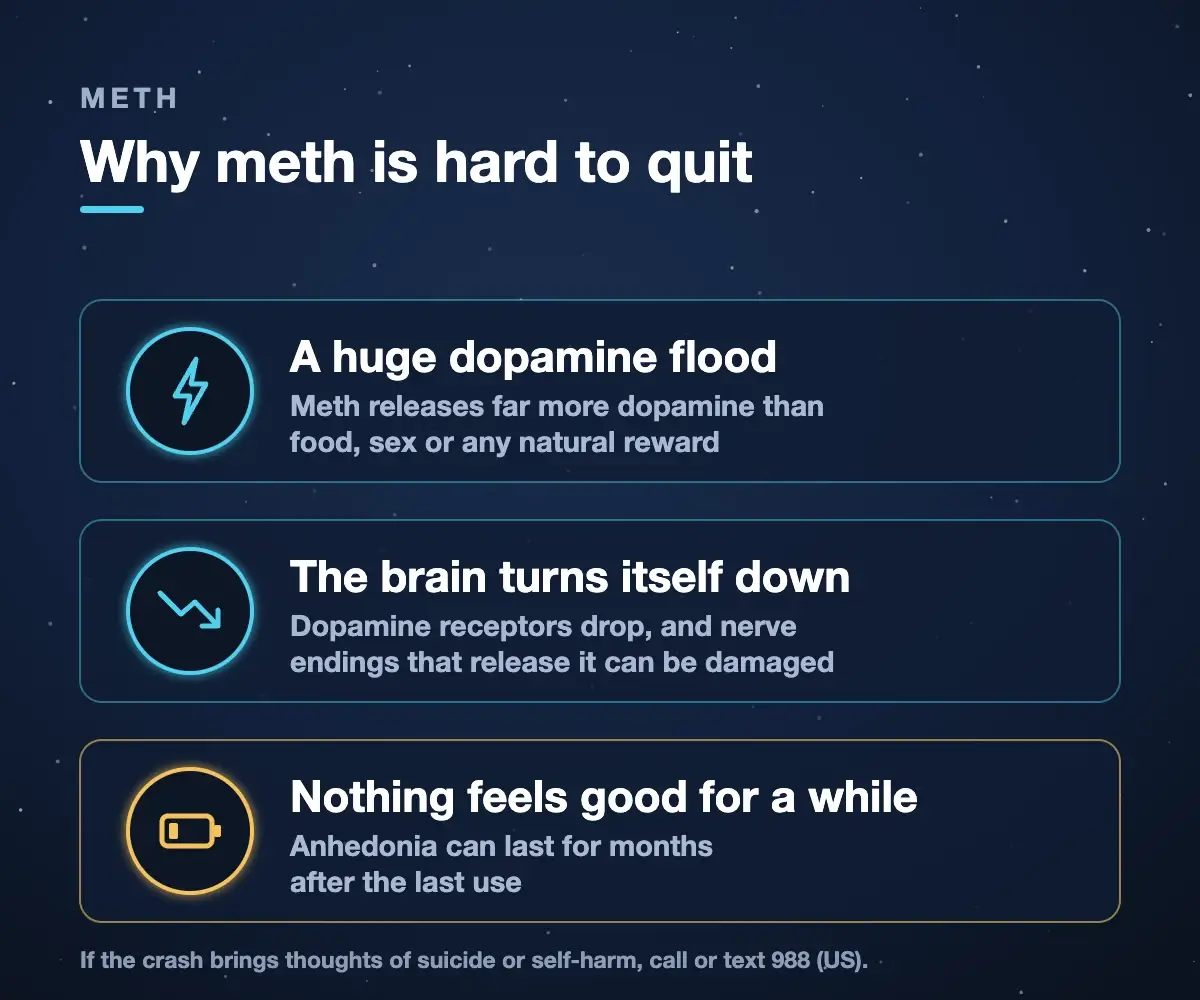
Methamphetamine (crystal meth, or ice) floods the brain with dopamine far beyond anything a natural reward can produce. A single use can release many times more dopamine than eating, sex or any other natural reward. The high is intense and long-lasting, and it teaches the brain something it never forgets: nothing else feels like this.
With repeated use, the brain adapts in self-defense. Dopamine receptors are downregulated, and the nerve endings that release dopamine can be damaged. Natural production drops, and the reward system that’s supposed to respond to food, connection, sleep and accomplishment becomes blunted. That’s what makes meth so brutal: the comedown isn’t just exhaustion or low mood, it’s a near-complete inability to feel pleasure. The clinical term is anhedonia, and for many people it lasts for months after the last use.
This is also why meth is so hard to treat. Counseling and group work can help with the habits and emotions around meth, yet the brain’s dopamine system may need many months to rebuild, and there’s no meth version of the medications used for opiate addiction. People relapse not from a lack of willpower but because a worn-down brain needs time to heal.
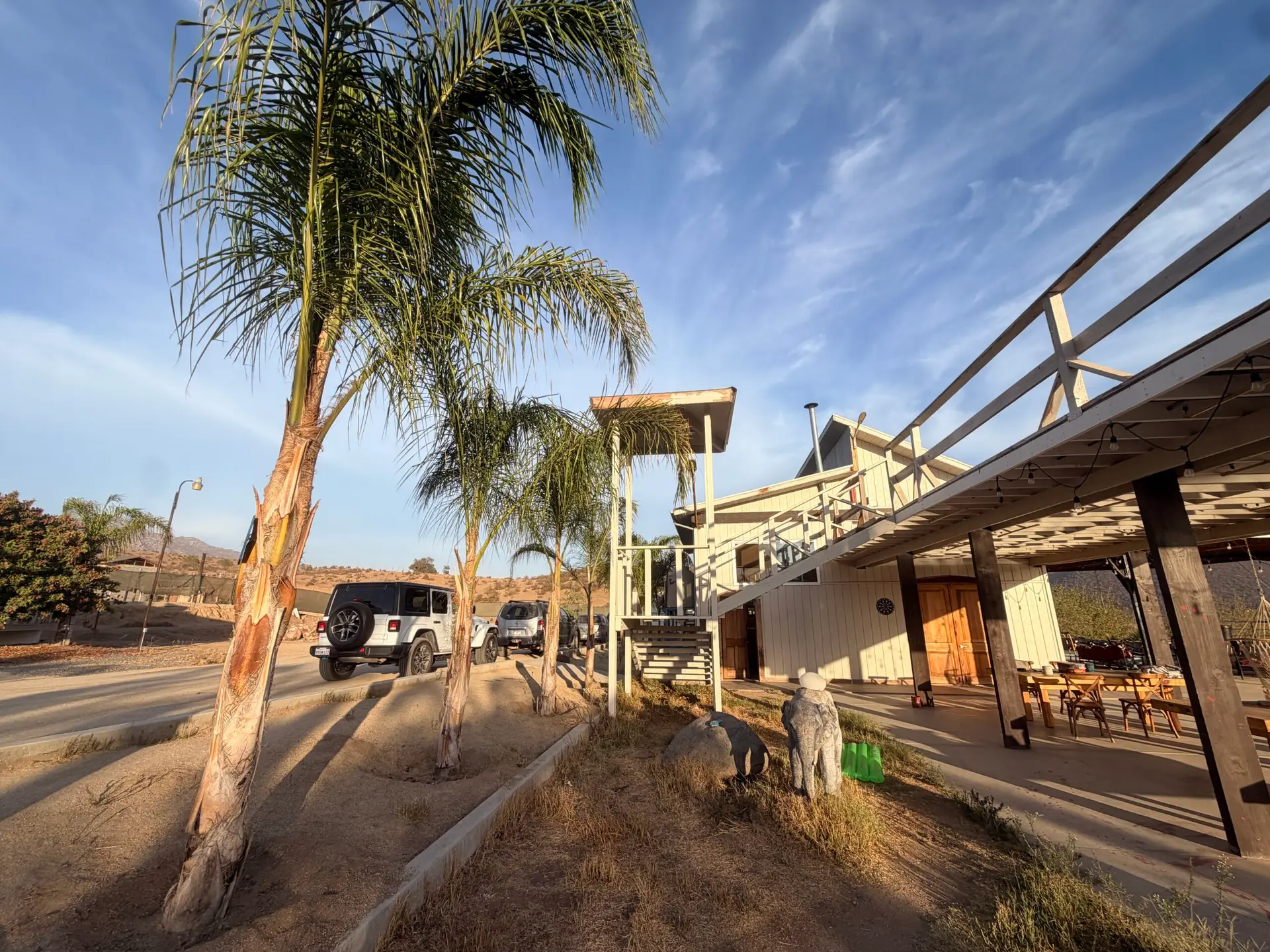
At Iboga Treatment Center, the ibogaine clinic we run on vineyard grounds in Ensenada, Mexico, meth programs are planned around giving your brain that time.
THE NEUROSCIENCE
How Ibogaine Can Help With Meth Addiction
Ibogaine works on many brain targets at the same time: the dopamine and serotonin transporters that meth damages, plus NMDA and opioid receptors. Your liver turns it into noribogaine, a longer-lasting compound that stays active for days after the session. In animal research, ibogaine and similar compounds cut how much methamphetamine and cocaine the animals chose to take. New to all this? Our page on what ibogaine is and how it works is a good place to begin.
With meth, the flood dose tends to reach two things together: the tug of a depleted reward system and the thinking patterns behind compulsive use. Over the following weeks, guests often report calmer moods, weaker cravings and clearer thinking, at a time when the brain may be unusually ready to learn new habits. For meth, this window matters, because it’s when anhedonia can begin to lift and ordinary pleasures start to register again.
Research in people is at an early stage, and we’d rather be upfront about that. One 2014 Brazilian study tracked 75 people who received ibogaine, most of them cocaine or crack users, and 61% said they were abstinent at follow-up. That study lacked a control group and relied on what participants reported, and no controlled trial has tested ibogaine for meth so far. Ibogaine is not a one-and-done cure: after meth, the dopamine system needs weeks to months to recover, and the iboga sessions, counseling, nutrition and structure that follow the flood dose are what allow recovery to take hold.
WHY TIME MATTERS
Meth Recovery Takes Time. We Built Our Program Around It.
The body clears meth fairly quickly. The real work is restoring a dopamine system that’s been worn down and rebuilding the capacity to feel pleasure from ordinary life, and that takes time. As an ibogaine treatment center built for longer stays, we give your brain the weeks it needs, not just a single session.
Meth Withdrawal Timeline, With and Without Ibogaine
Coming off meth is rarely dangerous to the body in the way alcohol withdrawal can be; the real risk is the crash and the long stretch of low mood afterward, when many people go back to using. This is the usual pattern, side by side with how we handle it.
Without Ibogaine
On your own
Days 1–3
The crash. Extreme fatigue, deep depression, increased appetite and long, heavy sleep. The body and brain are exhausted from prolonged stimulation.
Days 4–10
Acute withdrawal. Anhedonia, irritability, foggy thinking and intense cravings. Sleep is heavy and unrefreshing. Many people relapse here.
Weeks 2–8
Post-acute withdrawal sets in: persistent depression, low motivation, trouble feeling pleasure and unpredictable cravings. For a lot of people, this stretch is the toughest part.
Months 3–12+
Recovery is slow and uneven. Focus and memory slowly come back, yet the inability to feel pleasure can hang on for months, and without structure the chance of relapse stays high.
With Ibogaine and Our Medical Team
Our approach
First days
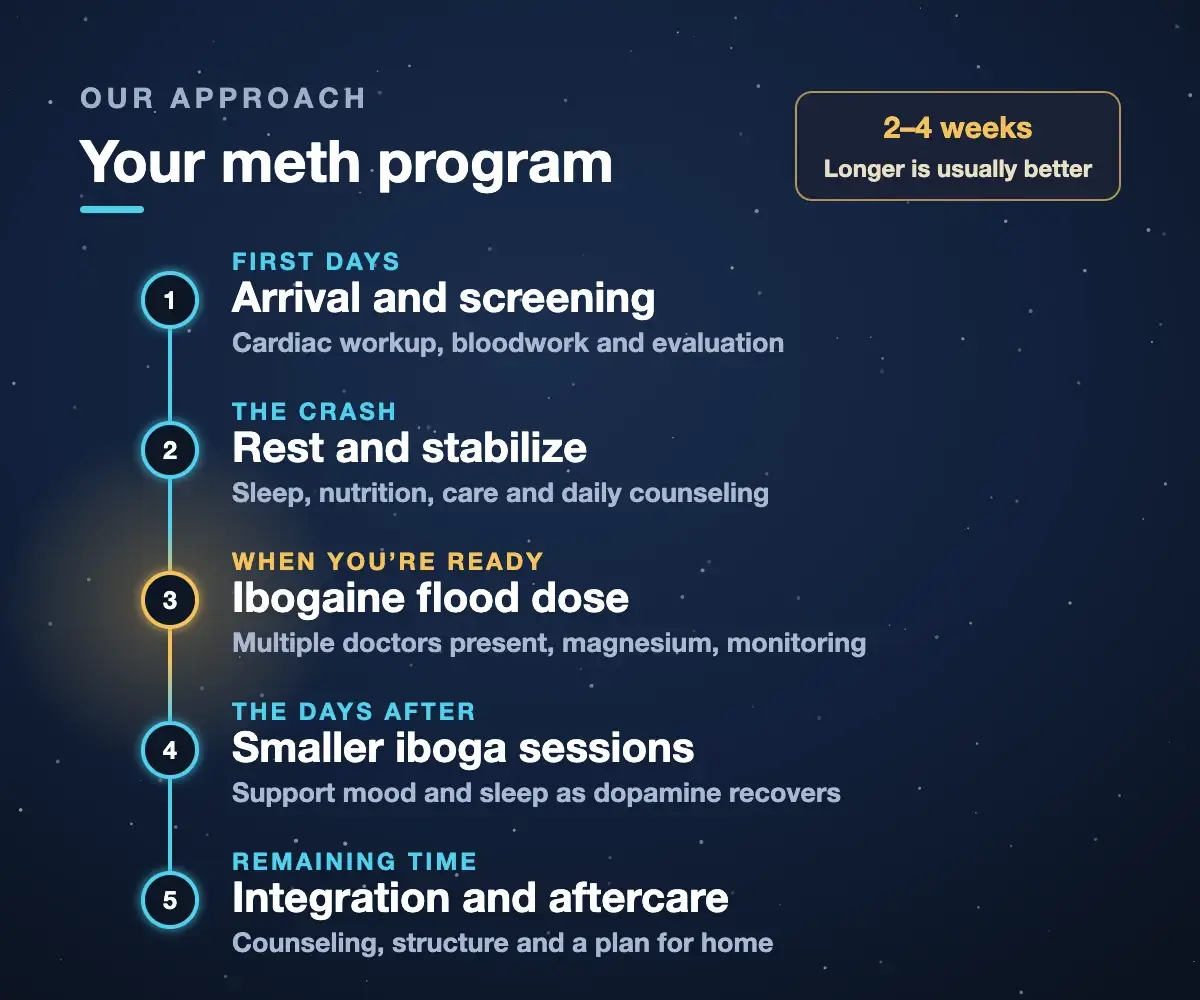
Arrival, a full medical and psychological evaluation, and a cardiac workup with an EKG and bloodwork. Because meth can strain the heart, we take extra care with this step.
The crash
While meth leaves your system you rest, eat well and see a counselor every day, with medical staff on site around the clock.
When you’re ready
After enough stimulant-free days, and only when our doctors sign off, you receive the flood dose: several doctors in the room, magnesium given with the ibogaine and your heart monitored for 24 to 36 hours.
The days after
Low-dose iboga sessions help with sleep and mood while dopamine signaling recovers. Many guests notice pleasure in small things again, like a meal, a conversation or a sunset.
Remaining time
Daily sessions with licensed counselors, integration work, a steady routine and the support of living on site.
When you leave
An aftercare plan written around your life at home, plus supervised housing through extended aftercare if you want more time.
Everyone’s timeline is different; treat these as rough guides. Our doctors set the pace for each guest. If thoughts of suicide or self-harm come up during the crash, reach the 988 Suicide & Crisis Lifeline (call or text, US) immediately.
HOW TO QUIT METH
How to Quit Meth Safely
On its own, meth withdrawal is seldom life-threatening, but the crash can bring deep depression, exhaustion, fierce cravings and, for some, suicidal thoughts. Going it alone is when many people slip, so having support in those first weeks matters.
Our approach: you don’t need to stop before you arrive. Meth clears the body fairly quickly, and our medical team supports you through the crash. Common ibogaine safety guidelines ask for a minimum of five days without stimulants first, and our doctors won’t move ahead until they’re sure it’s safe for you. The ibogaine session follows, with several doctors present and your heart monitored throughout, and after it come smaller iboga sessions, counseling and a daily structure while your brain heals.
Be honest with us about every substance you’ve used. Street meth is sometimes cut with fentanyl, and any possible exposure means we detox you differently. Our guide to the days before ibogaine treatment explains the preparation.
How Long Is a Meth Program?
2 weeks
The shortest meth program, depending on your condition
4 weeks
Usually better: more time for your dopamine system to recover
+ Aftercare
Supervised aftercare housing is there if you need it
Meth programs run two to four weeks. The right length depends on what you’re coming in on, how long and how heavily you’ve been using, and your physical and mental condition, so we recommend a length after your screening. Compare our ibogaine treatment programs.
The Iboga Treatment Center Meth Protocol
Screening and Stabilization
Ahead of ibogaine, our doctors do a complete check: an EKG and heart workup, full bloodwork, liver and kidney tests and a psychological assessment. Years of meth can take a toll on the heart, and ibogaine affects heart rhythm too, so meth has to be completely cleared before your session. We never proceed until our medical team is confident you’re safe.
The Ibogaine Session
Your ibogaine session runs in a clinical setting with nonstop heart monitoring. More than one doctor is with you, you’re given magnesium along with the ibogaine, and medical staff remain by your side for all 24 to 36 hours. Our three staff physicians oversee your care. For many meth guests, the session surfaces deep psychological material tied to trauma, isolation and years of use.
Post-Flood Iboga Work
In the days after, smaller iboga sessions keep the healing going and take the edge off leftover cravings and low mood. For meth, this stage is key: dopamine takes time to rebuild, and this support can help even out your mood and bring back sleep.
Integration and Aftercare
You meet with a licensed counselor every day. For meth guests, integration often focuses on the patterns behind the use: isolation, trauma and the drive to feel something. If trauma is involved, we address it head-on; see our page on ibogaine for PTSD. Your counselor helps you map out aftercare before you head home, and supervised housing is an option for anyone who needs longer.
GUEST STORY
Tyler’s Story
“I started using meth in my early twenties. By thirty I was using every day. I lost my job, my relationships, my apartment. I went through three programs — two 28-day rehabs and an outpatient thing — and every time I came out, I’d be okay for a few weeks and then it would set in. Not boredom exactly. More like… nothing felt like anything. Food tasted like nothing. Music didn’t move me. Nothing was worth doing. And meth was the only thing that made me feel anything at all.
I came to Iboga Treatment Center at thirty-four after a friend’s overdose. I was tired and I didn’t have any other ideas. I did the 30-day program. The first week I mostly just slept and ate and walked around the property. The medical team got me stabilized and watched my heart since meth had done some damage there.
The flood dose was hard to describe. It was like watching a documentary about my own life from the outside. I saw the patterns. I saw why I’d been using since I was nineteen. I saw a lot of stuff I’d been running from.
The weeks after the flood were where I started to feel things again. Real things. The sun coming through the window in the morning. A conversation with another guest. Tasting food again. I had forgotten that was possible.
I’ve been clean for fourteen months. I’m not going to say it’s easy. But the difference between this sobriety and the ones I had after rehab is night and day. I actually want to be sober. That’s new.”
Individual results vary. Other guests tell their stories on our testimonials page.
Meth and Ibogaine: Your Questions Answered
Is ibogaine safe for someone who’s used meth long-term?
Ibogaine has genuine risks, mainly to the heart, so it should only ever be given after careful screening and with constant medical monitoring. Long-term meth use is hard on the heart and blood vessels too, which is why everyone gets heart testing, full bloodwork and a psychological assessment first, and why meth must be completely gone from your body before treatment. In the session itself, several doctors attend, magnesium accompanies the ibogaine and monitoring never stops. Certain heart problems and medications make ibogaine off-limits, and we’ll be straight with you if you fall into that group. We cover the risks in more depth in Is Ibogaine Safe? The Honest Answer.
Do I need to stop using meth before coming to the clinic?
No. Many of our meth guests are still using when they arrive. Meth clears the body fairly quickly, and once you’re with us, our medical team supports you through the crash before any treatment begins. You don’t need to detox alone. Tell us about everything you’ve taken. Fentanyl shows up in street stimulants, and opioids are involved in many of the overdose deaths that also involve meth. Any chance of fentanyl exposure, even without your knowledge, changes our detox plan. We also treat fentanyl addiction.
How long does meth withdrawal last?
The crash usually comes in the first few days after the last use, with exhaustion, heavy sleep and low mood. Acute withdrawal, including cravings and irritability, typically lasts one to two weeks. After that, low mood, low drive and difficulty enjoying things can last weeks or months, which is why we put so much into the period after the flood dose.
How does ibogaine help with meth specifically?
Over time meth depletes the brain’s dopamine system, while most standard treatment works on behavior instead of brain recovery. Ibogaine affects both dopamine and serotonin signaling, and guests often say that in the weeks afterward they could enjoy things again. Paired with weeks of integration therapy, that gives the brain both time and a good environment to heal. Studies are still limited, and results differ from one person to the next.
Can ibogaine lift the flat, joyless feeling after meth?
We can’t promise that, but for many meth guests the change is noticeable. Weeks after the flood dose, many say small joys like a good meal, a real conversation or a full night’s sleep felt good again for the first time in years. Getting your sense of pleasure back is gradual, and low days can still come and go as you heal. If depression came before the meth, we can work on that as well; see ibogaine for depression. Should thoughts of suicide or self-harm come up, call or text 988 in the US at once, and if you’re here with us, tell a staff member right away.
I’ve had meth-induced psychosis. Am I still a candidate?
Possibly, but it depends on your individual history. A history of meth-induced psychosis requires extra care during evaluation, and our medical and psychological team will review your case carefully. People with active psychosis or unmanaged severe psychiatric conditions may not be candidates. We’re honest about who we can and can’t help safely — that’s part of responsible practice.
I’ve tried rehab multiple times. Why would ibogaine work?
Rehab works for some people, but it doesn’t directly address the dopamine depletion behind so much meth relapse. Many people feel fine in early sobriety, then relapse weeks or months later when the anhedonia sets in and nothing feels good. That’s the part of the problem ibogaine targets. It isn’t magic, and results vary, yet guests often describe the difference between gritting their teeth through sobriety and genuinely feeling okay without meth.
How long should I stay for meth treatment?
Meth programs run two to four weeks. The right length depends on what you’re coming in on, how long and how heavily you’ve been using, and your physical and mental condition when you arrive, so we’ll recommend a length after your screening. In general, a longer stay is better: the flood dose starts the process, but the time after, with smaller iboga sessions, counseling, nutrition and structure, is where the real restoration happens. See our program options.
What kind of support continues after I go home?
Before you go, you and your counselor put together an aftercare plan, which may include therapy and support groups where you live. Guests who need more time can move into extended aftercare with supervised housing. Details are on our aftercare program page.
How much does meth treatment cost?
What you pay depends on how long you stay and the medical care you need. After screening, admissions will give you the exact figure. Our ibogaine treatment cost page explains how pricing works.
How do guests travel to the clinic?
The clinic is in Ensenada, Baja California, roughly a two-hour drive south of San Diego. Guests fly into San Diego International, where our team meets them, drives them down and takes care of the border crossing. Admissions helps with travel plans and gives you a packing list. We’re in Mexico because ibogaine is a Schedule I drug in the US and can’t be legally provided there.
Still have questions? Call admissions at (877) 876-4157.
Ibogaine Treatment for Other Substances
Cocaine drains the same dopamine system meth does. See how our cocaine program works.
Adderall and other prescription stimulants can be tough to stop too. Read about our Adderall treatment.
Fentanyl now turns up in street stimulants. Read how we treat fentanyl.
The full list of what we treat is on our ibogaine addiction treatment page.
Ready to Get Off Meth for Good?
Talk to our admissions team today; the call is free and confidential. We’ll answer your questions about meth treatment honestly, with zero pressure.