Kratom Withdrawal: Symptoms, Timeline and How Long It Lasts
Thinking about quitting kratom, or already in the middle of it? Here’s what kratom withdrawal feels like, when it starts, when it gets better, and when to get help.
How Long Does Kratom Withdrawal Last?
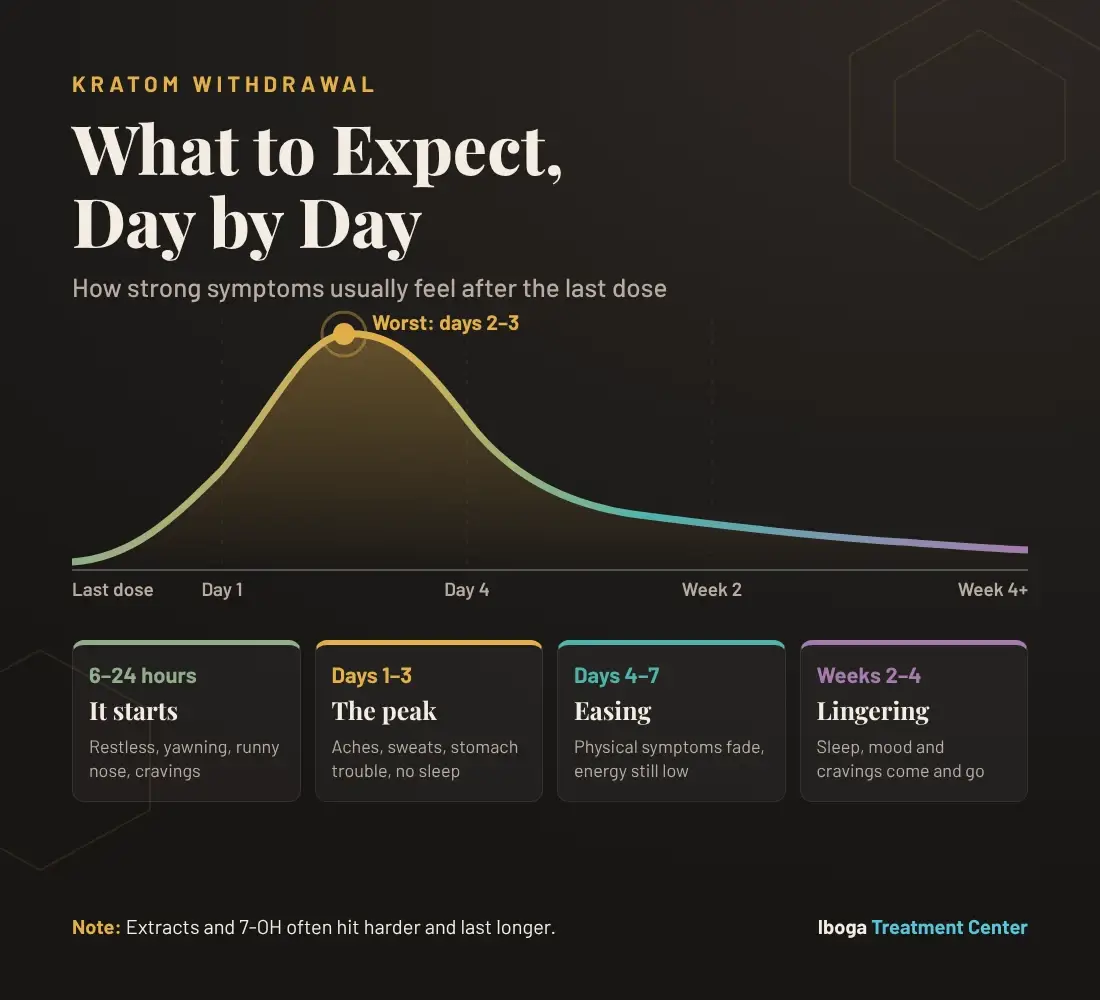
For most people, kratom withdrawal starts somewhere between 6 and 24 hours after the last dose. It’s usually at its worst around day 2 or 3. The heaviest physical part tends to ease up within about a week.
Sleep, mood and cravings often take longer, anywhere from a few weeks to a month or more. If you’ve been using a lot, using for a long time, or using concentrated 7-OH products, expect it to hit harder and last longer.
Why Quitting Kratom Causes Withdrawal
Kratom comes from a tree that grows in Southeast Asia. Its main compounds act on the same receptors in the brain as opioid painkillers. When you take it every day, your body gets used to it and starts relying on it to feel normal.
When you stop, your body has to relearn how to work without it. That adjustment period is withdrawal. It’s not a sign of weakness. It’s what happens to anyone whose body has adapted to something they took every day.
Kratom gets sold as “natural” or “just a leaf,” so a lot of people are caught off guard by how rough quitting feels. The National Institute on Drug Abuse (NIDA) lists dependence and withdrawal as a known risk of regular kratom use.
Kratom Withdrawal Symptoms
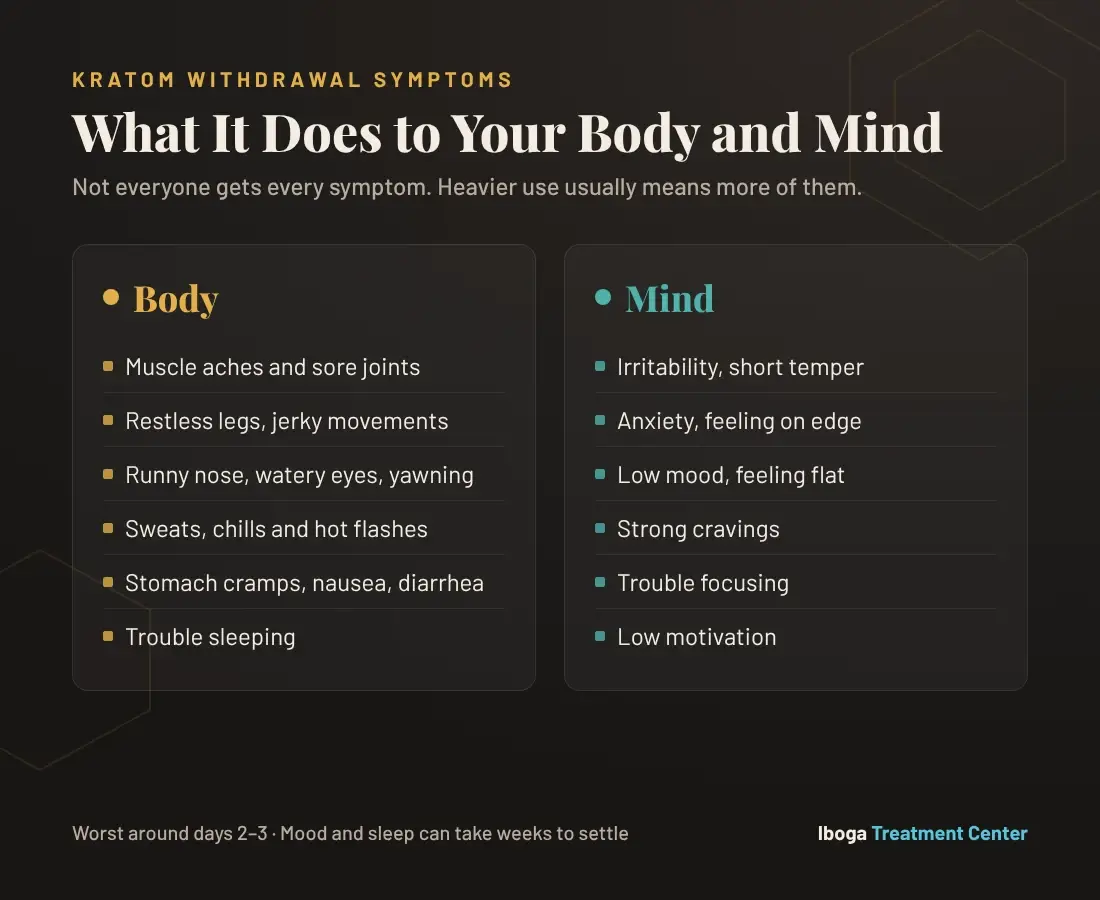
Kratom withdrawal looks a lot like opioid withdrawal, just usually a bit milder. Not everyone gets every symptom, and how bad it gets depends on how much you were using.
Physical symptoms
- Muscle aches and sore joints
- Restless legs and jerky movements, especially at night
- Runny nose, watery eyes and yawning
- Sweating, chills and hot flashes
- Stomach cramps, nausea and diarrhea
- Trouble falling asleep or staying asleep
- Feeling tired and drained
Emotional symptoms
- Irritability and a short temper
- Anxiety and feeling on edge
- Low mood or feeling flat
- Strong cravings
- Trouble focusing
The emotional side is often what sends people back. You can push through a few rough nights. Feeling anxious, flat and unable to sleep for weeks is harder.
Kratom Withdrawal Timeline, Day by Day
Everyone’s different, but this is the pattern most people go through.
| When | What it usually feels like |
|---|---|
| 6–24 hours after the last dose | Restlessness, yawning, runny nose, and the first cravings. Many people notice it first at bedtime. |
| Days 1–3 | The peak. Aches, sweats, stomach trouble, restless legs and little to no sleep. Irritability and anxiety run high. |
| Days 4–7 | The physical symptoms start to ease. Energy is still low, and sleep is still broken. |
| Weeks 2–4 | Mostly emotional now: low mood, poor sleep, low motivation, and cravings that come and go. |
| After a month | Most people feel much more like themselves, though some still have off days and occasional cravings. |
What Makes Kratom Withdrawal Last Longer?
The hardest part usually lasts 5 to 7 days. The full recovery, including sleep and mood, can take several weeks. These things make it longer or harder:
- How much you used. More grams a day means a bigger adjustment.
- How long you used. Months or years of daily use takes longer to settle than a few weeks.
- Extracts, shots and 7-OH products. These are much stronger than plain leaf powder. People coming off them often have a tougher, longer withdrawal, closer to quitting an opioid painkiller. If you’re using 7-OH, read our 7-OH withdrawal timeline.
- Other substances. Using kratom alongside alcohol, benzos or opioids makes withdrawal more complicated, and sometimes riskier.
- Your sleep and stress. No sleep, a stressful home and no support all make withdrawal feel longer.
Is Kratom Withdrawal Dangerous?
For most people, kratom withdrawal on its own is miserable but not life-threatening. The bigger dangers are around it:
- Dehydration from sweating, vomiting or diarrhea, especially if it goes on for days.
- Going back to stronger drugs. Some people switch to opioids to stop the sickness. After a break, your tolerance is lower, which raises the risk of overdose.
- Mixing substances. Trying to take the edge off with alcohol, sleeping pills or benzos can be dangerous.
- Your mental health. Withdrawal can bring on deep low moods. If you have thoughts of hurting yourself, call or text 988 (the Suicide & Crisis Lifeline in the US) right away.
If you have chest pain, fainting, a seizure, can’t keep fluids down, or feel confused, get medical care right away.
What Helps You Get Through It
- Talk to a doctor before you quit. Especially if you use a lot, use 7-OH products, or take other medications. A doctor can tell you whether to stop at once or cut down slowly, and what can ease the symptoms safely.
- Don’t do it alone. Tell someone you trust what you’re doing and when, so they can check on you.
- Drink plenty of water and eat simple food, even when you don’t feel hungry.
- Protect your sleep. Keep a routine, cut down caffeine, and limit screens at night.
- Move a little. A walk or a warm shower can help with aches and restless legs.
- Plan for weeks 2 to 4. This is when cravings sneak up on people. Know ahead of time who you’ll call.
There’s no medication approved specifically for kratom withdrawal. Some doctors use the same tools they use for opioid withdrawal, but this hasn’t been well studied for kratom, so it’s a decision to make with a doctor, not on your own.

Where Ibogaine Treatment Fits
Some people can quit kratom at home with support. Others have tried several times and keep getting pulled back by the sleepless nights and cravings, especially people using extracts or 7-OH.
For them, a medically supervised kratom detox can make a real difference. If you’re looking at ibogaine centers in Mexico, look for one where doctors check your heart and health first. At our center in Ensenada, we help you come off kratom safely, then give ibogaine with doctors in the room. Many guests tell us their withdrawal and cravings drop sharply after treatment. Results vary from person to person. Kratom programs start at two weeks, so there’s time to rest and recover afterward instead of going straight home.
If you’re not sure whether kratom or 7-OH is the bigger problem, our guide to how 7-OH is different from kratom is a good place to start.
Iboga Treatment Center has offered medically supervised ibogaine treatment in Ensenada since 2018. If you’d like to talk it through, our admissions team can answer your questions, with no pressure.
Kratom Withdrawal: Common Questions
Here are the kratom withdrawal questions we get asked most, answered simply.
How long does kratom withdrawal last?
The worst part usually lasts 5 to 7 days. Trouble sleeping, low mood and cravings can stick around for several weeks, especially after heavy or long-term use.
When does kratom withdrawal start?
Usually 6 to 24 hours after your last dose. People using strong extracts or 7-OH products often feel it sooner.
What day is kratom withdrawal the worst?
For most people, days 2 and 3. That’s when aches, sweats, stomach trouble and sleeplessness all tend to peak together.
What are the most common kratom withdrawal symptoms?
Muscle aches, restless legs, runny nose, sweating, stomach problems, trouble sleeping, irritability, anxiety and cravings.
Is kratom withdrawal as bad as opioid withdrawal?
It’s usually milder than withdrawal from heroin or fentanyl, but it can still be very hard, especially after heavy use. Coming off 7-OH products is often closer to opioid withdrawal.
Can kratom withdrawal kill you?
Kratom withdrawal by itself is rarely life-threatening. The risks come from dehydration, mixing in other substances, and switching to stronger drugs to stop the sickness. If you feel very unwell, get medical care.
Should I quit kratom cold turkey or cut down slowly?
It depends on how much you use, what you use, and your health. Talk to a doctor before you stop, especially if you use a lot or use 7-OH.
Why can’t I sleep after quitting kratom?
Kratom changes how your brain handles rest and calm. After you stop, it can take weeks for normal sleep to come back. A steady bedtime routine helps, and if it drags on, talk to a doctor.
Ready to Stop Fighting Kratom Withdrawal Alone?
Talk with our admissions team about a medically supervised stay in Ensenada. We’ll answer your questions and help you decide if it’s the right fit.
Prefer the phone? Call (877) 876-4157. We answer around the clock, and a call is just a conversation, not a commitment.