Rehab in Mexico: What Americans Should Know About Cost, Safety and Ibogaine
Thinking about rehab in Mexico? Here’s how treatment there really works, how a medical clinic differs from an unregulated center, what it costs next to US rehab, and how the trip works.
Is Rehab in Mexico a Good Idea?
It can be. Mexico has well-run private medical clinics, and it’s the closest country where Americans can get ibogaine treatment with doctors in the room. Many of its private programs also cost less than a comparable residential stay in the US.
The catch is range. Rehab centers in Mexico run from licensed medical clinics to informal houses with no doctors at all, and from the outside they can look alike. Choosing well means checking who is actually responsible for your care.
We see this question from the inside. Iboga Treatment Center has cared for guests from across the US in Ensenada since 2018, and this guide covers what we’d want any family to know before choosing a program in Mexico, whether it’s ours or someone else’s.
Why Americans Look at Rehab Centers in Mexico
People rarely start out wanting to leave the country for treatment. They usually get here after something at home didn’t work. The common reasons:
- Ibogaine. In the US, ibogaine is a Schedule I drug, so outside research no clinic there can offer it. Mexico doesn’t schedule it, which is why medically supervised clinics operate there. We explain what changed in 2026 in our post on the legal status of ibogaine in the US.
- Cost. A month of private residential rehab in the US can cost as much as a car, especially without insurance.
- Distance from home. A border between you and your usual contacts, routines and triggers can make the first weeks easier to protect.
- Time. Families who see that 30 days wasn’t enough often look for a place where a longer stay is realistic.
- Repeated relapse. Many people we hear from have done detox or rehab several times and want something that works differently.
Not All Rehab in Mexico Is Medical: Clinics vs Anexos
Most residential addiction care in Mexico is private. A peer-reviewed study of drug treatment in Tijuana cites Mexico’s national census of treatment centers: in 2013 it counted 2,043 residential drug centers, and 98% of them were privately run (read the study).
Many of those are anexos: peer-run houses, often run by people in recovery themselves, usually with no medical staff. Some help people. Researchers and journalists have also documented overcrowding, people held against their will, and withdrawal with no medical care at all.
Mexico does regulate addiction treatment. A national standard, NOM-028, sets requirements for treatment centers and recognizes professional, mixed and mutual-aid models. But many centers operate outside it, so a website alone tells you very little.
The difference that matters for you: a medical clinic has named doctors, a health license, a plan for withdrawal and an emergency plan. An anexo usually has none of those. If a center offers to pick someone up without their consent, walk away.
Rehab in Mexico vs the US: How the Cost Compares
In the US, one cost analysis put the average cash price of a 30-day residential stay at about $27,500, with families paying roughly $5,500 out of pocket when the program was in their insurance network (StartYourRecovery). Private and executive programs often charge far more.
In Mexico the range is wider still. Anexos may charge very little. Private medical clinics charge more, because doctors, nurses, screening and monitoring cost money everywhere.
| Typical US residential rehab | Private medical clinic in Mexico | |
|---|---|---|
| How it’s paid for | Often partly covered by in-network insurance | Self-pay. Ibogaine isn’t FDA-approved, so insurance won’t pay for it |
| Typical length | 28 to 30 days is the common starting point | One to four weeks or longer, set by the substance and your history |
| Opioid detox approach | Usually a medication taper or a switch to buprenorphine | Stabilization first, then ibogaine with doctors present |
| Medical oversight | Varies by license and level of care | Varies widely, from full medical teams to none at all |
| How the price is quoted | Often a daily rate, plus separate detox and medication bills | Ask for one total that lists screening, room, meals and medical care |
Insurance is the big difference. US plans generally won’t pay for treatment in Mexico, and no plan pays for ibogaine. So compare the full program price, not a daily rate, and ask what’s left out. For our own programs, the full ibogaine treatment cost breakdown lists each program length and what’s included.
Where Ibogaine Treatment Fits Into Rehab in Mexico
Ibogaine isn’t a 30-day program on its own. It’s a single long session, given under medical supervision, that many people describe as interrupting withdrawal and cravings. What happens before and after it matters just as much. Our page on what ibogaine is explains the medicine itself.
That’s why we put so much weight on time. Used within a longer, structured stay, it can be a real game changer, and a fast in-and-out trip rarely is. The length we suggest most often is four weeks, and people coming off methadone or Suboxone start at four weeks because those drugs need careful stabilization first.
If you’re comparing ibogaine treatment centers in Baja California, ask how each one handles the days before the session. At our center that means an EKG and bloodwork, a medication review, three doctors on staff with more than one at every session, continuous heart monitoring, and medical staff on site 24/7. A licensed counselor works with guests every day. See our ibogaine programs for how the weeks fit together.
Getting to Rehab in Mexico From the US
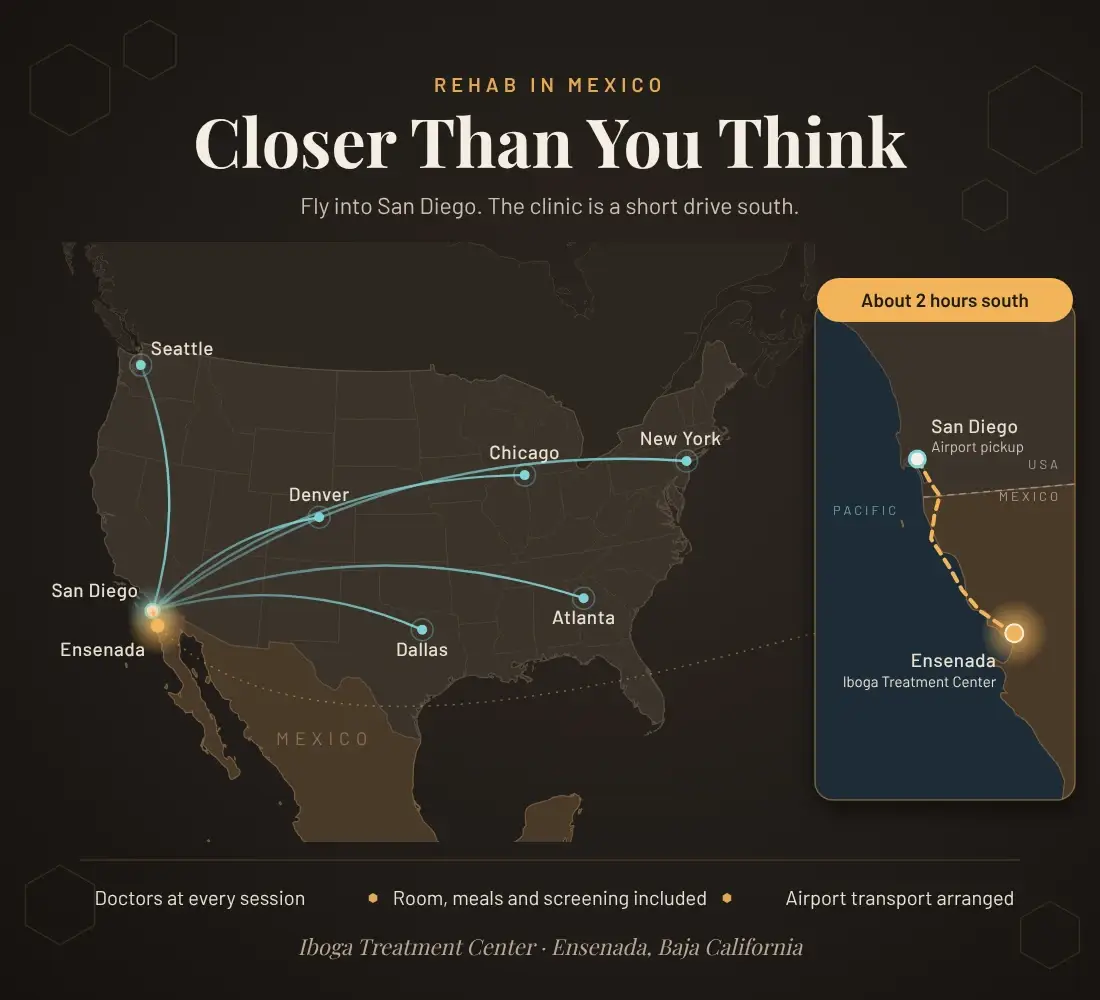
For a clinic in northern Baja California, the trip is shorter than most people expect:
- Fly into San Diego. From most US cities that’s a domestic flight, and Tijuana’s airport is the other option.
- Get picked up. We arrange transport from the airport and help guests through the border crossing.
- About two hours south. The drive from San Diego down to Ensenada takes around two hours, longer if the border is busy.
- Bring the right ID. Returning to the US by land requires a passport book or passport card.
- Leave the medicine behind. Ibogaine is illegal in the US, so nothing from treatment goes home with you.
If you started out searching for ibogaine treatment near me, that guide compares travel times from each US region and the other countries where treatment is available.
Is It Safe to Go to Mexico for Rehab?
There are two separate questions here: the trip and the treatment.
The trip. Arranged airport pickup and not driving yourself cut out the riskiest parts of the trip for a treatment stay. Treatment happens at the center, and outings come later in a stay.
The treatment. The main medical risk with ibogaine is to the heart’s rhythm, which is why screening, monitoring and doctors at the bedside aren’t optional. Our post on whether ibogaine is safe covers who shouldn’t take it, and you can meet the doctors and nurses on our medical team page.
Five Checks Before You Choose a Rehab in Mexico
- Ask what license it holds. A medical clinic should be able to tell you which Mexican health license or certification it operates under.
- Get the doctors’ names. Find out who is in charge medically and whether a doctor is present when medication is given.
- Ask how withdrawal is handled. “You’ll tough it out” is not a plan. Ask what medication and monitoring look like in the first days.
- Confirm you can leave. Treatment should be voluntary, with no locked-in stays and no services that collect people against their will.
- Ask about the weeks after. The end of a stay is where many relapses start. Ask what support exists afterward, such as ibogaine aftercare.
Weighing ibogaine providers specifically? Our comparison of an ibogaine retreat vs a medical clinic goes deeper on what separates the two.
Rehab in Mexico: Common Questions
Straight answers to what families ask us most about treatment in Mexico.
Is rehab in Mexico legal for Americans?
Yes. Traveling to another country for addiction treatment is legal. Ibogaine isn’t a scheduled drug in Mexico, so licensed clinics there can give it under medical supervision. It is illegal in the US, so it can’t come back across the border with you.
Does insurance cover rehab in Mexico?
Usually not. US health plans generally don’t pay for treatment in Mexico, and no plan covers ibogaine because it isn’t FDA-approved. Iboga Treatment Center is self-pay.
How much does rehab in Mexico cost?
It ranges from almost nothing at informal centers to the price of a private US program at medical clinics. Ask for one total price and what it includes. Our cost page lists our prices by program length.
Is Ensenada safe for treatment?
We arrange airport transport so guests don’t drive themselves, and care takes place on our grounds.
Do I need a passport to go to rehab in Mexico?
A flight to San Diego is domestic for most Americans. To return to the US by land from Baja California, you’ll need a passport book or passport card.
What’s the difference between an anexo and a rehab clinic?
An anexo is usually a peer-run residential house without medical staff. A clinic has licensed doctors, a health license, medical withdrawal care and an emergency plan.
How long should a stay in Mexico be?
It depends on the substance and your history. We most often recommend four weeks, and for methadone and Suboxone, four weeks is the starting point. Admissions will recommend a length after reviewing your history.
Can I get ibogaine treatment in the US instead?
Not outside approved research. It’s a Schedule I drug in the US, so no clinic can legally offer it today. That’s why Americans travel to Mexico for treatment.
Comparing Rehab Options in Mexico?
Tell our admissions team what you’re using and for how long. We’ll explain how screening and stabilization would work and how long a stay makes sense for you.
Rather talk first? Our line is answered 24 hours a day at (877) 876-4157, and a call doesn’t commit you to anything.