KETAMINE ADDICTION TREATMENT
Ibogaine Treatment for Ketamine Addiction
Ketamine has a strong emotional pull, and after months or years of use it can leave behind deep depression and real damage to the bladder. Our medically supervised ibogaine treatment for ketamine addiction deals with both: we help your body heal and get you through the low, and then ibogaine helps you re-ground and start putting your life back together.

UNDERSTANDING KETAMINE ADDICTION
Is Ketamine Addictive? Why It’s So Hard to Quit
Yes. Ketamine is a dissociative anesthetic, and while it doesn’t cause the heavy physical dependence of opioids, it is very psychologically and emotionally addictive. Many people start using it to escape stress, anxiety or depression. For a while it works, which is exactly what makes it so hard to put down.
Tolerance builds fast. People find they need more, more often, to get the same sense of detachment, and use can quietly go from weekends to daily. Over time the relief fades while the costs pile up: memory and focus problems, stomach pain, bladder damage and a heavy, flat depression when the drug wears off.
That depression is often what keeps people stuck. Stopping can feel unbearable, so they use again to escape it. At Iboga Treatment Center, we treat the low as part of the addiction, not as a side note.
HOW IBOGAINE HELPS
How Ibogaine Can Help With Ketamine Addiction
Ibogaine acts on many brain systems at once, including serotonin, dopamine and opioid receptors, and it is also known to affect NMDA receptors, the same receptor system ketamine works on. You can read more about this on our how ibogaine works page.
To be honest, there is very little formal research on ibogaine for ketamine addiction specifically. What we see in our guests is this: once they have been off ketamine for the required time and our doctor approves treatment, the ibogaine experience often helps them re-ground, see their patterns clearly and reconnect with what they want their life to look like.
Ibogaine is not a quick fix for ketamine, and we don’t treat it like one. It works best as one step inside a longer stay, with medical care before it and support after it. If you are curious how the two drugs compare as therapies, see our article on ibogaine vs. ketamine.

WHY TIME MATTERS
Ibogaine Treatment for Ketamine Addiction Treats the Mind and the Body
Most ketamine addiction treatment focuses only on stopping use. Our guests often arrive with two problems at once: a depression that makes quitting feel impossible, and physical damage, most often to the bladder, that needs medical care. We give both the time they need, so you leave feeling steadier and physically healthier, not just ketamine-free.
Ketamine Withdrawal Symptoms and Timeline, With and Without Ibogaine
Ketamine withdrawal is mostly emotional and mental rather than physical, but that doesn’t make it easy. These are the symptoms people most often describe, and how a supervised stay changes the experience.
Without Ibogaine
On your own
Days 1–3
Strong cravings, anxiety, irritability, poor sleep and fatigue. Some people also notice shakiness, sweating or a racing heart.
Days 4–14
Low mood sets in. Depression, trouble focusing, lack of motivation and cravings that come in waves. Plenty of people relapse during this stretch.
Weeks 3 and beyond
After long-term use, depression, memory problems and cravings can linger for weeks or months, along with any bladder pain that hasn’t been treated.
With Ibogaine and Our Medical Team
Our approach
First days
You arrive and get a complete medical and mental health assessment, a urine test for infection and a check of your bladder and kidneys. Our team keeps you comfortable and watches your mood closely.
Detox
You stay off ketamine for a set amount of time while we handle the detox here. It is often emotional, and our team supports you through it while our doctor treats any bladder problems with IV fluids and medications.
Ibogaine session
When our doctor approves, ibogaine is given under close medical supervision. Many guests describe it as the point where they finally feel grounded again.
The rest of your stay
Smaller iboga sessions, counseling and time to rebuild routines before you go home.
No two recoveries look the same. These ranges are only a guide, and our doctors decide the pace for every guest. If you are having thoughts of suicide, call or text 988 in the US right now, or tell our team as soon as you arrive.
KETAMINE BLADDER
Ketamine Bladder: How We Help It Heal
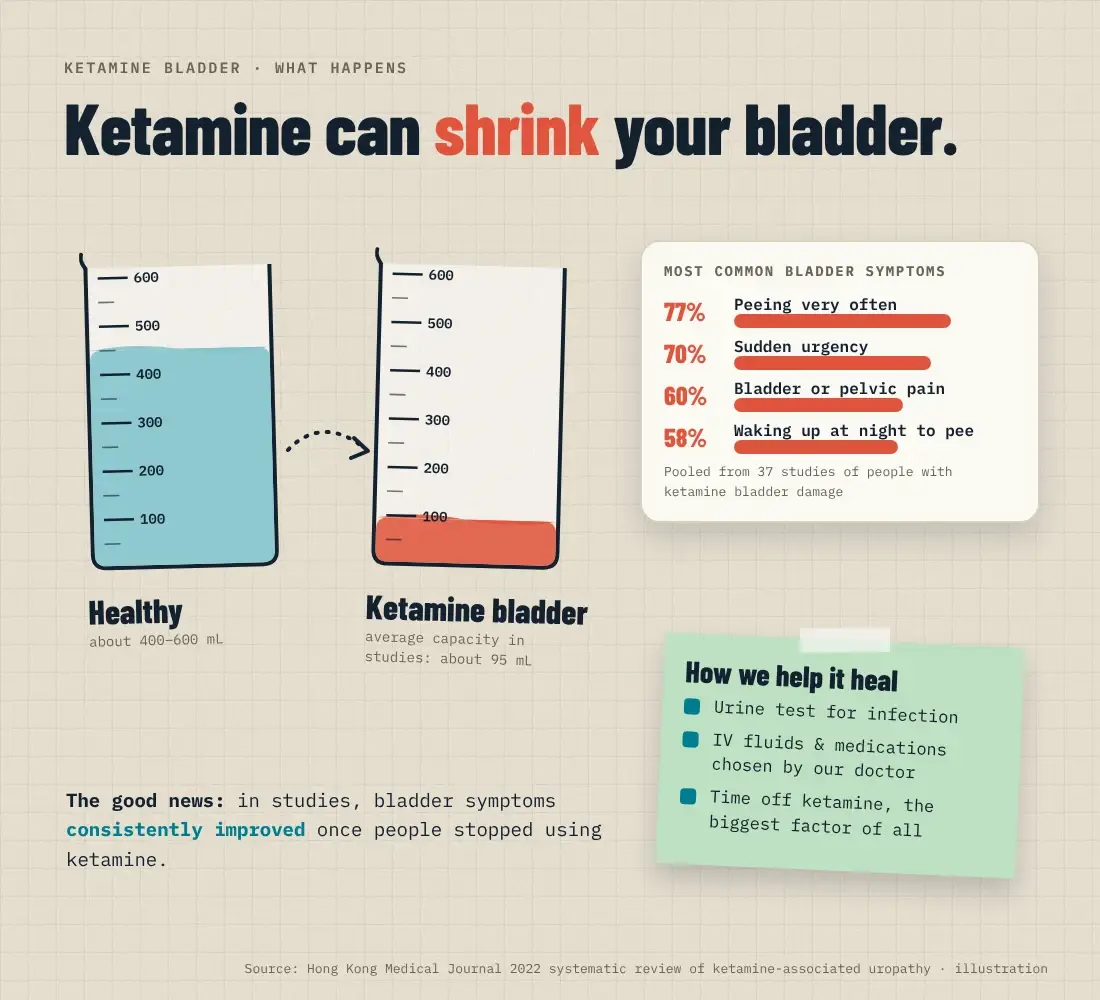
Ketamine bladder, also called ketamine cystitis or ketamine uropathy, is damage to the bladder lining caused by regular ketamine use. A 2022 review of 37 studies found the most common symptoms were needing to pee very often (77%), sudden urgency (70%), bladder or pelvic pain (60%) and waking at night to pee (58%). Blood in the urine and leaking are also common. In some people the damage reaches the kidneys.
We treat ketamine bladder often. Our doctor tests your urine for infection and treats it if it’s there, then uses specific IV solutions and medications to calm the bladder and help it heal. Our medical staff track how you’re doing day to day.
The single most important part of healing is stopping ketamine. The same review found that symptoms improved consistently once people quit, and in several studies even swelling of the kidneys went away. Severe or long-standing damage may need a urologist after you go home, and we help you plan for that.
How Long Is a Ketamine Program?
2 weeks
The minimum for ketamine, depending on your health
4 weeks
Often better: more time for your body to recover
+ Aftercare
Extended aftercare if you want more time with us
Ibogaine treatment for ketamine addiction typically starts at two weeks and goes up from there. How long you stay depends on how long and how heavily you have used, and how your bladder is doing. Every situation is different, so a consultation is needed to decide how long you will stay and what your treatment will look like. See our ibogaine treatment programs for the options, and our cost page for pricing.
The Iboga Treatment Center Ketamine Protocol
Screening and Stabilization
Before anything else, our doctors run a full workup: an EKG and heart check, bloodwork, liver and kidney tests, a urine test for infection and a psychological assessment. There is a set amount of time you need to be off ketamine before ibogaine. We handle that detox here, and treatment happens only once our doctor approves.
The Ibogaine Session
Ibogaine is given in a clinical room with continuous heart monitoring and several doctors on hand. You receive magnesium with your dose, with medical staff at your side from start to finish. For many ketamine guests this is where the fog lifts and old patterns become clear.
Post-Flood Iboga Work
In the following days, smaller iboga sessions help keep cravings and low mood in check while your bladder keeps healing. This is often when guests start to feel like themselves again: sleeping better, thinking clearly and making plans.
Integration and Aftercare
Counseling and integration help you make sense of the experience and build a plan for home, including any bladder follow-up you need. Our ibogaine aftercare program is there if you want more support before going back to daily life.
KETAMINE AND YOUR HEALTH
Other Health Problems Ketamine Can Cause
Long-term ketamine use can affect more than the bladder. People commonly report severe stomach pain (often called “K-cramps”), memory and concentration problems, anxiety and depression, and in some cases liver and bile duct problems. Accidents and injuries while dissociated are also a real risk.
Our medical team checks for these problems during screening and treats what we find while you are here. Many guests arrive feeling physically worn down and leave noticeably healthier. If depression is a big part of your story, our page on ibogaine for depression explains how we approach it.
Ketamine and Ibogaine: Your Questions Answered
Is ketamine addictive?
Yes. Ketamine causes little physical dependence compared with opioids, but it is very psychologically and emotionally addictive. Tolerance builds quickly, and many people end up using daily to escape anxiety or low mood.
What are ketamine withdrawal symptoms?
The most common are cravings, anxiety, irritability, poor sleep, fatigue and depression. Some people also have shakiness, sweating or a racing heart in the first few days. After long-term use, depression and memory problems can last for weeks.
How long does ketamine withdrawal last?
The first few days are usually the hardest for cravings and anxiety. Low mood often peaks in the first two weeks, and after heavy, long-term use it can linger for weeks or months without support.
Can ketamine cause depression?
Yes. Chronic ketamine use can lead to severe depression, especially when the drug wears off or after stopping. We support guests through it as part of their care here.
What is ketamine bladder?
Ketamine bladder is damage to the bladder lining from regular ketamine use. It causes frequent and urgent urination, bladder pain, waking at night to pee and sometimes blood in the urine. Over time the bladder can hold much less.
Can ketamine bladder heal?
In many people it improves a great deal once ketamine use stops. At our center the doctor tests for infection and uses IV fluids and medications to help the bladder heal. Severe damage may need follow-up with a urologist at home.
How long is ibogaine treatment for ketamine addiction?
Ketamine programs typically start at two weeks and go up from there, but every situation is different. We do a consultation first to determine how long you will stay and what your treatment will look like.
Do I need to stop ketamine before I arrive?
No. Don’t put yourself through it alone. Tell us honestly how much you use. There is a set amount of time you need to be off ketamine before ibogaine, and we handle the detox here. Your ibogaine session happens once our doctor approves.
Is ibogaine safe after heavy ketamine use?
Ibogaine carries real heart risks, so everyone gets a heart tracing (EKG), lab work and a complete medical exam first, and sessions are run with heart monitoring and doctors present. Read our honest take on whether ibogaine is safe for more detail.
How does ibogaine help with ketamine addiction?
After the detox, and once our doctor approves treatment, ibogaine often helps guests re-ground, see their patterns clearly and reset how they want to live. There is little formal research on ibogaine for ketamine specifically, so we treat it as one part of a full program.
What happens after I go home?
We build an aftercare plan with you before you leave, including any bladder follow-up. Our extended aftercare program is available if you want more support before returning to daily life.
Still have questions? Call admissions at (877) 876-4157.
Related Pages
Ketamine often leaves deep depression behind. See how ibogaine can help.
How the two compare as therapies, and why they work so differently.
Ketamine and cocaine are often used together. See our cocaine program.
See every substance we help with on our ibogaine addiction treatment page.
Ready to Get Off Ketamine for Good?
Talk with our admissions team about ibogaine treatment for ketamine addiction today. Calls are free and private. Expect straight answers about ketamine treatment, the bladder care we provide and how long you would likely stay.