DEPRESSION TREATMENT
Ibogaine Treatment for Depression
Depression can make it hard to feel motivated, connected or hopeful. Ibogaine offers a different approach, one that may open a window for emotional insight and meaningful change. At Iboga Treatment Center in Ensenada, Mexico, every ibogaine session for depression comes with careful medical screening beforehand and integration therapy and extended care afterward.
Ibogaine for Treatment-Resistant Depression
Ibogaine for Depression and Emotional Healing
Depression affects far more than mood. It changes sleep, energy, concentration, relationships, and the ability to feel pleasure or hope. For some people, these symptoms become deeply entrenched, creating a cycle of isolation, negative thinking, and emotional exhaustion that is hard to break.
The ibogaine molecule is extracted from the root bark of the iboga plant and has psychoactive effects. It acts on several neurological systems involved in mood, motivation, reward, and emotional processing, including serotonin, dopamine, and glutamate pathways. Early research and observational studies have reported improvements in depressive symptoms in some people following ibogaine treatment, although ibogaine is not an established or approved treatment for depression. At Iboga Treatment Center, we combine careful medical and psychological screening, a supervised ibogaine session, integration therapy, and extended support to give appropriate guests the best conditions for lasting change.
HOW IT WORKS
How Ibogaine Works for Depression
Ibogaine treatment for depression is fundamentally unlike daily antidepressant therapy. Rather than managing symptoms over months or years, the ibogaine experience is a single, intensive, deeply introspective session. Many guests describe gaining a different perspective on long-standing emotional patterns, memories, relationships, and negative thought cycles — material that becomes the foundation for therapeutic work afterward.
After the session, ibogaine is converted in the body into noribogaine, an active metabolite that remains in the system longer and continues to interact with systems involved in mood regulation. This post-treatment window is one reason we never treat the ibogaine session as a stand-alone event. The days and weeks that follow are used for integration therapy, counseling, healthy routines, physical wellness, and continued emotional support. For the science, see how ibogaine works.
WHAT TO EXPECT
What to Expect From Ibogaine Treatment for Depression
Before Ibogaine Treatment
Initial Evaluation: Your treatment begins with a comprehensive medical and psychological assessment. Our team reviews your depression history, current symptoms, medications, previous treatments, sleep patterns, overall health, and any factors that may affect ibogaine treatment.
Medication Review and Preparation: Some antidepressants and psychiatric medications may need to be adjusted before ibogaine treatment because of potential interactions. Our medical team carefully reviews your medications and develops an individualized preparation plan before your ibogaine session.
Medical Screening: Cardiac screening, blood work, and a detailed health evaluation are completed before treatment. This preparation helps ensure that you are medically stable and properly prepared for the ibogaine experience.
During Your Stay at Iboga Treatment Center
The Ibogaine Session: Treatment happens in a fully equipped clinical room where your heart and vital signs are monitored the whole time, several doctors are present and magnesium is given to help protect the heart. The experience can be deeply introspective, giving some guests an opportunity to examine emotional patterns, memories, relationships, and long-standing negative thought cycles from a different perspective.
Post-Session Recovery: After the ibogaine session, you stay at our center while our team monitors sleep, mood, energy, nutrition, and overall wellbeing. This recovery period provides time to rest, reflect, and begin processing the experience before returning to everyday life.
Integration Therapy: Our counselors help you work through the emotions, insights, memories, and patterns that may emerge during ibogaine treatment. Integration therapy is designed to turn the experience into practical changes involving relationships, routines, coping strategies, emotional health, and the way you approach your life.
Extended Support: During the remainder of your stay, treatment focuses on emotional healing, healthy routines, physical wellness, counseling, and continued integration. The goal is to give you time and support to build on the changes that may begin during the ibogaine experience.
Aftercare Planning: Before leaving Iboga Treatment Center, we develop a personalized aftercare plan based on your mental health history and recovery goals. This may include continued therapy, psychiatric follow-up, medication management, exercise, nutrition, sleep support, family involvement, and other forms of ongoing care.
Ibogaine treatment for depression is not designed as a quick fix or stand-alone cure. At Iboga Treatment Center, the ibogaine experience is combined with careful preparation, medical supervision, integration therapy, emotional support, and extended care to help appropriate guests use the experience as part of a broader process of healing and meaningful personal change.
RELATED CONDITIONS
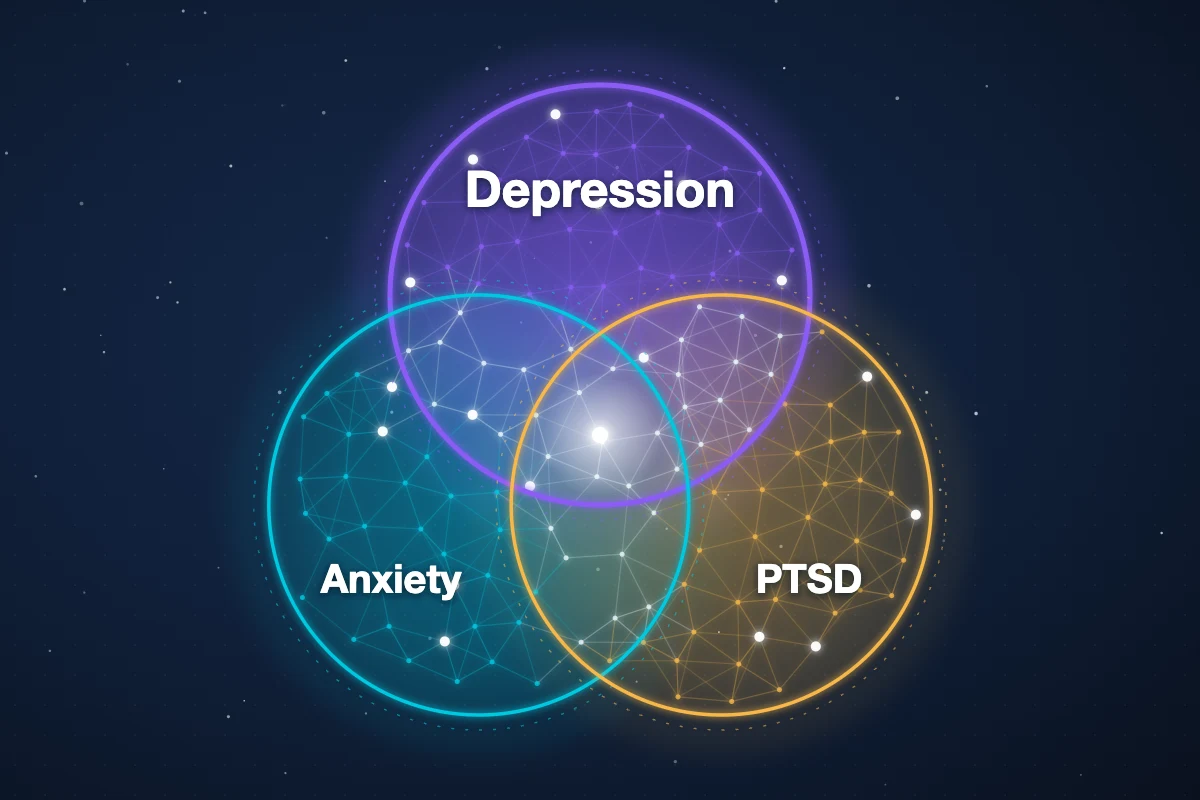
Depression, Anxiety, and PTSD Often Overlap
Depression rarely exists on its own. Many guests who come to Iboga Treatment Center are also living with persistent anxiety, or with depression rooted in PTSD, trauma, or unresolved grief. Because ibogaine’s introspective nature tends to bring these underlying experiences to the surface together, our screening, session, and integration therapy address the whole picture rather than treating each condition in isolation.
When anxiety or trauma is part of the picture, our pages on ibogaine treatment for anxiety and ibogaine treatment for PTSD go further, and ibogaine for mental health lists every condition we treat. Let our team know during intake so we can plan your program around the whole picture.
THE RESEARCH
Ibogaine and Depression: What the Research Shows
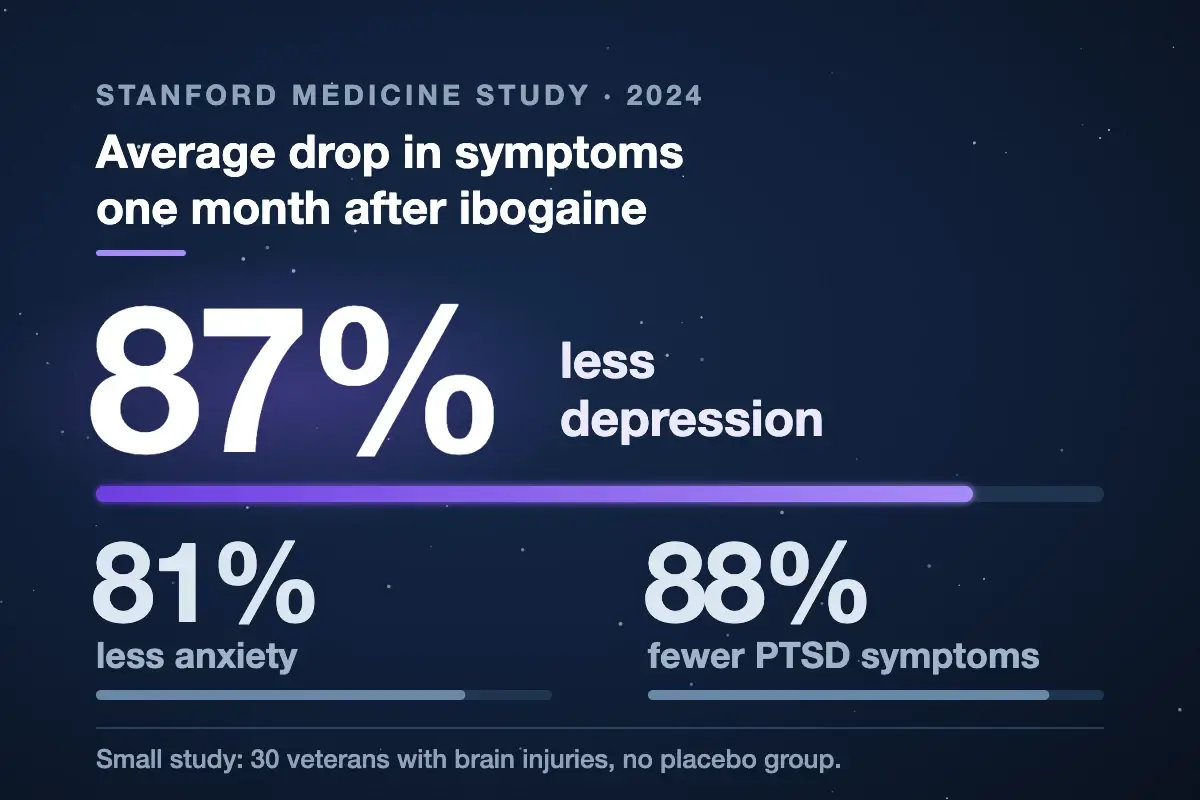
Research on ibogaine for depression is still early, but it’s growing. A 2024 Stanford Medicine study, published in Nature Medicine, looked at 30 veterans of US Special Operations who had traumatic brain injuries and received ibogaine with magnesium at a clinic in Mexico. One month later, their depression symptoms had dropped by an average of 87%, along with an 81% drop in anxiety and an 88% drop in PTSD symptoms, and there were no serious side effects.
With only 30 participants, no placebo group and a sample made up entirely of brain-injured veterans, the study can’t tell us how ibogaine performs across all forms of depression. Ibogaine has not been approved to treat depression, and bigger trials are needed; in 2025 Texas committed $50 million to pay for clinical trials of ibogaine. One theory is that noribogaine plays a role, since it slows serotonin reuptake in a way similar to some antidepressants.
Guest Story
Joe's Story
“When I called Iboga Treatment Center, I was in a very dark place. I couldn’t get out of bed, and I felt completely stuck in my life. I spent a month at Iboga Treatment Center, and for the first time in three years, I feel good, happy, and excited for life again. Thank you to everyone at Iboga Treatment Center for helping me get my life back.”
Individual results vary.
When Depression Isn’t the Only Struggle
Worry, restlessness and trouble sleeping often come with depression. Learn how we use ibogaine for anxiety.
Depression that started after a trauma often has PTSD underneath it. Learn how ibogaine is used to treat PTSD and trauma.
Every mental health condition we treat with ibogaine, plus how screening, integration and aftercare work.
Frequently Asked Questions About Ibogaine for Depression
Is ibogaine safe for depression?
Ibogaine can be a safe option for depression when it’s given in a medically supervised setting with proper screening and monitoring. Before treatment here, you’ll have an EKG, a blood panel and a psychological assessment. Magnesium is given with the ibogaine to support the heart, several doctors stay through the whole session, and medical staff are here around the clock. When screening shows ibogaine isn’t safe for someone, we stop there.
How long should I stay for depression treatment?
Our shortest program is one week, but we usually recommend staying longer, and some people benefit from several weeks. Our medical and clinical team assesses each guest individually and recommends a program length based on your history, your medications and how much integration time you need.
What if I’m currently taking antidepressants?
This is one of the most important questions to ask before booking, and our medical team discusses it individually with every guest. Some guests come off antidepressants here, tapering under medical supervision as they prepare; others taper at home first with guidance from their own doctor or ours. Certain antidepressants, especially SSRIs and MAOIs, can interact dangerously with ibogaine, so there’s no one-size-fits-all answer; our clinical team reviews what you take and plans a safe approach with you. Our doctor looks at benzodiazepines on an individual basis. Don’t stop taking anything without talking to us first. Apply for treatment to start the conversation.
Will ibogaine cure my depression?
No treatment can promise a cure, and we don’t make that claim. What many guests report is a significant shift in how they experience their depression — often described as newfound clarity, emotional release, and renewed motivation. Results vary by individual, and lasting change depends heavily on the aftercare and integration work that follows treatment.
How do I get to Ensenada for treatment?
The clinic is located in Ensenada, in Mexico’s Baja California, about two hours from San Diego. Guests land at San Diego International Airport, where our staff pick them up for the ride to the clinic and help with the border crossing. Admissions coordinates the trip with you and explains what to bring. Ibogaine’s Schedule I status in the United States means it can’t be legally offered there, so we provide treatment in Mexico.
How is ibogaine different from traditional depression treatment?
Traditional treatment for depression often centers on daily medication and ongoing talk therapy over months or years. Ibogaine works differently — guests often describe it as an intense, introspective experience that surfaces root causes rather than just managing symptoms. Our program pairs this with structured integration therapy so guests have support processing what comes up, both during and after their stay. Unlike ketamine, which usually needs repeated sessions, ibogaine is typically given as a single, extended session followed by integration.
What happens after I leave Iboga Treatment Center?
Aftercare is built into our program, not an add-on. Before you go home, we create an aftercare plan with you, which may include ongoing therapy and community support, because the move back home is often what decides whether depression treatment lasts. Learn more about our aftercare program.
What does a typical day look like during depression treatment?
Beyond the ibogaine session itself, your stay includes daily structure built around recovery: medical check-ins, integration therapy, counseling, and time for rest and reflection. This isn’t a one-and-done dosing experience; it’s a full program designed to give you the time and support to process what comes up and build a plan for what comes next.
Does ibogaine help with depression linked to trauma or PTSD?
Many guests come to us with depression that’s tied to past trauma, PTSD or unresolved grief. The 2024 Stanford study found that, a month after treatment, depression symptoms in the brain-injured veterans fell by 87% on average, with big reductions in PTSD symptoms too, although only 30 people took part. Ibogaine’s introspective nature often brings underlying experiences to the surface alongside the depression, which is why our integration therapy addresses both together. Learn more about our ibogaine treatment for PTSD, and let our team know during intake if trauma is part of your story.
Can ibogaine help with depression and anxiety at the same time?
It may. Depression and anxiety frequently go hand in hand, and in the Stanford study anxiety scores fell 81% on average while depression fell 87%. It was a small study, and outcomes differ. Read about ibogaine for anxiety.
Ready to Feel Like Yourself Again?
Talk with our team in a free, confidential consultation about what you’re going through with depression and whether ibogaine could be a fit.