Ibogaine Treatment for California Residents
Ibogaine can’t legally be offered anywhere in California. For most Californians, the nearest medically supervised option is a short trip south of San Diego, in Ensenada.
Is Ibogaine Legal in California?
No. Ibogaine is a Schedule I drug under both federal law and California’s own controlled substances law, so no clinic, doctor or retreat in the state can legally treat you with it. That holds in Los Angeles, San Diego, the Bay Area and every other part of California.
Lawmakers in Sacramento have debated psychedelics for several years, and the state has made research easier to approve, but nothing passed so far opens a legal path to ibogaine treatment for the public.
That’s why so many Californians who decide on ibogaine end up looking just across the border. We’re Iboga Treatment Center, and our clinic in Ensenada is closer to most of Southern California than people tend to expect.
California Psychedelic Laws and What They Mean for Ibogaine
These are the California bills that come up most often when people ask about ibogaine, and what each one actually did:
| Bill | What happened | Effect on ibogaine |
|---|---|---|
| SB 58 (2023) | Would have decriminalized personal possession of several psychedelics, ibogaine included. Governor Newsom vetoed it in October 2023. | None. Ibogaine stayed fully illegal. |
| SB 803 (2024) | The Heal Our Heroes Act would have allowed supervised psilocybin pilot programs for veterans and first responders in three counties. It died in committee in June 2024. | It never covered ibogaine. |
| AB 1103 (2025) | Signed in October 2025. Lets a smaller group of the state’s Research Advisory Panel approve FDA-cleared studies of Schedule I and II drugs faster, through the end of 2027. | Could speed up ibogaine research in California. It doesn’t allow treatment. |
| SB 1224 (2026) | Would fund a clinical trial of emerging therapies, ibogaine among them, anchored at a University of California campus. It was held in committee in August 2026. | Research only, and it hasn’t passed. |
Bill status is current as of October 2026. California’s legislature moves quickly on this topic, so check for newer bills before you rely on any of this.
How Far Is Ensenada From California Cities?
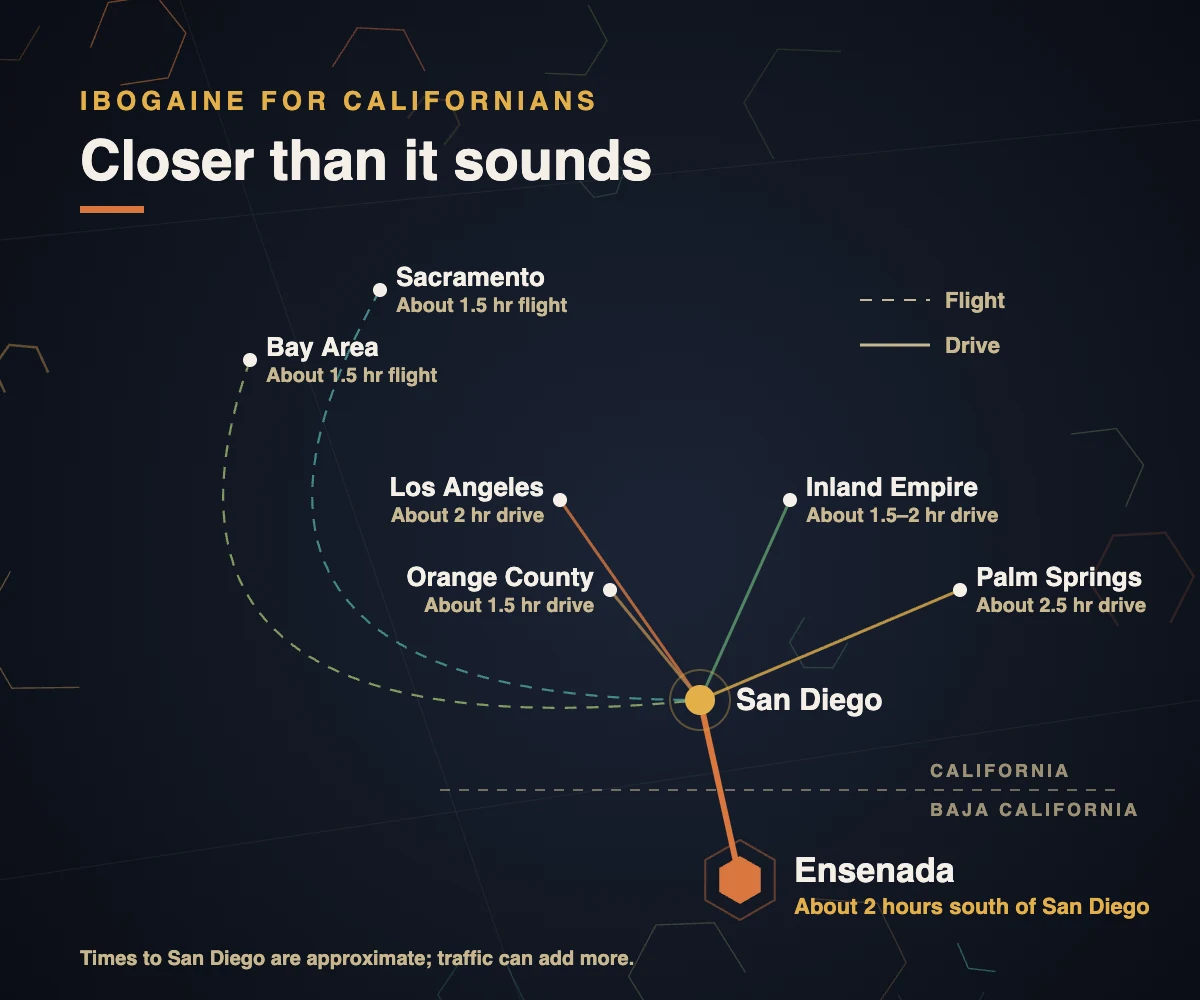
Ensenada is in Baja California, Mexico, a drive of roughly two hours beyond San Diego’s airport. From most of Southern California you can drive to San Diego; from Northern California it’s a short flight. Approximate times to San Diego:
| Where you live | Best way to San Diego | Time to San Diego |
|---|---|---|
| Orange County | Drive | About 1.5 hours |
| Los Angeles | Drive, or a short flight | About 2 hours by car, longer in traffic |
| Inland Empire (Riverside, San Bernardino) | Drive | About 1.5 to 2 hours |
| Palm Springs and the Coachella Valley | Drive | About 2.5 hours |
| Bay Area (SFO, Oakland, San Jose) | Nonstop flight | About 1.5 hours in the air |
| Sacramento | Nonstop flight | About 1.5 hours in the air |
| Central Valley (Fresno, Bakersfield) | Drive or fly | About 3.5 to 5 hours by car |
Add about two hours from San Diego to the clinic, and give yourself a cushion, because Southern California traffic can stretch any drive. If you’re helping someone who lives outside California, our guide to ibogaine centers near me covers travel from every part of the US.
Getting From California to Our Clinic
However you reach San Diego, the last leg is taken care of.
- Flying in: our team meets you at the San Diego airport and takes you down to Ensenada, crossing the border with you.
- Driving down: if you live within driving distance of San Diego, ask admissions about the easiest way to meet our team.
- Paperwork: bring a passport book or passport card for the land crossing back into the US.
- Leave ibogaine behind: it’s against the law to bring it into California or anywhere else in the country.
Being close to home helps after treatment too. The trip back is short, so you aren’t facing a long day of connecting flights right after your stay ends.
What Californians Come to Us For
Fentanyl now drives most of California’s opioid overdose deaths, and opioid detox is what our clinic was founded on. Our programs cover:
- Fentanyl addiction, including fentanyl-laced pills and powder
- Heroin and prescription painkillers such as oxycodone
- Getting off methadone or Suboxone
- Alcohol, with medical detox first
- Stimulants like meth and cocaine
- Depression, anxiety and trauma, alongside or apart from substance use
Each of those pages explains how long a program usually runs for that substance and why.
Ibogaine for California Veterans
Some of the strongest voices for ibogaine research in California are veterans. Veteran advocates backed AB 1103 in 2025, and the best-known ibogaine study of recent years came out of Stanford, right here in California. Its 30 participants were Special Operations veterans, each with a history of traumatic brain injury, who traveled to Mexico for ibogaine given alongside magnesium, and in October 2026 Stanford reported that their PTSD relief was still holding a year later.
The research is still early. It was a small study without a placebo group, and since everyone in it had served and had a head injury, the results may not carry over to other people. If you’re a veteran weighing ibogaine, our page on ibogaine treatment for PTSD and trauma covers screening, safety and what a program looks like.
Choosing a Clinic South of the Border
Baja California has many ibogaine clinics, and they aren’t all run the same way. No California or US agency oversees them, so ask a few hard questions before you commit:
- Will a medical doctor be with you during the ibogaine session itself?
- What heart screening happens before any dose, and who reads the results?
- How close is the nearest hospital, and how would they get you there?
- Who decides what happens with your current prescriptions?
A clinic that answers clearly, and puts it in writing, is a good sign. One that dodges the questions isn’t.
A Short Trip From San Diego, Built for Longer Stays
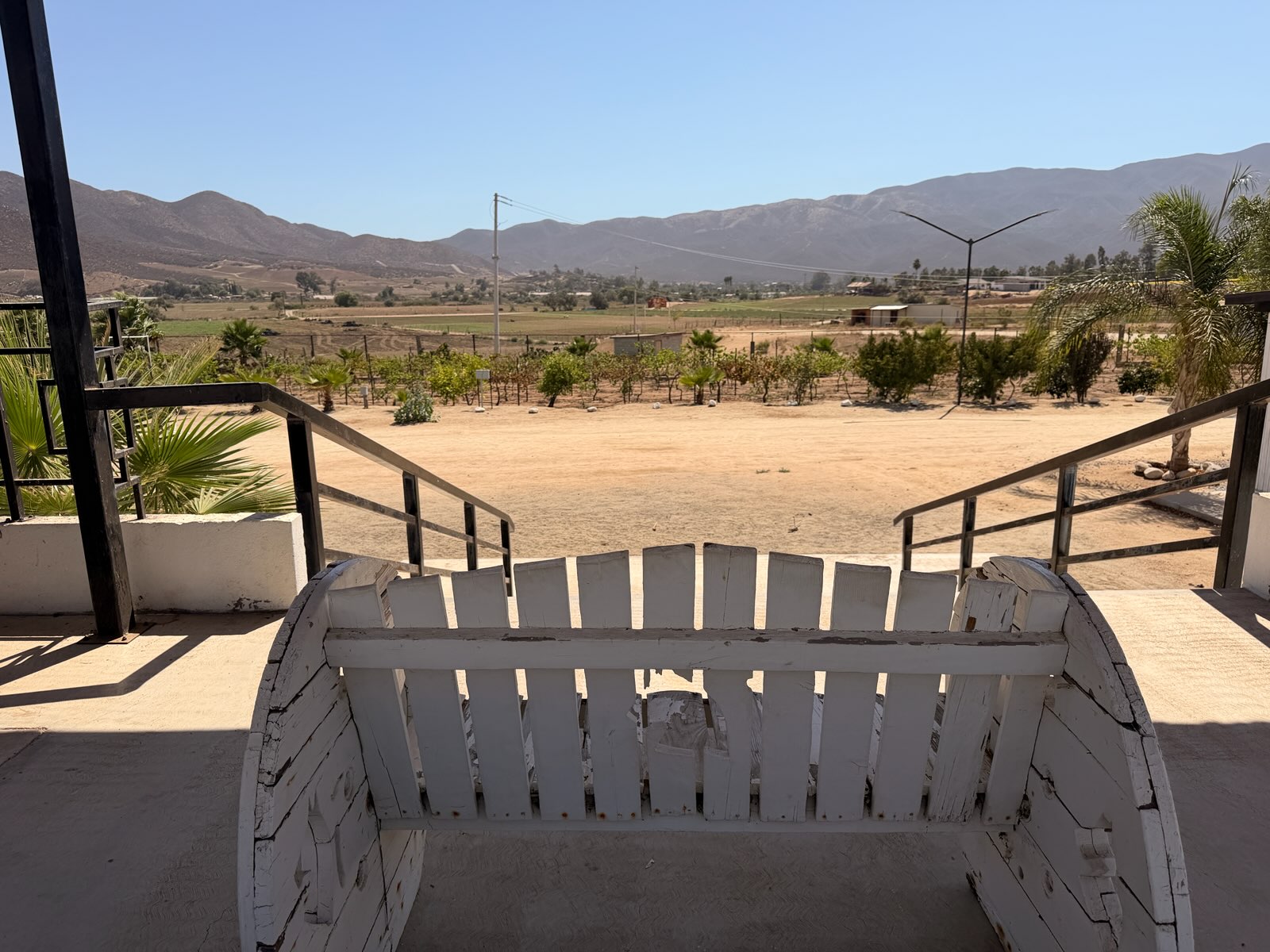
Iboga Treatment Center has been treating guests since 2018 on vineyard grounds outside Ensenada. Our medical team includes three doctors, and more than one of them is with you during the ibogaine session. Magnesium is given with every dose, medical staff are on site at all hours, and if you take a benzodiazepine, a doctor decides how to handle it on an individual basis.
If you’ve been comparing an ibogaine clinic in Baja California against short retreats elsewhere, ask how long each one keeps you after the ibogaine itself. Our programs were designed around that time. You can see the center and our team before you decide.
How Californians Get Started
Reach out by phone or with a short application. Admissions will go over your health history and current medications, arrange a medical screening and then help you choose dates and a program length.
For daily or long-term substance use, four weeks is the length we recommend, and stays can run from one to four weeks or longer. Read more about ibogaine program lengths, the cost of ibogaine treatment and our aftercare.
Apply online or call (877) 876-4157.
Ibogaine in California: Frequently Asked Questions
Quick answers for Californians looking into ibogaine treatment.
Is ibogaine legal in California?
No. It’s Schedule I under both California and federal law, and recent California bills have focused on research rather than treatment. No clinic in the state can legally offer it.
Is there an ibogaine clinic in Los Angeles or San Diego?
Not a legal one. Anyone offering ibogaine inside California is operating outside the law, usually without the heart monitoring and medical backup ibogaine calls for. The closest legal options are across the border in Baja California.
How far is Ensenada from Los Angeles?
Usually about four hours by car: around two hours from Los Angeles to San Diego, depending on traffic, and about two more from San Diego to the clinic.
Can I fly from Northern California?
Yes. San Diego has nonstop flights from San Francisco, Oakland, San Jose and Sacramento, each around an hour and a half. Our team picks you up at the San Diego airport.
Did California legalize psychedelic therapy?
No. A 2023 decriminalization bill was vetoed, a 2024 psilocybin pilot for veterans died in committee, and AB 1103 in 2025 only speeds up approval of FDA-cleared research. None of them allows ibogaine treatment.
Can I get into an ibogaine trial in California?
Not yet. A 2026 bill to fund a University of California trial was held in committee. Federally funded ibogaine trials are being planned, so check ClinicalTrials.gov for any that open near you.
Will my health insurance cover ibogaine treatment?
No. Ibogaine isn’t an FDA-approved treatment, so insurers don’t cover it. Our ibogaine treatment cost page explains what affects the price.
Can I come home to California after treatment in Mexico?
Yes. Getting treatment in Mexico doesn’t stop you from coming home. Just don’t bring any ibogaine with you, since carrying it into the US is against federal law.
Talk to Us About Coming Down From California
Our admissions team can walk you through the trip, the medical screening and what a stay would look like for you.
Want to talk it over first? Admissions is at (877) 876-4157.