ADDERALL & STIMULANT ADDICTION TREATMENT
Ibogaine Treatment for Adderall Addiction
Adderall addiction treatment in Ensenada, Mexico: rest through the Adderall crash with doctors close by, then ibogaine to help you stop needing pills to function.
UNDERSTANDING ADDERALL ADDICTION
Is Adderall Addictive? Why It’s So Hard to Quit
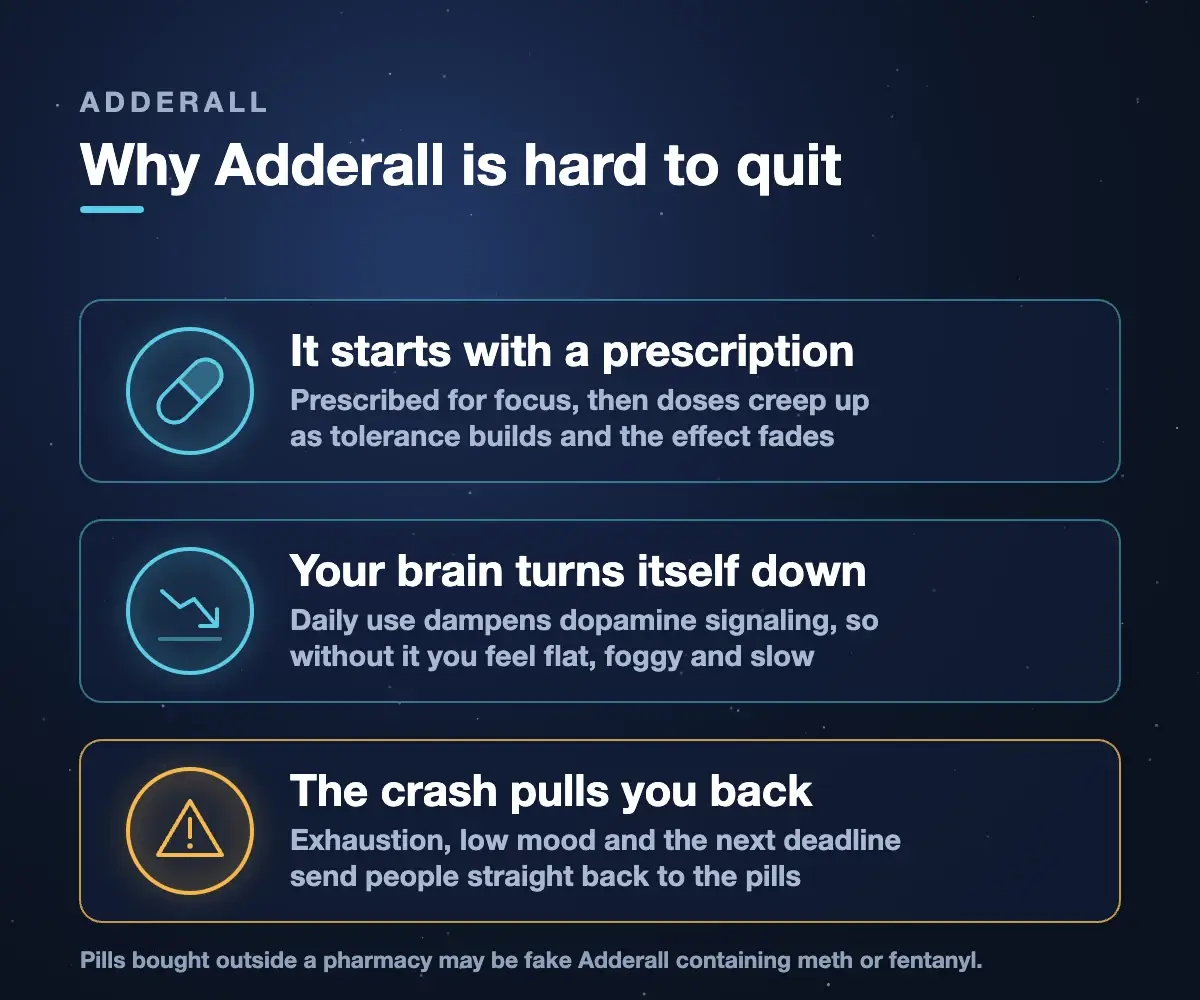
Adderall is a prescription stimulant, a mix of amphetamine salts used to treat ADHD and narcolepsy, and it raises dopamine and norepinephrine in the brain. For someone with ADHD on a carefully prescribed dose, that can quiet the noise and make focus possible. Taken in higher doses, more often or without ADHD, it brings a rush of energy and confidence instead, and that’s when the brain starts adapting to it.
With regular use, the brain dials down its own dopamine signaling to compensate. Tolerance builds, so the same dose does less, and before long Adderall isn’t making you sharper; it’s only getting you back to normal. Without it you’re exhausted, flat and foggy. Hardly anyone sets out to misuse it. It starts with a prescription, a semester of all-nighters, long shifts or a demanding job, and slowly becomes the only way to keep up: doses creep up, refills run out early, and pills start coming from friends or online.
That path carries real risks: chronic sleep loss, weight loss, anxiety, a racing heart, high blood pressure and, at high doses, paranoia or psychosis. Pills bought outside a pharmacy may not be Adderall at all, and the DEA has warned that fake Adderall can contain methamphetamine or fentanyl. Quitting on your own is hard too. Adderall withdrawal is rarely dangerous to the body, but the crash, the low mood and the foggy focus send people straight back to the pills, and, just as with meth addiction and cocaine addiction, there’s no approved medication to lean on the way there is for opioids.
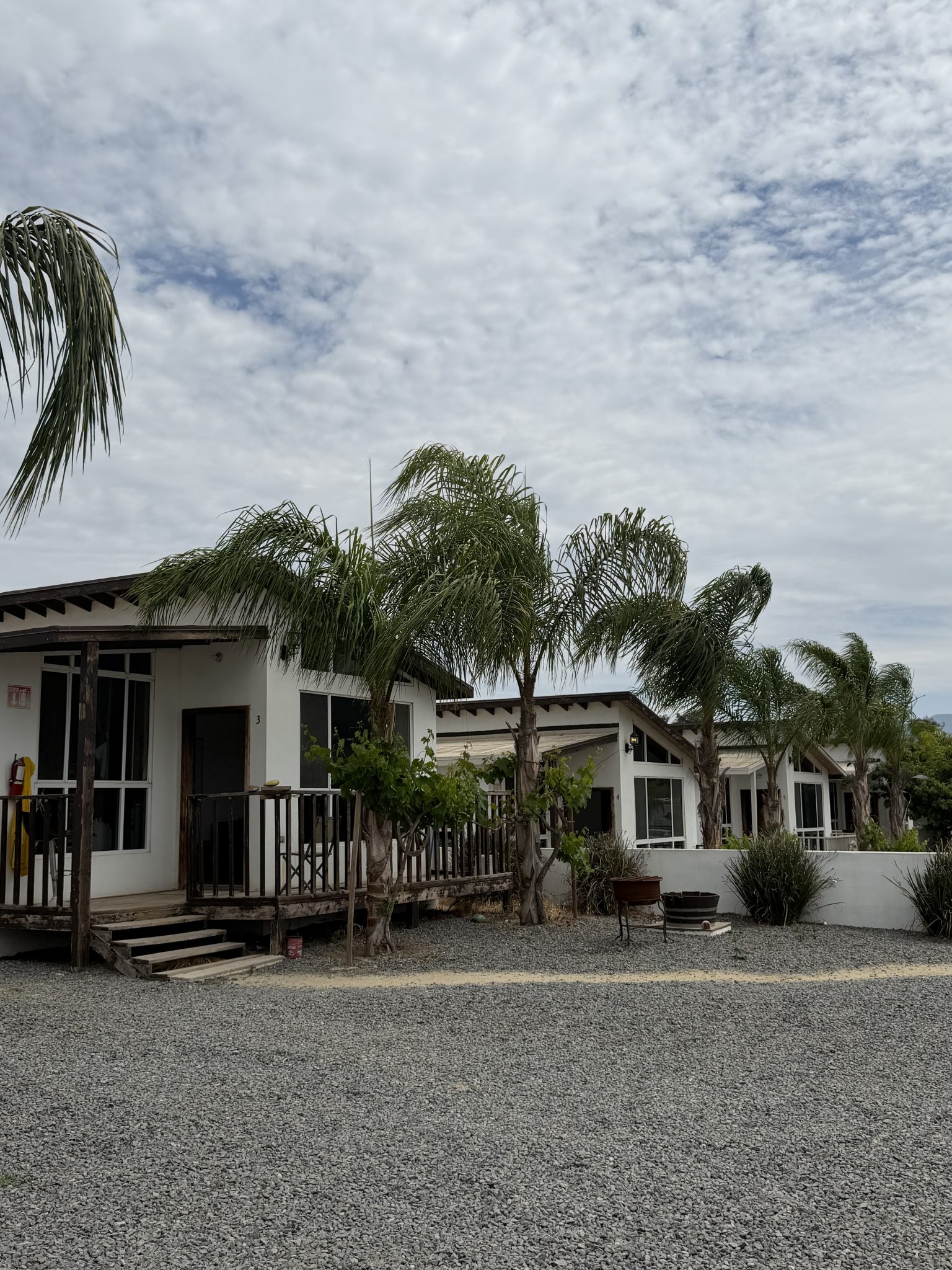
Iboga Treatment Center, our ibogaine clinic in Ensenada, Mexico, sits far from the deadlines, inboxes and easy refills that keep Adderall use going. That distance is part of the treatment: time to sleep, eat and think clearly before ibogaine and after it.
THE SCIENCE
How Ibogaine Treats Adderall Addiction
Rather than targeting a single receptor, ibogaine works on several brain systems together: the dopamine and serotonin transporters that stimulants wear down, plus NMDA and opioid receptors. As it breaks down, it leaves behind noribogaine, which keeps working in the body for several days. In animal studies, ibogaine and closely related compounds reduced how much cocaine or methamphetamine the animals chose to take. If you’re new to it, start with our guide to what ibogaine is.
Research in people is further behind, and we want to be upfront about that. A 2014 study from Brazil looked back at 75 people treated with ibogaine, many of them former cocaine or crack users: 61% reported staying abstinent, and those who had more than one session stayed sober longer. With no control group and self-reported results, it’s encouraging but not proof. No controlled trial has tested ibogaine for Adderall or amphetamine addiction yet, and results vary from person to person.
What guests talk about most is the session itself. The flood dose is a long, inward-looking experience of 24 to 36 hours, and for people coming off Adderall it often circles back to what the pills were covering for: the pressure to perform, the fear of falling behind, the feeling of not being enough without them. In the weeks after, many feel calmer, crave less and think more clearly. Ibogaine isn’t a one-and-done cure, though. After months or years of stimulant use, the dopamine system needs weeks or months to recover, and the sleep, food, counseling and smaller iboga sessions that follow are what help recovery take hold.
AWAY FROM THE PRESSURE
An Adderall Rehab Away From the Deadlines
Many people who call us about Adderall have already tried to quit at home: flushing pills, setting rules, switching doctors. Then a deadline lands and the pills come back out. Outpatient therapy and counseling help plenty of people, but they ask you to get through the crash while still living inside the pressure that drove the use. Coming to us for ibogaine in Mexico takes you out of that pressure long enough to heal, with no deadlines, no refills and room to sleep, eat and recover.
Adderall Withdrawal Timeline, With and Without Ibogaine
Adderall withdrawal symptoms are rarely dangerous to the body, but they can be miserable, and how hard they hit depends on your dose, how often you took it and for how long. The first card shows how it tends to unfold without help; the second shows how we handle the same stretch.
Without Ibogaine
On your own
Days 1–3: the Adderall crash
Deep exhaustion, sleeping 12 hours or more, a big appetite, low mood, anxiety and irritability. After running on a stimulant, the body pays back its sleep and energy debt all at once.
Days 4–10
Flat mood, little pleasure in anything, brain fog, poor focus, vivid dreams and strong cravings. Everyday tasks feel impossible, and many people relapse here, especially with a deadline coming.
Weeks 2–6
Low motivation, trouble concentrating and low energy, with cravings set off by stress at work or school. If you have ADHD, the original symptoms come back on top of withdrawal.
Month 2 and beyond
Slow improvement as the brain’s reward system recovers. Without structure and a plan for focus and energy, the risk of relapse stays high, often peaking the first time pressure spikes.
Adderall Recovery With Ibogaine
Our approach
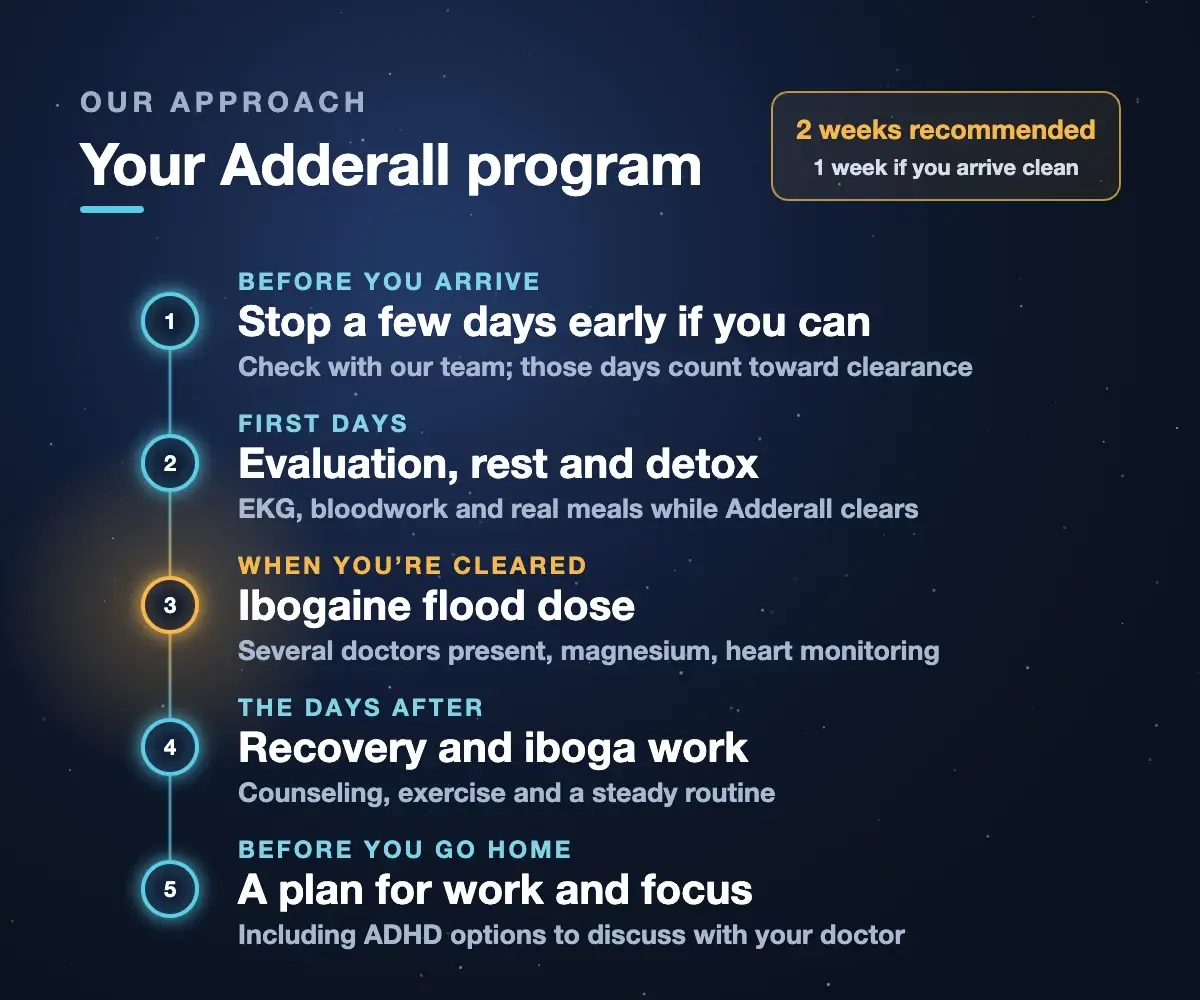
Before you arrive
If you can, stop taking Adderall a few days ahead, after talking with our team. Those days count toward the stimulant-free time needed before ibogaine. Still taking it? We’ll detox you here first.
First days
A medical and psychological evaluation, an EKG, bloodwork and a review of every medication you take, while rest, real meals and water help your body recover from the crash.
When you’re cleared
Once you’ve been off stimulants long enough and our doctors sign off, you take the ibogaine flood dose. More than one doctor is in the room, magnesium is part of the protocol, and your heart is watched from start to finish.
The days after
Smaller iboga sessions, integration therapy, exercise and good food. You practice working, focusing and resting without a stimulant.
Going home
Before you go, we work through the pressures waiting at home, including how you’ll handle ADHD symptoms with your doctor, and shape your aftercare plan around them.
Thoughts of suicide or self-harm during the crash are an emergency: call or text 988, the US Suicide & Crisis Lifeline, right away. These timelines are typical ranges, and yours may run shorter or longer.
HOW TO QUIT ADDERALL
How to Quit Adderall Safely
Getting off Adderall is less about willpower than about timing and support. The hard part comes in the first weeks: the crash, then a long stretch of low energy and poor focus while the brain’s reward system recovers. Trying to push through that in the middle of work or school is where many attempts fall apart, and if the crash has ever brought severe depression, it’s not something to go through alone.
With us, timing is part of safety. Stimulants and ibogaine both affect the heart, so Adderall has to be fully cleared before your session. Standard safety guidance for ibogaine calls for five or more stimulant-free days, and our doctors decide your exact timing; days you’ve already been off Adderall before you arrive count toward it. For a closer look at your first days, read how we prepare you before ibogaine.
Tell us about everything else in the mix too: alcohol or sleeping pills to come down, other stimulants when the Adderall runs out, or pills of unknown origin. Each one changes your safety plan. If there’s any chance your pills contained fentanyl, keep naloxone (Narcan) on hand until you arrive.
How Long Does Adderall Treatment Take?
1 week
Only if you arrive completely clean of Adderall
2 weeks
Our recommended Adderall program
+ Detox days
Added if you’re still taking Adderall when you arrive
Two weeks works best when you can come in a few days off Adderall. Long-term or high-dose use, or other substances in the mix, can call for a longer stay. Guests who want more time after treatment can also stay on in supervised aftercare housing. Compare the options on our ibogaine treatment programs page.
Our Adderall Detox and Recovery Program
Screening and Rest
First comes screening: an EKG to check your heart, bloodwork that includes liver and kidney function, a look at every medication you take, and a psychological assessment. If you’re still taking Adderall, we detox you here, with sleep, food and medical care while it clears.
The Ibogaine Session
We have three medical doctors on staff, and more than one is with you for the flood dose. Magnesium goes in alongside the ibogaine, a monitor follows your heart rhythm the entire time, and our medical team is on the grounds around the clock. We never go ahead until our team is confident you’re safe.
Post-Flood Iboga Work
The days after the session are for recovery: smaller iboga sessions, integration therapy with licensed counselors, exercise, nutrition and a steady daily rhythm. You get to practice working, focusing and resting without a stimulant before you go back to real life.
Integration and Aftercare
Together we plan for what’s waiting at home: your job or classes, your sleep, and how you’ll manage ADHD symptoms with your doctor if you have them. Your aftercare plan is shaped by your actual schedule and pressures, not copied from a template.
SIGNS IT’S TIME FOR HELP
Signs of Adderall Addiction
Adderall addiction rarely looks like the stereotype. Many of the people we treat are high-functioning, holding down demanding jobs, finishing degrees and raising families, right up until they can’t. These signs often mean Adderall has stopped helping and started running your life:
- ✓ Taking more than prescribed, or running out before your refill
- ✓ Needing it just to get out of bed or feel normal, not to focus
- ✓ Getting pills from friends, online or from more than one doctor
- ✓ Crashing hard whenever you stop: sleeping for a day, feeling empty or hopeless
- ✓ Losing weight, sleeping only a few hours, a racing heart or constant anxiety
- ✓ Promising yourself you’ll cut back, and not being able to
If several of these sound familiar, you’re not lazy and you’re not weak. Your brain has adapted to a powerful stimulant, and it needs time and support to adapt back. When anxiety or depression sit underneath the Adderall use, we treat those during your stay as well; see ibogaine for anxiety and ibogaine for depression. To hear from people who’ve been through it, visit our testimonials page.
Adderall Withdrawal and the Crash: Your Questions Answered
Is Adderall addictive?
It can be. Adderall is an amphetamine, and the DEA lists it as a Schedule II controlled substance because of its potential for misuse and dependence. Plenty of people take it exactly as prescribed for ADHD without becoming addicted. The risk climbs with higher doses, taking it more often than prescribed, crushing or snorting pills, or using it to stay awake, lose weight or keep up at work or school. Over time the brain comes to rely on it, and stopping brings a crash and cravings that make quitting hard.
What are the symptoms of Adderall withdrawal?
Common Adderall withdrawal symptoms include exhaustion, sleeping far more than usual or sleeping badly, a bigger appetite, low or flat mood, anxiety, irritability, trouble concentrating, slowed thinking, vivid or unpleasant dreams and strong cravings. For a while, some people can’t enjoy anything at all, a symptom called anhedonia. Withdrawal is rarely dangerous to the body, but depression during the crash can be serious. Anyone having thoughts of suicide or self-harm should call or text 988 in the US without waiting.
How long does Adderall withdrawal last?
The crash usually begins within a day of the last dose and is worst over the first few days. Acute withdrawal tends to ease within one to two weeks, but low energy, poor focus and cravings can hang on for several weeks, longer after heavy, long-term use. Your dose, how long you’ve been taking it and anything else you use all change the timeline. With us, the hardest days happen somewhere calm, with medical care, before your ibogaine session.
What is the Adderall crash, and can ibogaine help with it?
The Adderall crash, often called the comedown, is the drop that comes when the drug wears off or when you stop: heavy fatigue, a flat or low mood, hunger, irritability and trouble focusing or feeling pleasure. After a single dose it may last hours; after weeks of heavy use it can go on for days. We carry you through it with sleep, nutrition and daily counseling before your flood dose, and many guests describe a lifted mood and clearer thinking in the weeks after treatment. Low mood can still come and go while your brain recovers, so tell our staff right away if it gets heavy.
Is ibogaine safe after long-term Adderall use?
Ibogaine carries real risks, above all for the heart, so it belongs only in a medical setting with careful screening. Years of stimulant use can also wear on the heart and blood vessels. You’ll have an EKG workup, bloodwork and a medication review first, and Adderall must be completely out of your system before treatment. In the session itself, more than one of our three doctors stays with you, you receive magnesium as part of the protocol, and a monitor tracks your heart continuously, with medical staff on site at all hours. Certain heart conditions and medications rule ibogaine out, and we’ll tell you plainly if that applies to you. Read Is Ibogaine Safe? The Honest Answer for the full picture.
Do I need to stop taking Adderall before I arrive?
It helps, but you don’t have to. If you can stop a few days before you arrive, you’ll come in past the worst of the crash, and those days count toward the stimulant-free time required before ibogaine. That’s when our 2-week program works best. The 1-week program is only for guests who arrive completely clean of Adderall. If you’re still taking it when you get here, that’s okay: we’ll detox you on-site first, with rest, food and medical care, and that time is added to your stay.
Please talk with our team before you stop, and be honest about exactly what you take, how much, how often and when you last took it. If the crash has ever brought severe depression or thoughts of self-harm, don’t go through it alone; let us detox you here. And if you have a prescription, let your prescribing doctor know your plans.
How does ibogaine help with stimulant addiction?
Ibogaine affects the dopamine and serotonin pathways that stimulant use depletes, and in animal studies it reduced stimulant-seeking behavior. Early human data, mostly from people who used cocaine, is encouraging, but there are no controlled trials for Adderall yet. What guests describe most is a long, introspective session that brings the reasons behind their use into focus, followed by weeks of steadier mood and fewer cravings. The days after the flood dose, and the aftercare plan you take home, are where much of the healing happens.
I was prescribed Adderall for ADHD. Can I still come?
Yes. Many of our Adderall guests started with a legitimate prescription. Ibogaine doesn’t treat ADHD, so part of your stay is planning how you’ll manage focus and energy afterward: structure, sleep, exercise and non-stimulant options to discuss with your doctor. We’ll also help you think through how to talk with your prescriber about what comes next. One honest note: if you take Adderall as prescribed and only want to adjust your dose, that’s a conversation for your doctor, not a reason for ibogaine.
What if I’ve also used other stimulants, alcohol or fake Adderall?
That’s common. Many guests use alcohol or sedatives to come down, or other stimulants when their Adderall runs out. Tell us everything, because it changes your safety plan and timeline. It matters most if you’ve taken pills bought outside a pharmacy: counterfeit Adderall can contain methamphetamine or fentanyl, and our medical team needs to know before treatment. We regularly treat guests whose stimulant use overlaps with alcohol addiction and other substances, and your plan covers all of it.
How long should I stay for Adderall treatment?
Two weeks is the length we recommend for Adderall, and it works best if you can arrive a few days off it. That covers your evaluation, your flood dose once you’re cleared, and recovery afterward with smaller iboga sessions, counseling, nutrition and a steady routine. A 1-week program is possible only if you arrive completely clean. If you’re still taking Adderall when you get here, the on-site detox adds time. Long-term, high-dose use or other substances can call for a longer stay, and we’ll recommend a length after your screening.
How much does Adderall rehab cost?
Your price depends mainly on how long you stay and whether you need on-site detox first. After a free consultation, our admissions team can give you an exact figure for your plan, and our ibogaine treatment cost page explains what a stay includes.
How do I get to the clinic from the US?
Book a flight to San Diego International Airport. A member of our team meets you at arrivals and drives you roughly two hours south to Ensenada, Baja California, handling the border crossing on the way. Admissions will help you time your trip and tell you what to pack. Since US law lists ibogaine as a Schedule I drug, it can’t be offered legally there, so our clinic is in Mexico.
Still have questions? Call admissions at (877) 876-4157.
More on Stimulants and Mood
Meth hits the same dopamine system as Adderall, only harder. See how our longer meth programs give the brain time to heal.
Using cocaine as well, or instead? Read how our cocaine rehab handles testing, the comedown and the weeks that follow.
When the crash leaves you low for weeks, depression may be part of the picture. Learn how ibogaine is used for depression at our clinic.
Using something else? Every substance we treat is listed on our ibogaine addiction treatment page.
Ready to Stop Running on Adderall?
Our admissions team offers a free, confidential consultation about Adderall treatment. No pressure, just an honest conversation about whether ibogaine is right for you.