MENTAL HEALTH TREATMENT
Ibogaine Treatment for Mental Health
Depression, anxiety and PTSD can leave you feeling stuck, even after years of medication and therapy. At Iboga Treatment Center in Ensenada, Mexico, ibogaine therapy is paired with careful medical screening, round-the-clock medical care, integration counseling and aftercare, so we treat the whole picture rather than one diagnosis.
One Program
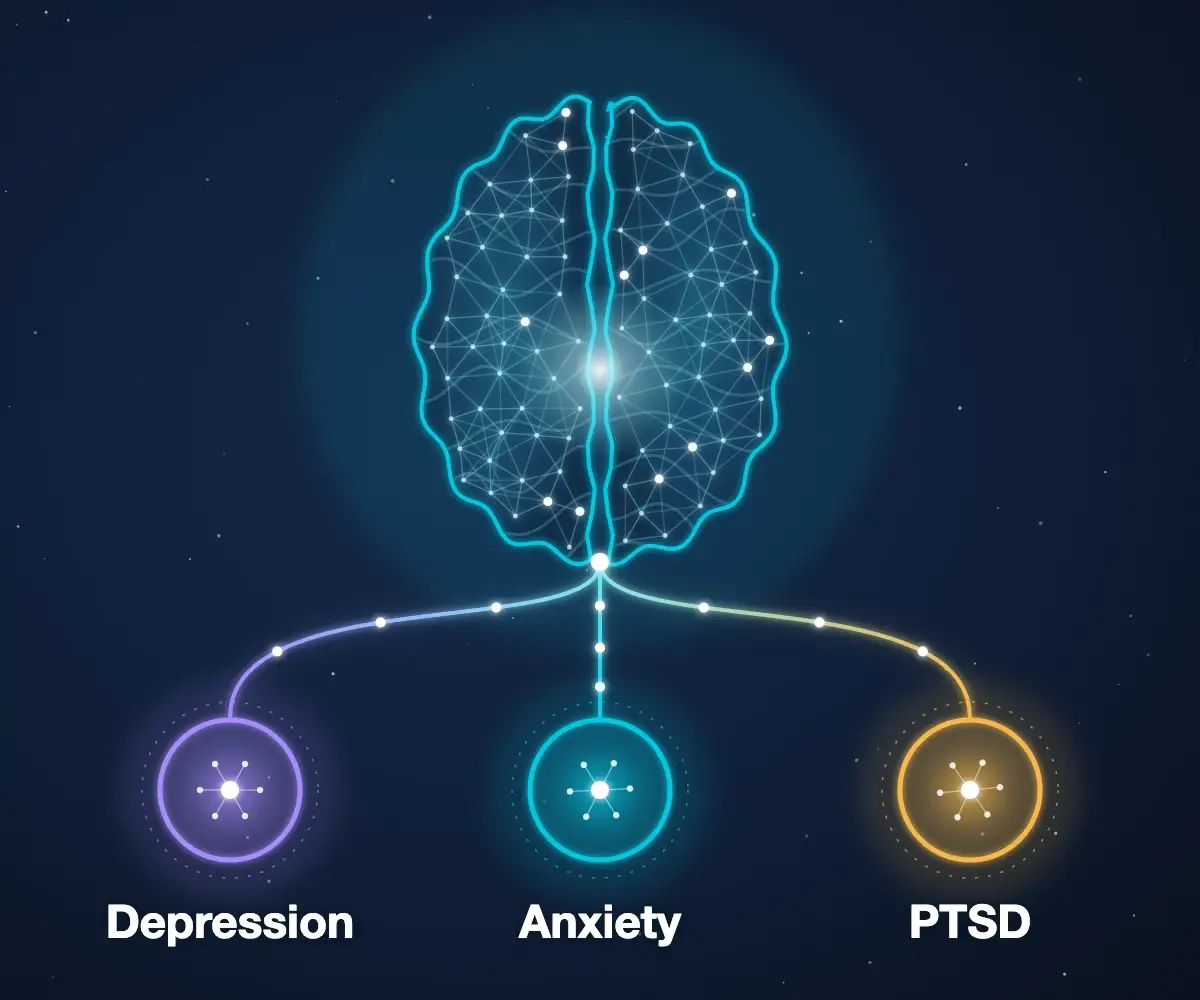
Ibogaine for Depression, Anxiety, and PTSD in One Program
Depression, anxiety and PTSD rarely show up alone, and for many people they don’t respond fully to medication and therapy. Ibogaine offers a different approach: a single, medically supervised session that many guests describe as bringing long-standing emotional patterns into clear view, followed by structured integration therapy and extended care to turn that insight into lasting change.
Because these conditions so often overlap, our program treats the whole picture rather than one diagnosis at a time, whether you’re exploring ibogaine for depression, ibogaine for anxiety or ibogaine for PTSD. Every guest at our Ensenada center completes full medical and psychological screening before treatment and is monitored by medical staff throughout. Ibogaine is not an approved treatment for any mental health condition, and it isn’t right for everyone, but for the right person it can be a real turning point.
Mental Health Conditions We Treat with Ibogaine
For depression that hasn’t responded to antidepressants or therapy. A single supervised session, followed by integration therapy and extended care, may open a window for real change.
For persistent anxiety that keeps the mind and body on constant alert. The introspective ibogaine session, paired with integration work, can help guests see the patterns underneath the worry.
For trauma that stays with you long after the event. Ibogaine often brings underlying experiences to the surface, and our integration therapy is built to work through what comes up.
Many people who live with depression, anxiety or trauma also struggle with substance use. If that’s part of your story, see our ibogaine addiction treatment programs.
What to Expect
Your Ibogaine Treatment Journey
Before treatment
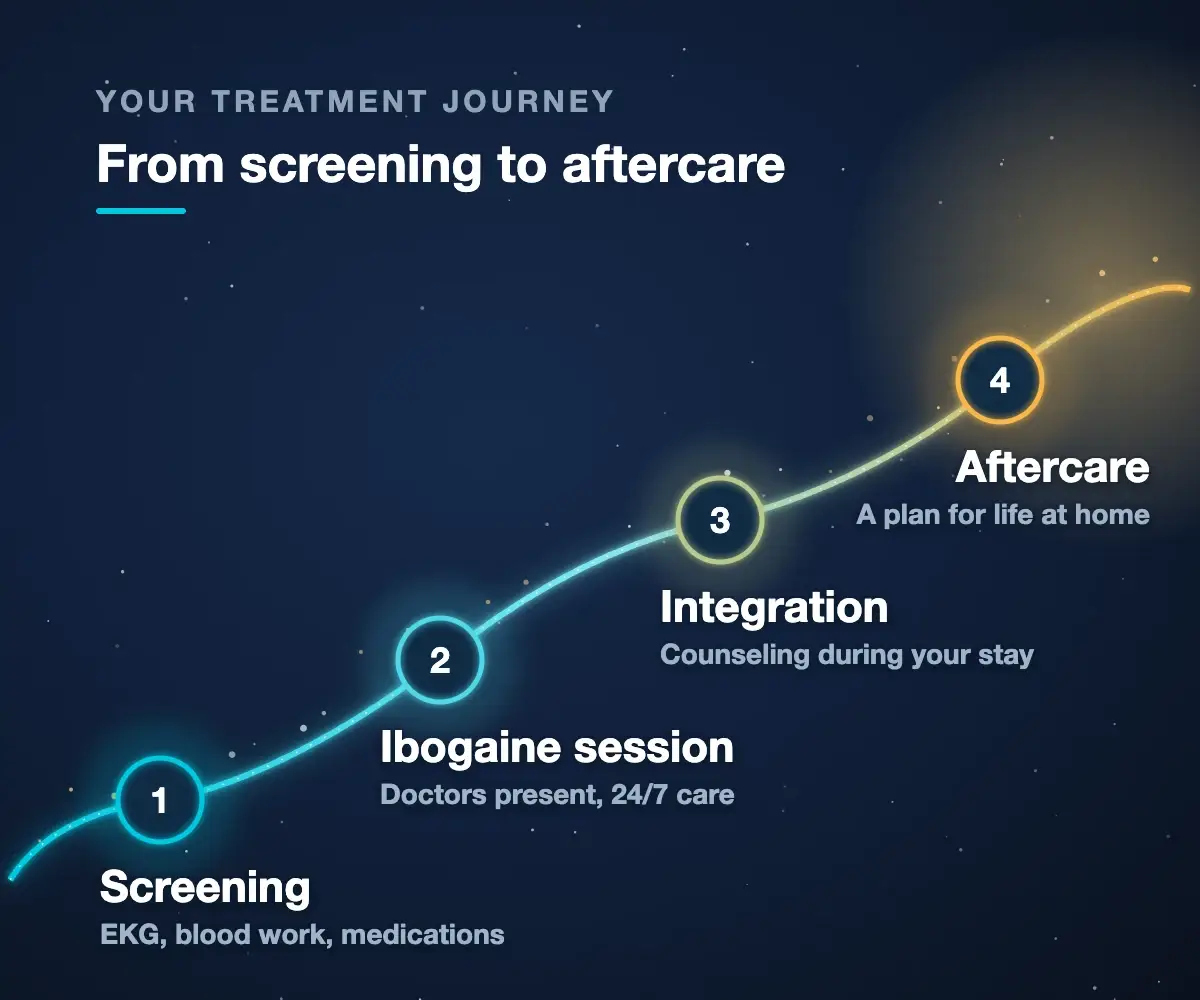
Ibogaine treatment is not a quick fix. At Iboga Treatment Center, the work begins before you arrive. Every guest completes a full medical and psychological evaluation, including an EKG, blood work and a review of current medications. Antidepressants come down gradually under medical supervision, here or at home beforehand, and our doctor manages benzodiazepines individually. Preparation is individualized and never rushed.
The ibogaine session
Your session happens in a clinical room with nonstop heart and medical monitoring, several doctors present and magnesium to help protect the heart. Guests often describe a long, deeply introspective experience in which old patterns, memories and emotions come into view. Our medical and clinical team is with you throughout, keeping you physically safe and emotionally supported as it unfolds.
Programs run from one to four weeks; a one-week stay is decided case by case, and we usually suggest staying longer. The right length depends on your history, your medications and what you’re working through.
Our clinical standards
- Full medical and psychological screening, including an EKG and blood work
- Individualized dosing under medical supervision
- Multiple doctors present during treatment, with magnesium co-administered
- Medical staff on site 24/7
- Integration counseling with licensed counselors
Integration and Aftercare
Long-Term Integration and Support
The ibogaine session opens a window; integration is where the change happens. In the weeks after treatment, ibogaine’s active metabolite, noribogaine, remains in the body, and many guests describe a period of unusual clarity. We use that window deliberately. During your stay, integration counseling helps you make sense of what came up and turn it into practical changes in routines, relationships and coping strategies.
Your aftercare plan, built before you leave, may include therapy at home, psychiatric follow-up, and support with sleep and exercise. Recovery is built in the months after treatment, and our goal is to make sure you don’t walk that road alone. Learn more about our ibogaine aftercare program.
The Research
Ibogaine and Mental Health: What the Research Shows
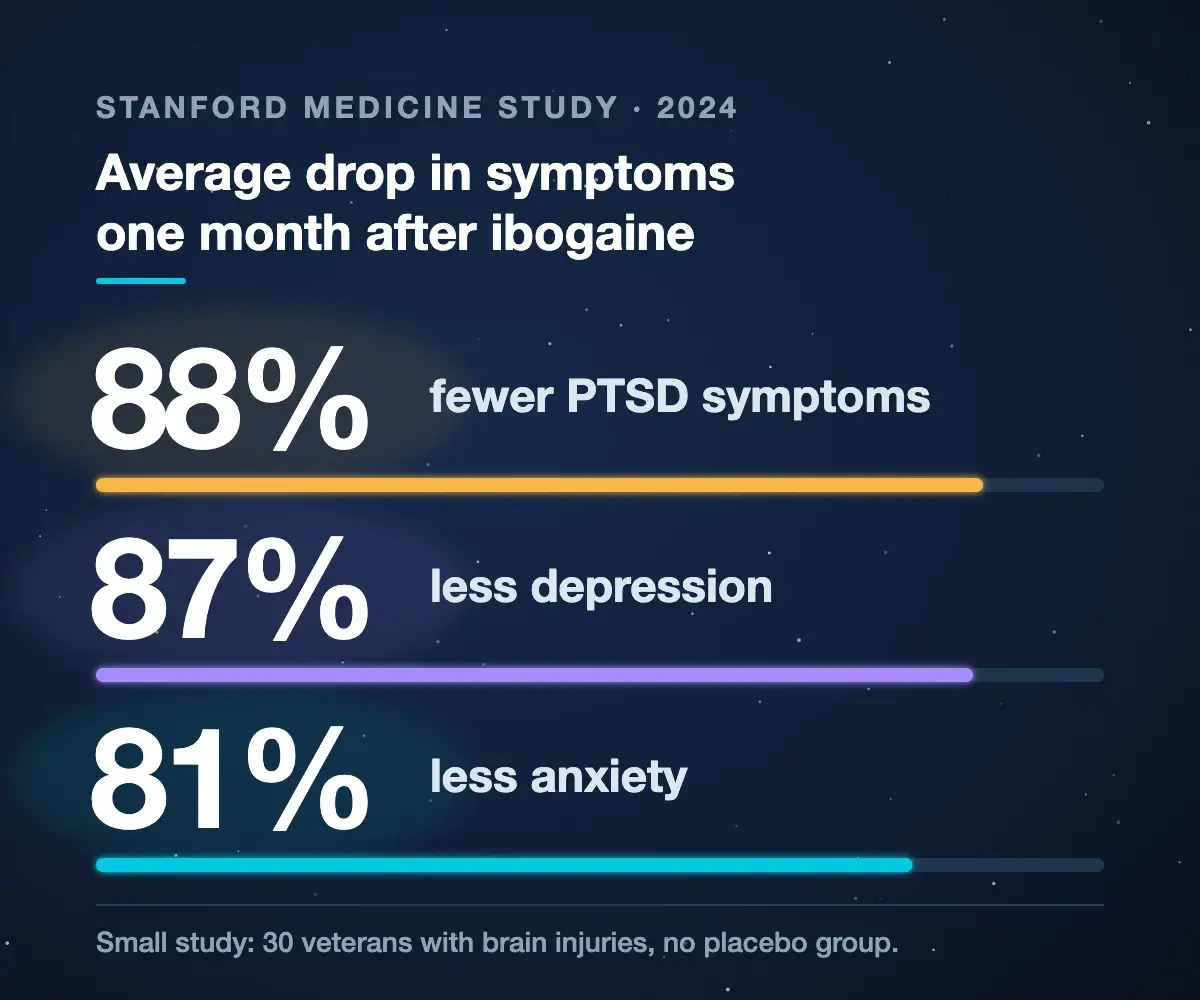
Research on ibogaine for mental health is still early, but it’s growing. The best-known study so far came from Stanford Medicine in 2024: a Nature Medicine paper on 30 Special Operations veterans with brain injuries who were given ibogaine and magnesium in Mexico. A month after treatment, average symptom scores were down 88% for PTSD, 87% for depression and 81% for anxiety, with no serious side effects reported.
Scientists are still working out why. Ibogaine’s long-acting metabolite, noribogaine, slows the reuptake of serotonin, and animal studies suggest ibogaine may raise growth factors such as GDNF, which support the growth and survival of brain cells. It’s encouraging work, but early: the Stanford trial was small, lacked a placebo group and studied only brain-injured veterans. Larger trials are coming, backed by $50 million Texas committed in 2025. Read more about how ibogaine works.
Safety First
Is Ibogaine Right for You?
Ibogaine is a powerful medicine. It affects the heart’s rhythm, which is why it should only ever be taken with medical screening and monitoring, and it isn’t safe for everyone.
Ibogaine isn’t an option for anyone with long QT syndrome, an irregular heartbeat or other serious heart disease, a past stroke, schizophrenia or active psychosis, serious kidney or liver disease, or a current pregnancy, and it isn’t given while breastfeeding.
For that reason, nobody is approved until they’ve passed medical and psychological screening, EKG and blood work included. If you’re not sure whether ibogaine is right for you, apply and our medical team will review your health history with you.
Learn More About Ibogaine
Where ibogaine comes from, how it has been used and what to know before considering treatment.
What happens in the brain during and after an ibogaine session, from serotonin to neuroplasticity.
How we support you after treatment, from your personal aftercare plan to extended aftercare with supervised housing.
Ibogaine for Mental Health: Frequently Asked Questions
What is ibogaine?
Ibogaine is a naturally occurring psychoactive substance found in the root bark of iboga, a Central African shrub. It has a long history of ceremonial use there, and today it’s best known for its use in addiction treatment and, more recently, in research on depression, anxiety and PTSD. Learn more on our What Is Ibogaine? page.
How can ibogaine help with depression, anxiety and PTSD?
Ibogaine isn’t a cure, and it doesn’t rewire the brain overnight. Many guests describe the session as a long, introspective experience that brings painful memories and long-standing patterns into view, often with a sense of distance that makes them easier to look at. Noribogaine lingers for days afterward, and researchers suspect this may be a period when the brain is especially open to change. Our integration counseling is built to make the most of that window. The science is explained in how ibogaine works.
Is ibogaine treatment safe?
Because ibogaine can trigger dangerous heart rhythm problems, it must only be taken with medical screening and monitoring. At Iboga Treatment Center, every guest is screened with an EKG and blood work first. While you’re in treatment, a team of doctors attends, magnesium helps protect your heart, and medical staff are always on site. All treatment carries some risk, and we’ll go over the risks with you before you make a decision.
Can I take ibogaine if I'm on antidepressants or benzodiazepines?
Some antidepressants, particularly SSRIs and MAOIs, carry real interaction risks with ibogaine, so our medical team reviews your medications and builds a personalized plan with you. Many guests taper off antidepressants on-site under medical supervision as part of preparing for treatment, while others taper before arriving, guided by their own doctor or ours. Our doctor evaluates any benzodiazepine use one guest at a time. Please don’t stop any medication on your own.
What results can I expect?
Results vary, and no one can promise a specific outcome. Stanford’s 2024 study saw average drops of 81% to 88% in veterans’ PTSD, depression and anxiety symptoms a month after treatment, but it was small and had no placebo group. Ibogaine works best as part of a bigger process, which is why integration counseling and aftercare are built into every program.
How long is the program?
Programs start at one week, though we generally recommend a longer stay. The right length depends on your history, your medications (some need to be tapered first) and what you’re working through. Our admissions team will recommend a length after reviewing your application.
What happens after I leave?
We create an aftercare plan with you before you go. That plan might cover therapy near home, follow-up with a psychiatrist, and routines for sleep and exercise. Guests who need more time can stay on in our extended aftercare program, which includes supervised housing. See our ibogaine aftercare page for details.
What does ibogaine therapy cost here?
Cost depends mainly on how long you stay. See our ibogaine treatment cost page for pricing details, or apply and our admissions team will give you a quote for your program.
Where are you located, and how do I travel there?
We’re based in Ensenada, Baja California, which is around two hours by car south of San Diego. Arrive by plane at San Diego International Airport; our team picks you up and drives you to the clinic, crossing the border with you. Admissions can help you schedule the trip and decide what to pack. Ibogaine is illegal to offer in the US because it’s classified as Schedule I, so our treatment takes place in Mexico.
How do I get started?
Fill out our application for ibogaine treatment or call us at (877) 876-4157. Our team will review your health history, answer your questions and help you decide whether ibogaine is right for you. There’s no obligation.
Ready to Talk About Treatment?
Our team is available for a free, confidential consultation to discuss your mental health history and whether ibogaine treatment may be right for you.