Ibogaine Treatment for Anxiety
A Different Approach to Anxiety That Won't Let Go

HOW IT WORKS
How Ibogaine Works for Anxiety
Ibogaine isn’t an anti-anxiety pill you take every day. It’s a single, medically supervised treatment that acts on several brain systems at once. Inside the body, ibogaine becomes noribogaine, which holds back serotonin reuptake somewhat like certain antidepressants and lasts for days. Ibogaine also acts on opioid, NMDA (glutamate) and nicotinic receptors, which are tied to mood, stress and learning. Researchers are still learning exactly how these effects add up, and much of the evidence comes from laboratory and animal studies.
Many guests describe the experience itself as dreamlike. Memories and old fears come up, often from childhood or key moments in their lives, but they can look at them from a calmer distance than usual. For people who have spent years stuck in fight-or-flight, that new perspective can be the start of real change. The most intense part usually lasts several hours, and our medical team monitors you the whole time.
Some researchers believe the weeks after treatment bring heightened neuroplasticity, a period when new habits may form more easily, though that idea is still under study. That’s why integration therapy and aftercare matter so much: they help you practice calmer ways of responding while that window is open. Ibogaine isn’t a cure for anxiety, and results vary from person to person. For the full science, see our guide to how ibogaine works.
What to Expect From Ibogaine Treatment for Anxiety
Evaluation and Preparation
The Ibogaine Session
Recovery and Integration
Extended Stay and Aftercare
Sustained peace requires a well-structured bridge back to daily life. We co-create a personalized, practical aftercare plan, outlining local therapists, daily mindfulness habits, and routine check-ins to prevent relapse.
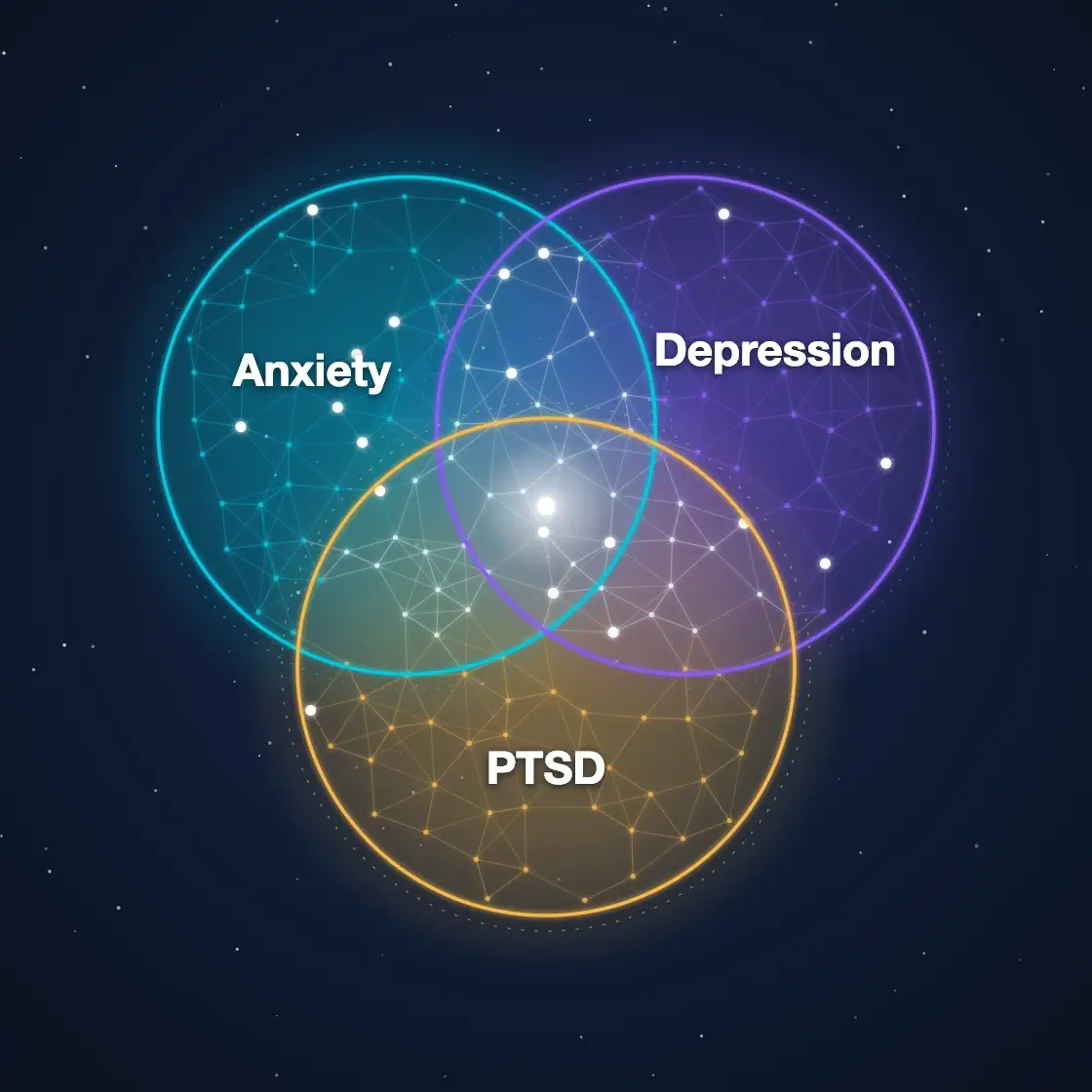
Anxiety, Depression, and PTSD Often Overlap
Anxiety rarely shows up alone. According to the Anxiety & Depression Association of America, nearly half of people diagnosed with depression also have an anxiety disorder, and PTSD often comes with anxiety and depression too. Racing thoughts, trouble sleeping, irritability and poor concentration can be part of all three. They also tend to feed each other: worry ruins sleep, poor sleep drains energy and mood, and painful memories keep the nervous system on high alert. Living with more than one of them can make each one harder to treat.
That overlap is one reason ibogaine has drawn so much interest. Since it affects several brain systems together and often gives people a fresh perspective on their past, it may ease more than one of these problems at once. That’s what researchers saw in the Stanford study below. Rather than treating anxiety, low mood and trauma as separate problems, treatment can look at the patterns they share. Still, ibogaine isn’t a replacement for ongoing mental health care, and it isn’t right for everyone.
At Iboga Treatment Center, our medical team looks at your whole history, not just one diagnosis, before recommending treatment. If depression or trauma is also part of it, see our pages on ibogaine treatment for depression and ibogaine treatment for trauma and PTSD, or ask admissions which program suits you.
Ibogaine Treatment for Depression and Anxiety: What the Research Shows
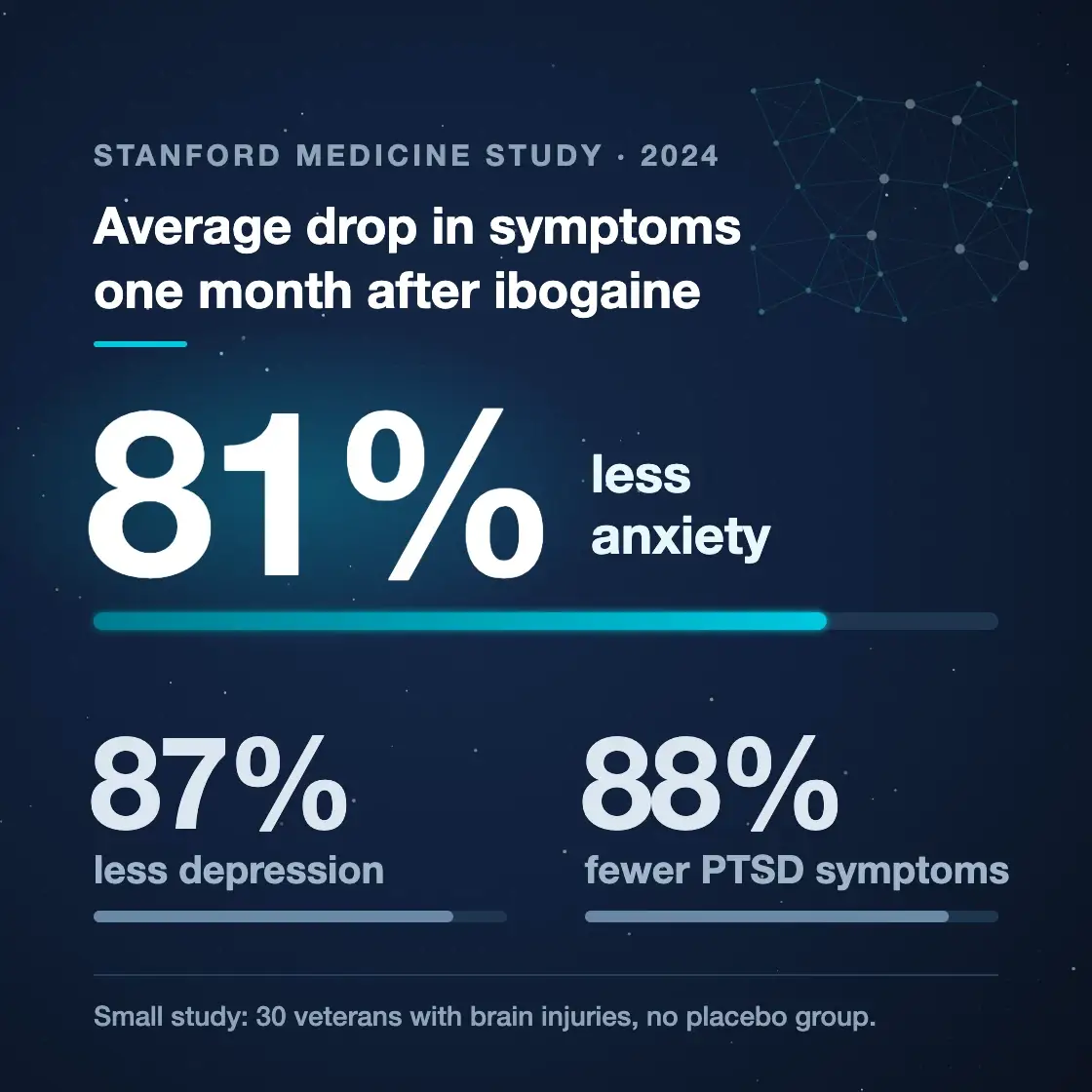
Does ibogaine help with depression and anxiety? The strongest evidence so far comes from a Stanford Medicine study published in Nature Medicine in January 2024. The study treated 30 Special Operations veterans who had traumatic brain injuries, using ibogaine plus magnesium to protect the heart, at a clinic in Mexico. One month later, their anxiety symptoms had dropped by an average of 81%, depression by 87% and PTSD by 88%. There were no serious side effects and none of the heart problems that have sometimes been linked to ibogaine.
Those results are encouraging, but the study had real limits. It was small, it had no placebo group, and everyone in it was a veteran with a brain injury, so it can’t show how well ibogaine works for anxiety disorders in general. More research is coming, including ibogaine trials funded by $50 million that Texas approved in 2025.
Researchers think noribogaine, the compound your body makes from ibogaine, is part of the reason mood and anxiety can improve. Like some antidepressants, it slows serotonin reuptake, and it remains active for several days. Our how ibogaine works guide explains more. At Iboga Treatment Center, every guest is medically screened before treatment, and integration therapy and aftercare help turn those first weeks into lasting change.
Who Shouldn’t Take Ibogaine for Anxiety
- Congenital Long QT Syndrome or any pre-existing cardiac arrhythmia
- Active cardiovascular disease, history of stroke, or transient ischemic attacks
- Severe hepatic dysfunction, advanced cirrhosis, or acute liver failure
- Active psychosis, schizophrenia, or severe, unstable psychiatric conditions
- Severe renal insufficiency requiring dialysis or intensive monitoring
- Currently pregnant, nursing, or unable to safely undergo deep physical detox
Other Conditions We Treat With Ibogaine
Anxiety often comes with low mood, tiredness and a loss of interest in things you once enjoyed. See how ibogaine is used to treat depression and what treatment involves.
Flashbacks, nightmares and a nervous system that never feels safe can sit underneath anxiety. Learn how ibogaine is used for trauma and PTSD, and what to expect.
Explore all the mental health conditions we treat and how the program runs, from screening through integration and aftercare.
Frequently Asked Questions About Ibogaine for Anxiety
What is Ibogaine and how does it address anxiety?
Is Ibogaine treatment safe for individuals with severe anxiety?
How long do the therapeutic effects of a single session last?
What should I expect during an Ibogaine experience?
Can Ibogaine be combined with standard anxiety medications?
It depends on the medication. SSRIs, SNRIs and MAOIs can react dangerously with ibogaine, so these antidepressants are tapered under medical supervision before treatment.
Benzodiazepines are handled differently. If you take a benzodiazepine, our doctor reviews your use individually and makes any changes under medical care. Never quit a medication abruptly on your own; with some anxiety medicines, benzodiazepines above all, sudden stops can be dangerous. Share your full medication list when you apply, and our medical team will plan the safest approach with you.