KRATOM ADDICTION TREATMENT
Ibogaine Treatment for Kratom Addiction
Kratom detox and rehab in Ensenada, Mexico, with medical staff on site 24/7. We manage your withdrawal first, then use ibogaine to help you stop the daily dosing.
THE KRATOM DEPENDENCE CYCLE
Why Kratom Is So Hard to Quit
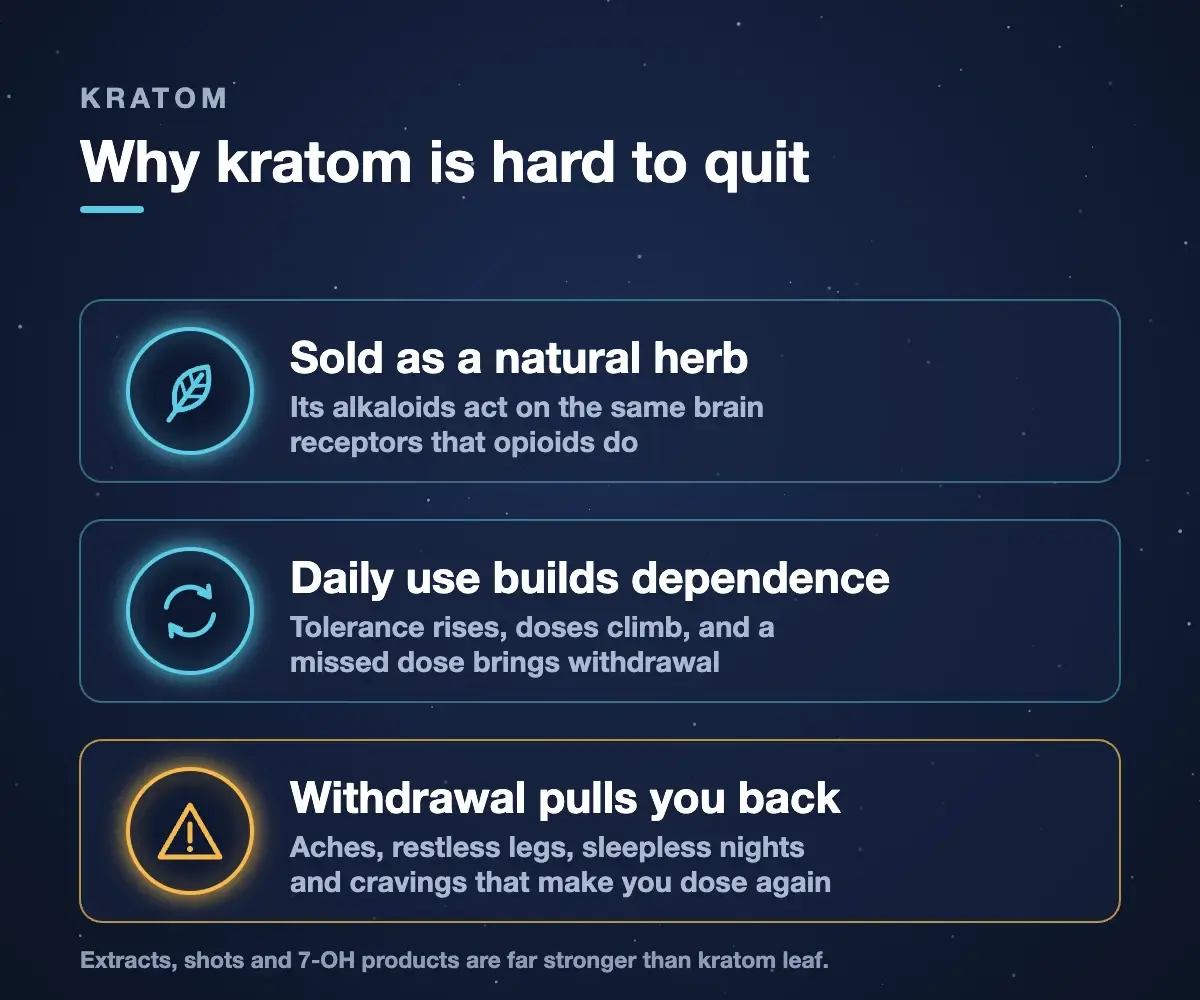
Kratom comes from the leaves of Mitragyna speciosa, a tree native to Southeast Asia. Its main alkaloid, mitragynine, along with smaller amounts of 7-OH, acts on the brain’s mu-opioid receptors, the same receptors that opioids act on.
Taken every day, kratom can lead to tolerance, rising doses and physical dependence. Many people start using it for pain, energy or focus, or to get off other opioids, and don’t realize how dependent they’ve become until they miss a dose and withdrawal sets in.
Because it’s sold as powder, capsules, extracts and shots at gas stations, smoke shops and online, often as a natural supplement, kratom dependence is easy to underestimate. Extracts, shots and concentrated 7-OH products make the cycle even harder to break; if that’s what you’ve been taking, see our ibogaine treatment for 7-OH addiction.
Many of the staff at Iboga Treatment Center, our clinic in Ensenada, Mexico, have been through ibogaine themselves, so they know how hard it is to give up a daily habit. Here, getting off kratom starts with a careful medical detox, followed by ibogaine and time to recover.
THE SCIENCE
How Ibogaine Treats Kratom Addiction
A standard kratom detox mostly treats symptoms one day at a time. Ibogaine takes a different route: it works on several brain systems tied to dependence at once, from opioid receptors to the circuits behind craving, reward and mood. Our guide to what ibogaine is and how it works covers the basics.
Since kratom works on those same opioid receptors, months of daily use teach the brain to expect it: tolerance builds, and the body protests when the dose drops. Ibogaine may help interrupt that pattern, and guests often say their withdrawal and cravings let up during the session or soon after. Noribogaine, the compound the body makes from ibogaine, lingers for days, which may help keep mood steadier and cravings quieter during early recovery.
In fairness, the research has limits. No study has looked at ibogaine for kratom yet, so what we know comes from opioid research: small open-label studies, including one that followed people treated at clinics in Mexico and another in New Zealand, found large drops in withdrawal and cravings, and a 2022 systematic review reached a similar conclusion about opioid withdrawal and craving. Those studies were small, most had no control group, and ibogaine can affect heart rhythm, so it belongs only in a setting with careful screening and constant medical monitoring.

MORE THAN A DETOX
A Kratom Rehab Built for Longer Stays
Getting through kratom withdrawal is only the start. The weeks after, when sleep is off, energy is low and old routines say “just take a little,” are when relapse is most likely. We’re one of the ibogaine clinics in Mexico built for longer stays, so you get at least two weeks, and often a month, to stabilize, recover and plan for home.
Kratom Withdrawal Timeline: On Your Own vs. With Ibogaine
Kratom withdrawal is often milder than heroin or fentanyl withdrawal, but for people who dose heavily every day, especially with extracts or shots, it can be rough and last longer than they expect. Below is the usual course on your own, next to what the same weeks look like with us.
Without Ibogaine
On your own
First 12–24 hours
As your last dose wears off: restlessness, irritability, yawning, a runny nose, sweating, muscle aches, trouble sleeping and growing cravings.
Days 2–4
Often the peak: aching muscles and joints, jerky or restless legs, hot and cold flashes, diarrhea, anxiety, very little sleep and strong urges to use.
Days 5–10
Physical symptoms usually ease, but fatigue, low mood, anxiety, broken sleep and cravings can hang on.
Weeks 2 and beyond
Cravings, low energy and low mood can linger for weeks, and the daily routines built around kratom make it easy to slip back.
Kratom Detox With Ibogaine, Step by Step
Our approach
First days
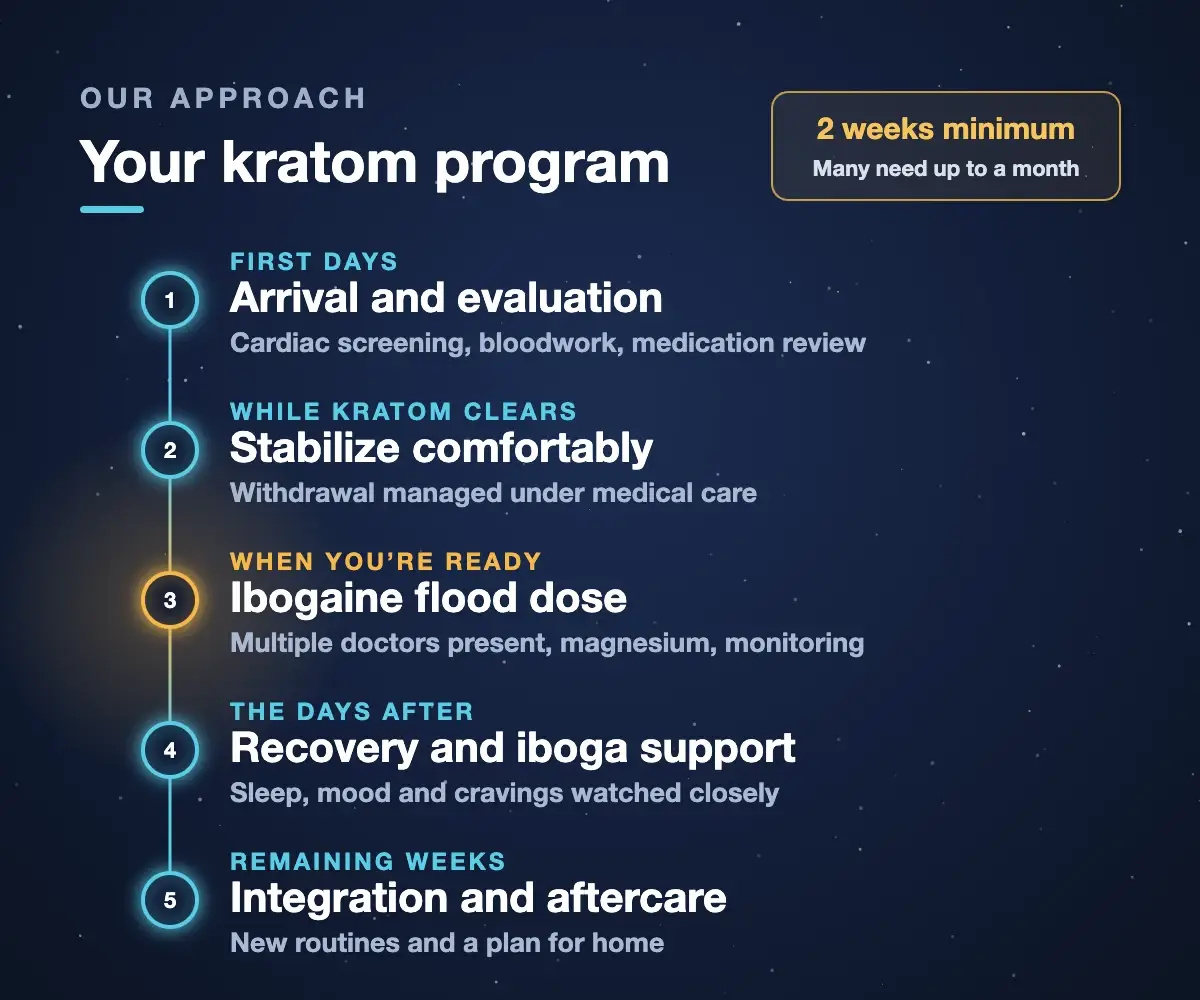
We check your heart with an EKG, run bloodwork and go over every medication, supplement and substance you use, including the kratom products themselves.
While kratom clears
Our medical team eases you through withdrawal, with staff on site around the clock, so you reach your ibogaine session stable rather than worn out.
When you’re ready
The ibogaine flood dose, given with several doctors present, magnesium alongside it and your heart monitored the whole time.
The days after
Rest and recovery. We keep track of how you’re sleeping, eating and feeling, and may add smaller iboga sessions if they’ll help.
Remaining weeks
Integration therapy and counseling with licensed counselors, good food and new daily routines that don’t revolve around kratom.
When you leave
You go home with an aftercare plan made for you, or stay on in extended aftercare with supervised housing.
These ranges are averages; your own withdrawal may run shorter or longer, and kratom withdrawal hasn’t been studied much. One more thing to know: treatment lowers your tolerance. Going back to your old dose can hit harder than you expect, and 7-OH products or other opioids, especially fentanyl, could be fatal. If you ever use again, don’t use alone, and have naloxone (Narcan) nearby.
HOW TO QUIT KRATOM
How to Quit Kratom Safely
If you want to get off kratom, talk to a doctor before you stop or start cutting back. Some people taper off kratom slowly with medical guidance; others try to quit cold turkey or taper on their own and end up back on their old dose once withdrawal and sleepless nights set in. Don’t switch to 7-OH or another opioid to get through it.
Here’s how it works with us. After you arrive, our doctors gauge how dependent you are and keep withdrawal in check while kratom leaves your system, so you come to the ibogaine session steady instead of sick, dehydrated or exhausted. Your ibogaine session follows under our doctors’ close watch and continuous heart monitoring, with recovery time and on-site aftercare afterward. Our page on how we prepare you for ibogaine treatment explains the first days in detail.
Be upfront with us about everything you take: extracts, shots, 7-OH products, other opioids, alcohol and prescriptions. Anyone also taking Suboxone or methadone follows a separate plan, explained on our pages for ibogaine and Suboxone and ibogaine and methadone.
How Long Does Kratom Detox Take?
2 weeks
The shortest kratom program we offer
Up to a month
How long many guests stay in total
+ Aftercare
Supervised housing afterward if you want more time
Your stay is set by your history: the products you use, how much and how often, how many months or years you’ve been taking kratom, and anything else in the mix, like 7-OH or opioids. See how our ibogaine programs are structured.
Our Kratom Rehab Program
Evaluation and Detox
Your first days are about safety. Bloodwork, an EKG and a full medication and substance review come first, along with the details of your kratom use. After that, our medical team treats your withdrawal symptoms until kratom is out of your system.
Your Ibogaine Session
The flood dose takes place in a clinical room set up for cardiac monitoring, which runs the entire time. A group of doctors is in the room, you’re given magnesium as well, and staff don’t leave your side during the 24 to 36 hours. Your care is in the hands of our three staff doctors.
Rest and Recovery
The days after the session are for rest. We keep an eye on your sleep, appetite, mood, energy and cravings, plus any leftover withdrawal, and smaller iboga sessions can be added when they’ll help. Your body gets real time to recover before the trip home.
Integration and Aftercare
Our licensed counselors help you understand what came up and rebuild days that no longer revolve around kratom. Together you’ll map out an aftercare plan for home, and if you’re not ready to leave, extended aftercare with supervised housing is an option.
GUEST STORY
Jacob’s Story
“I started taking kratom in 2014 and spent years trying to quit. I went to rehab, tried maintenance treatment, and made attempt after attempt—but I could never stay clean. In 2023, I went to Iboga Treatment Center, and I’ve been free from kratom ever since. I can’t thank the team enough for helping me finally reclaim my life.”
Individual results vary. More guests share their experiences on our testimonials page.
Kratom Withdrawal and Detox: Common Questions
Is ibogaine safe for kratom addiction treatment?
Ibogaine isn’t risk-free. Its biggest danger is to heart rhythm, so it should never be given without careful screening and nonstop medical monitoring. Before your session, you’ll have bloodwork, an EKG and a review of everything you take, and we stabilize you while kratom clears. While it’s underway, a team of physicians stays with you, you receive magnesium too, and your heart is watched the whole time, with medical staff on site day and night. Certain heart conditions and medications make ibogaine unsafe, and if you have one, we’ll say so plainly. Our article Is Ibogaine Safe? The Honest Answer goes deeper into the risks.
Is kratom addictive?
It can be. Kratom’s main alkaloid, mitragynine, and 7-OH act on the brain’s mu-opioid receptors, and regular daily use can lead to tolerance, physical dependence and withdrawal when you stop. Not everyone who uses kratom becomes dependent, but many people who take it every day find they can’t stop without withdrawal and cravings pulling them back. Stronger extracts, shots and concentrated 7-OH products raise that risk.
What are the symptoms of kratom withdrawal?
Kratom withdrawal often looks like a milder version of opioid withdrawal: restlessness, irritability, anxiety, muscle and joint aches, jerky movements or restless legs, a runny nose, sweating, hot and cold flashes, nausea, diarrhea, insomnia, low mood and strong cravings. For some people it’s mild to moderate; for heavy daily users, especially of extracts or shots, it can be much harder. How severe it gets depends on your dose, how often you use, how long you’ve been using and whether other substances are involved.
How long does kratom withdrawal last?
Symptoms often start within 12 to 24 hours of the last dose, usually peak around days 2 to 4 and ease over about a week to 10 days, though sleep problems, low mood and cravings can last for weeks. Heavier use, extracts and a longer history can mean a longer, harder withdrawal, and kratom withdrawal hasn’t been studied in depth. With us, your withdrawal is treated medically during stabilization, and guests often feel it lift during or soon after the ibogaine session.
Do I need to stop using kratom before coming to the clinic?
No. Please don’t stop or change your kratom use abruptly based on information from a website. Tell our admissions team exactly which products you take, how much, how often you dose, and which medications or other substances are involved. Our medical team will give you individual instructions for the days before you arrive, then stabilize you here while kratom clears your system.
How quickly can ibogaine help with kratom withdrawal and cravings?
For many guests, the biggest change comes during the session itself or shortly after, when withdrawal and cravings drop off noticeably. Everyone responds differently, though, and no one can promise a specific result. Ibogaine also won’t erase every trigger or urge, which is why the weeks after matter: we keep supporting your sleep, mood and energy, and integration therapy and aftercare planning help you build on the progress. Individual results vary.
What if I’ve been using kratom extracts or shots?
Tell our team exactly which products you use, and share photos of the packaging or ingredient labels if you can. Extracts and shots vary widely in strength and ingredients, so this matters for screening, stabilization and planning your treatment. Concentrated 7-OH products act more like opioids than kratom leaf does; learn more about what 7-OH is and our ibogaine treatment for 7-OH addiction.
What’s the difference between ibogaine and Suboxone for kratom?
Suboxone is an FDA-approved medication for opioid use disorder, and some doctors prescribe it for kratom dependence. It works through continued daily dosing to manage withdrawal and cravings. Ibogaine is not FDA-approved in the United States; at Iboga Treatment Center it’s used as an intensive, medically supervised treatment followed by structured recovery and integration. If you’re currently taking Suboxone, don’t stop on your own; our medical team plans that transition. See ibogaine for Suboxone.
Could I overdose if I use again after treatment?
It’s possible, and it’s important to know. Detox and ibogaine lower your tolerance, so your old kratom dose can hit much harder than it used to, and 7-OH products or other opioids, especially fentanyl, can cause a dangerous or fatal overdose. If you do use again, have someone with you and keep naloxone (Narcan) close; US pharmacies sell it without a prescription. In an overdose, give naloxone and call 911.
Preventing that moment is a big part of your aftercare plan. If things get hard once you’re home, call us, and if you’re in crisis, call or text 988.
How long should I stay for kratom addiction treatment?
Plan on at least two weeks; many guests stay closer to a month in total. How long you’ll need comes down to how much kratom you take, how often, which products, how long you’ve used and your overall health. That time goes to stabilizing before ibogaine, then recovering afterward while your sleep settles, along with integration therapy and planning for home. After reviewing your history, admissions can give you a realistic estimate. Our program options page shows how stays are set up.
How much does kratom detox cost?
The price of kratom detox depends mostly on how long you stay and what medical care you need, including how long stabilization takes. Once your screening is done, admissions will walk you through the numbers. For general pricing information, see our ibogaine treatment cost page.
How will I get to the clinic?
Iboga Treatment Center is in Ensenada, Baja California, a two-hour trip south of San Diego by car. After you fly into San Diego, we meet you at the airport and take care of the drive and the border crossing. Our admissions staff will help you prepare for the trip, packing included. Treatment happens in Mexico because ibogaine’s Schedule I status makes it illegal to offer in the US.
Still have questions? Call admissions at (877) 876-4157.
More on Kratom, 7-OH and Opioids
Concentrated 7-OH products are far stronger than kratom leaf. See how our 7-OH detox program works.
What 7-OH is, how it differs from natural kratom leaf and why concentrated products are so habit-forming.
Coming off heroin, oxycodone or other opioids too? Our opiate detox program covers them.
Looking for something else? Our ibogaine addiction treatment page lists everything we treat.
Ready to Break Free From Kratom?
Ask our admissions team about kratom treatment in a free, confidential call. We’ll be honest about whether ibogaine is right for you, and there’s never any pressure.