Ibogaine Treatment Near Me: Where US Residents Can Get Treatment
There are no legal ibogaine clinics in the United States yet. Here is where Americans actually go, how far it is from you and how to choose a clinic safely.
Why a Search for Ibogaine Near Me Comes Up Empty
If you’ve searched for ibogaine treatment near me and found nothing local, you didn’t miss anything. Ibogaine is a Schedule I controlled substance under US federal law, so no clinic in any state can legally offer it to the public. Right now there isn’t a single US clinic that can treat you with it.
On paper, that has started to change. An April 2026 executive order told federal agencies to speed up psychedelic research, and in October 2026 the FDA asked the public for input on how early ibogaine trials should be designed. Texas and several other states have also set money aside for research. None of that lets a doctor treat you with ibogaine today. We cover the trials further down this page.
So where can you get ibogaine treatment for now? Nearly every American who goes ahead with it travels abroad, and most go to Mexico, where ibogaine isn’t a controlled substance. We’re Iboga Treatment Center, a medically supervised clinic in Ensenada, Baja California, and this page is our honest guide to your options, including the ones that aren’t us.
Where Can I Get Ibogaine Treatment? Your Options by Country
Ibogaine’s legal status varies a lot from country to country, and “legal” rarely means the same thing as regulated. Here’s the short version for the places Americans ask about most:
| Country | Ibogaine status | What it means for you |
|---|---|---|
| Mexico | Not a controlled substance | The closest and most common choice for Americans. Clinics operate openly, but quality varies widely, so vet any clinic carefully. |
| Costa Rica | Not controlled | Clinics can operate legally, with no government oversight of how they are run. A longer trip from most of the US. |
| Canada | Schedule III | Ibogaine can’t be sold or marketed as a treatment. Access is limited to rare case-by-case exemptions. |
| Brazil | Allowed for therapeutic use since 2017 | Not a full medical approval, and a long trip from most of the US. |
| New Zealand | Prescription medicine since 2010 | A doctor can prescribe it, but it is a very long way to travel. |
| United States | Schedule I | No legal treatment outside approved research. |
Drug laws change, so confirm the current rules before you book anything. Our summary is based on Mind Medicine Law’s country guide, last updated in September 2026.
The Closest Ibogaine Treatment for US Residents, by Region
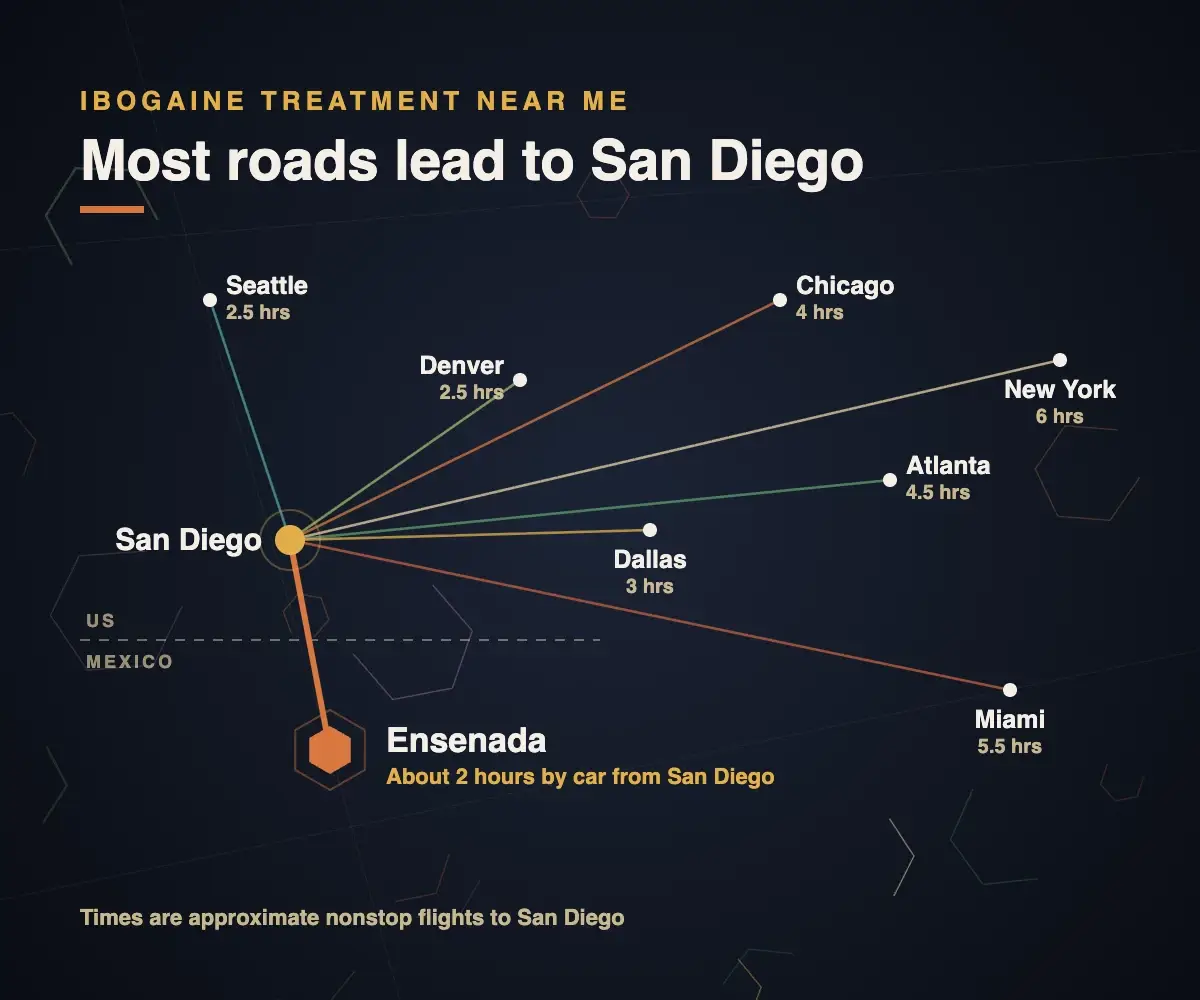
For most of the country, the closest ibogaine treatment is just across the border from San Diego. Ensenada sits about two hours south of San Diego International Airport by car, and San Diego has nonstop flights from most major US cities. Here’s roughly how long the flight takes from where you live:
| Where you live | Major airports | Nonstop flight to San Diego |
|---|---|---|
| Southern California | Los Angeles, Orange County | Under an hour, or drive |
| Pacific Northwest and Bay Area | Seattle, Portland, San Francisco | About 1.5 to 2.5 hours |
| Southwest | Phoenix, Las Vegas | About 1 to 1.5 hours |
| Mountain states | Denver, Salt Lake City | About 2 to 2.5 hours |
| Texas | Dallas, Houston, Austin | About 3 to 3.5 hours |
| Midwest | Chicago, Minneapolis, Detroit | About 4 to 4.5 hours |
| Southeast | Atlanta, Charlotte, Nashville | About 4.5 to 5 hours |
| Northeast and Florida | New York, Boston, Miami | About 5.5 to 6 hours |
Times are approximate for nonstop flights; a connection adds a few hours. If you live in Texas, our page on ibogaine treatment for Texas residents covers flights from Texas airports and the state’s ibogaine research program.
What Traveling to Mexico for Ibogaine Treatment Looks Like
Getting to a clinic in Baja California is simpler than many people expect. Here’s how it works when you come to us:
- You fly into San Diego. It’s a domestic flight, so that part of the trip needs no passport.
- Our team meets you at the airport and drives you south to the clinic, and we handle the border crossing with you.
- Bring a valid passport book or passport card. You’ll need it to cross back into the US by land when your stay ends.
- Plan a travel day on each end of your stay.
One rule matters more than any other: never try to bring ibogaine back into the United States. It is still a Schedule I drug there, and carrying it across the border is a federal offense.
Our admissions team can help you time your flights and walk you through what to pack before you leave home.

How to Vet an Ibogaine Clinic Before You Book
No US agency inspects ibogaine clinics abroad, so checking a clinic out is up to you. These are the questions we’d ask any clinic, ours included:
- Who are the doctors, and will one be there during my dose? Ask for names, not just “medical staff.”
- What heart testing do you do first? A careful clinic runs an EKG and blood work and reviews every medication before deciding you’re a candidate.
- How will you monitor me during treatment? Ask about heart monitoring, who is awake with you overnight and what happens if something goes wrong.
- How far away is the nearest hospital, and how would you get me there?
- What’s the plan for my current medications? Opioids, benzodiazepines and antidepressants each need a plan made by a doctor.
- How long do I stay after the ibogaine session? Ask what the days afterward look like and what support you get once you go home.
- Have you ever turned someone away? A clinic that never says no isn’t really screening anyone.
Ask the same questions on every call and compare the answers side by side. Vague answers to any of them tell you something.
Red Flags When You Are Looking for Ibogaine Treatment
Walk away, or at least slow down, if a clinic:
- will give you ibogaine without an EKG, blood work and a full medication review
- offers to dose you the day you arrive, before anyone has checked your heart
- can’t tell you the name of the doctor in charge
- calls itself a ceremony or retreat and has no medical team on site
- promises a cure or quotes a guaranteed success rate
- pushes you to pay or book before you’ve been screened
- asks you to bring, buy or carry ibogaine yourself
Ibogaine changes the heart’s rhythm, and people have died at clinics that skipped the safety work. Thorough screening isn’t red tape; it is the main protection between you and that risk.
Can You Get Ibogaine Treatment in the US Through a Clinical Trial?
Possibly, someday, for a small number of people. Here’s where things stand as of October 2026:
- Federal law: ibogaine is still Schedule I. The executive order signed April 18, 2026 directs agencies to speed up psychedelic research and review and sends at least $50 million to state programs, but it did not make ibogaine legal.
- The FDA: on October 5, 2026, the agency asked for public comments on how early ibogaine trials should be designed, with opioid use disorder and PTSD as priorities. Comments are due November 20.
- Texas: the state has committed $50 million to FDA-supervised ibogaine trials led by UTHealth Houston and UTMB. No start date has been announced.
- Other states: Mississippi has funded ibogaine research too, and several more states have bills or studies under way.
When US trials do open, expect them to enroll small groups of people who meet strict criteria. You can search ClinicalTrials.gov for ibogaine studies. For most people looking for help this year, treatment abroad is still the only realistic route.
Where Iboga Treatment Center Fits In
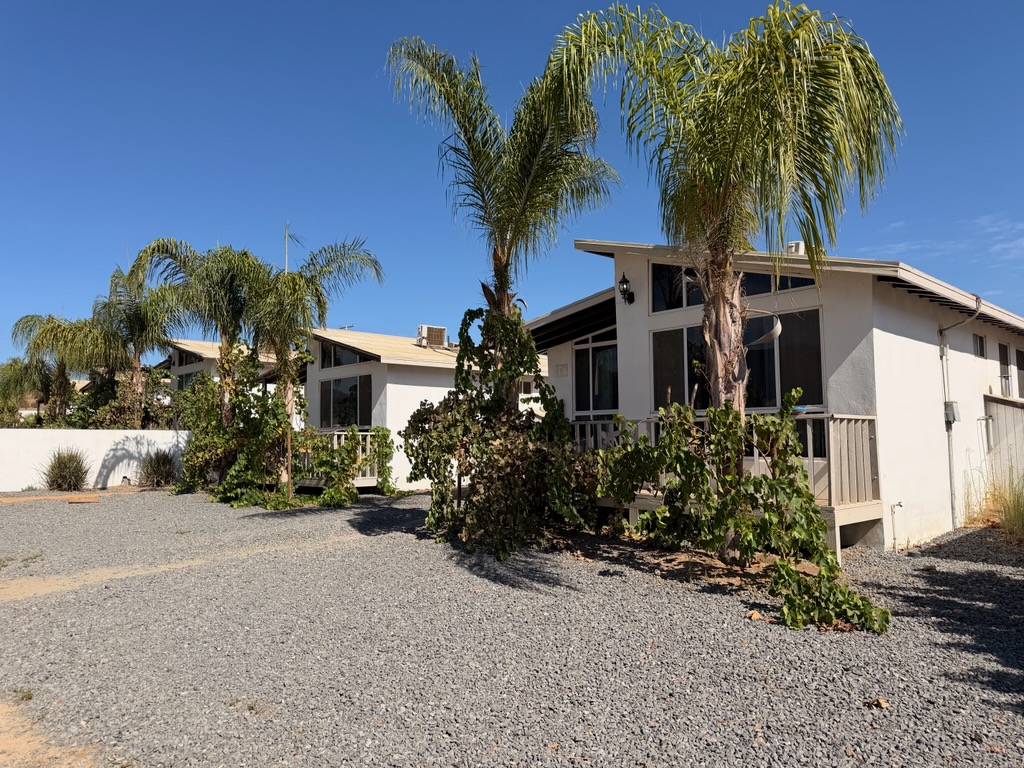
We’re on vineyard grounds near Ensenada, with mountain views, about two hours south of San Diego. Three medical doctors are on our staff, more than one is present during every ibogaine session, magnesium is given alongside the ibogaine, and there is always medical staff on site, day and night.
Since 2018 we’ve been one of the ibogaine treatment centers in Baja California built for longer stays, because detox, the ibogaine itself and the days after it all take time. You can see the grounds and meet the team on our About page.
Starting the Process From Anywhere in the US
You don’t need everything figured out before you reach out. The usual first step is a phone call or a short application, then a medical screening, and only after that do you pick dates and book flights.
Stays run one to four weeks, longer when you need it, and the length we most often recommend is four weeks. See our ibogaine programs for how a length is chosen, and our page on ibogaine treatment cost for what affects the price.
Start your application or call (877) 876-4157 to talk it through first.
Ibogaine Treatment Near Me: Common Questions
Answers for people in the US who are trying to work out where to go.
Is there ibogaine treatment in the US?
Not legally, outside of approved research. Ibogaine is Schedule I under federal law, and no state has made it available to the public. A handful of states are paying for clinical trials, but those will be small and selective.
Did the 2026 executive order make ibogaine legal?
No. The April 2026 order speeds up federal research and review and directs funding to state programs. Ibogaine is still Schedule I, and rescheduling would only be considered after FDA approval, which hasn’t happened.
Is it legal for Americans to travel to Mexico for ibogaine treatment?
Ibogaine isn’t a controlled substance in Mexico, and many Americans travel there for treatment. What you can’t do is bring ibogaine back into the US. We aren’t lawyers, so if you have a specific legal concern, such as probation or a pending case, check with an attorney before you travel.
What is the closest ibogaine treatment to California?
For most Californians the closest options are in Baja California, just south of San Diego. From Los Angeles you can drive or take a short flight to San Diego, and from there Ensenada is roughly a two-hour drive. Our page on ibogaine for California residents covers California law and travel times from each part of the state.
What if I live in Texas or on the East Coast?
Mexico is still the closest option for most of the country. Nonstop flights to San Diego take about three hours from Dallas or Houston and about six from New York or Miami. Texans can find more detail on our page for Texas residents.
Are there ibogaine clinics in Canada?
Not for public treatment. Ibogaine is Schedule III in Canada and can’t be sold or marketed as a treatment. The government grants rare case-by-case exemptions, mostly for research.
Can I get into a US ibogaine clinical trial?
Maybe in the future. Trials funded by Texas and the federal government are being planned, with opioid use disorder and PTSD as early priorities. Search ClinicalTrials.gov for ibogaine to see what’s recruiting, and expect strict eligibility rules.
How much time should I plan for treatment in Mexico?
Plan a travel day at each end plus the program itself. Many programs run one to four weeks; methadone and Suboxone stays start at four weeks, and some guests stay six. How long you stay depends on the substance you’re leaving behind and on your overall health.
Ready to Talk About Your Options?
Whether you end up with us or somewhere else, we are glad to answer questions about ibogaine, travel and safety. Our admissions team can tell you whether a screening makes sense for you.
Rather talk it through by phone? Admissions is at (877) 876-4157.